
Category: Parkinson's Disease (Other)
Objective: In this analysis, we aimed to evaluate long-term safety of DBS systems in real-world use.
Background: Deep brain stimulation (DBS) is an established therapy for movement disorders. While clinical trials provide valuable data, they may not fully reflect real‑world patient populations, comorbidities, and device‑use patterns. Large‑scale observational data are needed to better characterize long‑term device‑ and procedure‑related safety outcomes in everyday clinical settings.
Method: Medicare Fee-for-Service (FFS) claims and manufacturer’s device registration data were linked to identify de novo DBS U.S. implants (implanted 1/2018 – 12/2023). For inclusion in the study, patients were required to have continuous Medicare FFS enrollment one year prior to implant, no prior DBS implants, and no out-of-service status on the implant date. Descriptive analyses of safety outcomes were conducted during patient follow-up and included non-serious device- or procedure-related adverse events (AE) and serious AEs requiring hospitalization (SAE-H). Events were identified from diagnosis and procedure codes.
Results: There were 1,623 patients who met inclusion criteria. On average, patients were 71.4 years old and 38.9% female. In this large, real‑world cohort of U.S. patients receiving de novo DBS implants, long‑term device‑ and procedure‑related adverse events were infrequent, and serious adverse events requiring hospitalization were rare; when compared with literature, these rates are within observed and acceptable ranges. Rates of adverse events were consistent across primary indications, with mechanical complications, infections, and procedure‑related complications occurring at low levels over a median of 2.4 years of follow‑up.
Conclusion: These findings demonstrate an acceptable long‑term safety profile for DBS systems in routine clinical practice and support the continued use of DBS as a durable therapy for movement disorders. Further analyses of long‑term effectiveness and comparative safety across device types may provide additional insights into optimizing patient outcomes.
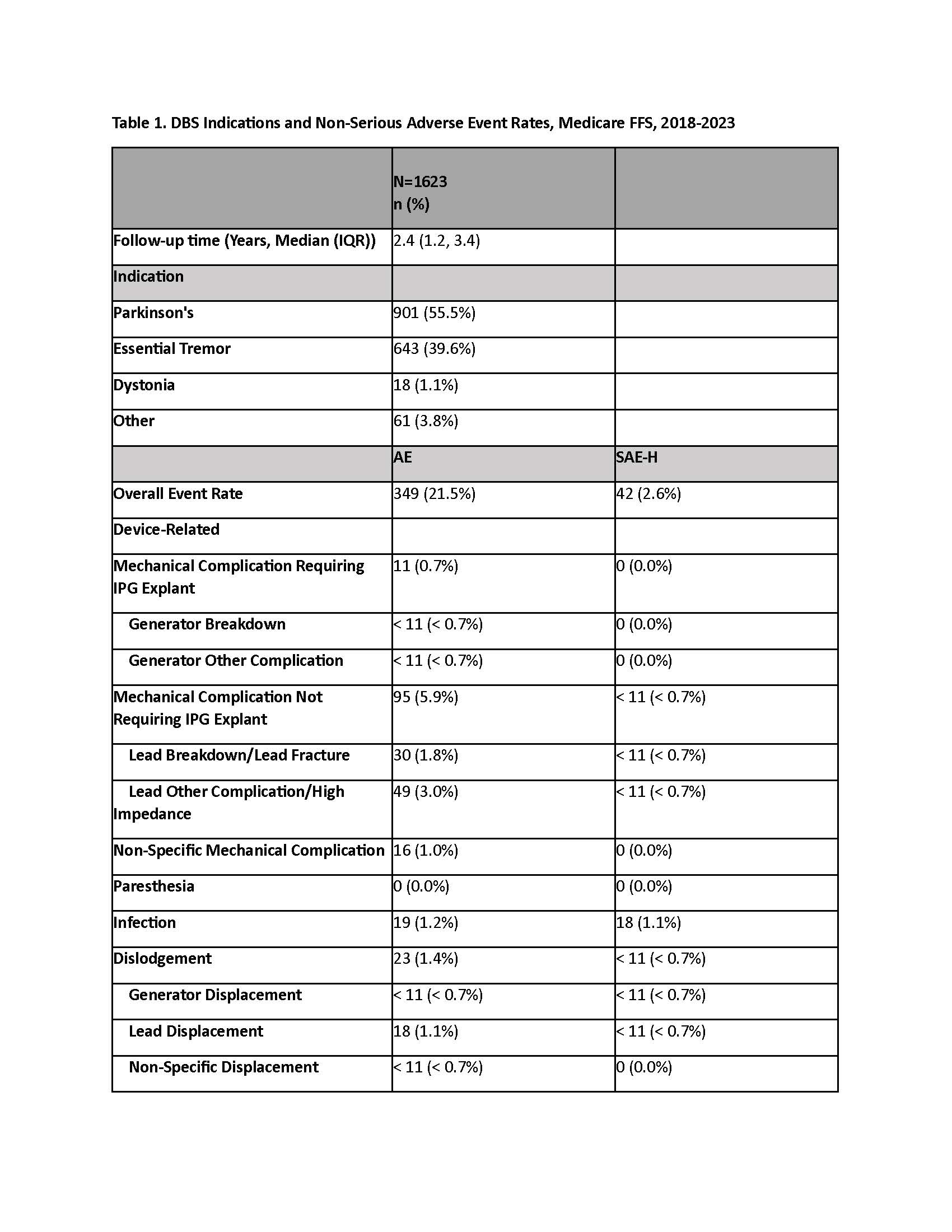
Table 1
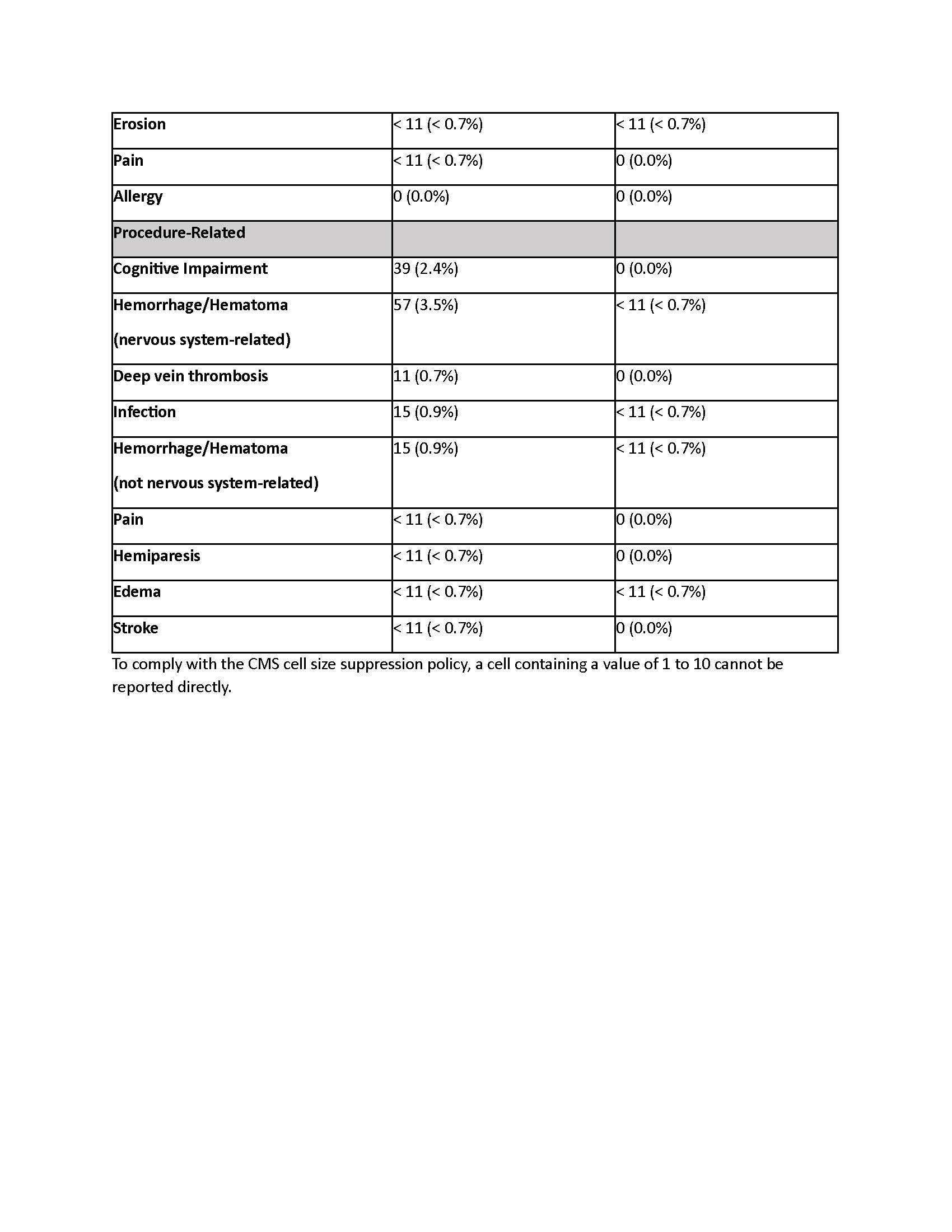
Table 1
To cite this abstract in AMA style:
J. Joseph, Y. Pathak, C. Salazar, A. Benison. Long-term safety of deep brain stimulation (DBS): Real-world evidence [abstract]. Mov Disord. 2026; 41 (suppl 1). https://www.mdsabstracts.org/abstract/long-term-safety-of-deep-brain-stimulation-dbs-real-world-evidence/. Accessed October 1, 2026.« Back to 2026 International Congress
MDS Abstracts - https://www.mdsabstracts.org/abstract/long-term-safety-of-deep-brain-stimulation-dbs-real-world-evidence/