
Objective: This longitudinal MRI study in cervical dystonia uses functional MRI (fMRI) to evaluate neural mechanisms underlying clinical response to deep brain stimulation (DBS), with the goal of identifying imaging biomarkers for early DBS programming.
Background: DBS is an effective treatment for dystonia, however its mechanisms remain unclear and about 20% of patients show limited benefit1. Unlike Parkinson’s disease, symptom improvement in dystonia is slow, complicating initial programming due to delayed feedback. While two postoperative fMRI studies have related DBS-related network changes to symptom improvement,2,3 multi-timepoint imaging is needed to better understand longitudinal and pre-to-postoperative effects.4
Method: 3T resting-state fMRI data were collected from 10 patients with cervical dystonia before DBS surgery, and from four patients after surgery at one or two timepoints (Table 1). Postoperative scans included fMRI with DBS OFF, followed by DBS ON using clinically optimized settings at the time of MRI. Motor connectivity was compared across the baseline and postoperative conditions and timepoints, as well as with age-matched healthy controls (public data) and TWSTRS motor scores. Focusing on pallidal-cerebellar and pallidal-sensorimotor connections, we aimed to validate preoperative functional signatures linked to dystonia response and examine their evolution and possible normalization after DBS.2–6
Results: Pallidal-cerebellar and pallidal-sensorimotor connectivity generally decreased over time; however, transient increases were also observed, such as after one month of DBS during optimization (Fig 1AB). Differential effects of stimulation on connectivity (DBS ON vs. OFF) were most pronounced during the first year of follow-up. In certain patients, connectivity approached that of controls (Fig 1AB), though no group-level trends were observed (Fig 1CD). At baseline, higher pallidal-sensorimotor connectivity and lower pallidal-cerebellar connectivity trended with worse baseline TWSTRS scores (Fig 2A). Baseline connectivity also showed weak relationships with postoperative TWSTRS outcomes, including percent change from preoperative scores (Fig 2BC; unadjusted for variability in follow-up duration).
Conclusion: These early results suggest pallidal connectivity is modulated by DBS over time and may contribute to dystonia severity and treatment response, though further investigation is needed.
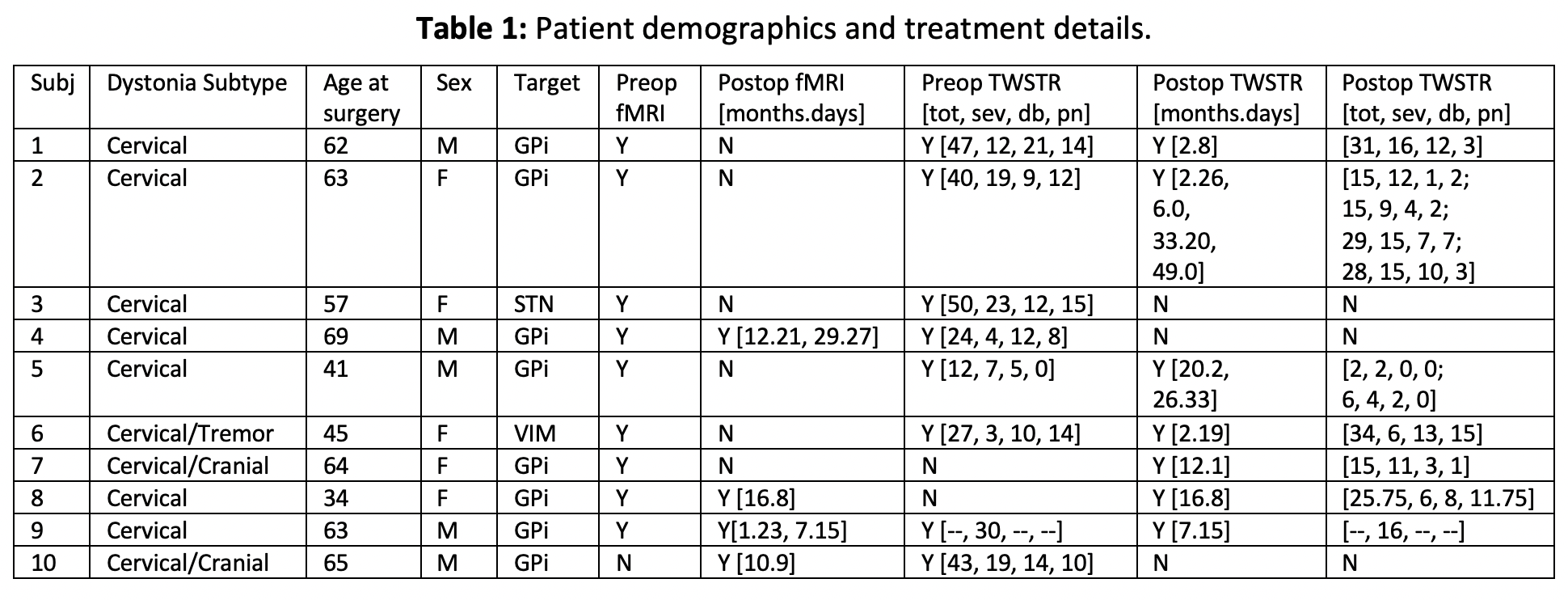
Table 1: Patient demographics and therapy details.
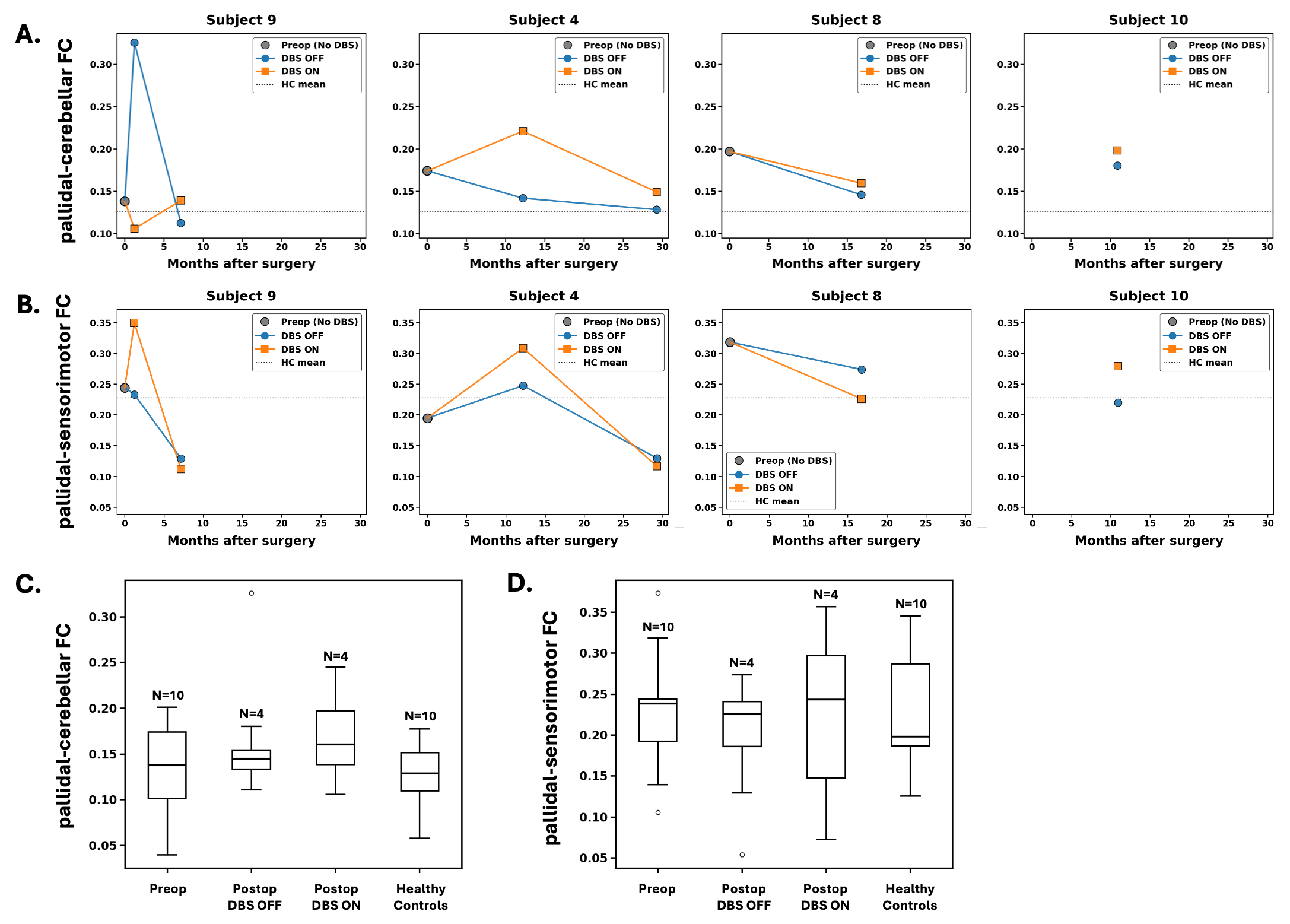
Fig 1: DBS-related changes in fMRI connectivity.
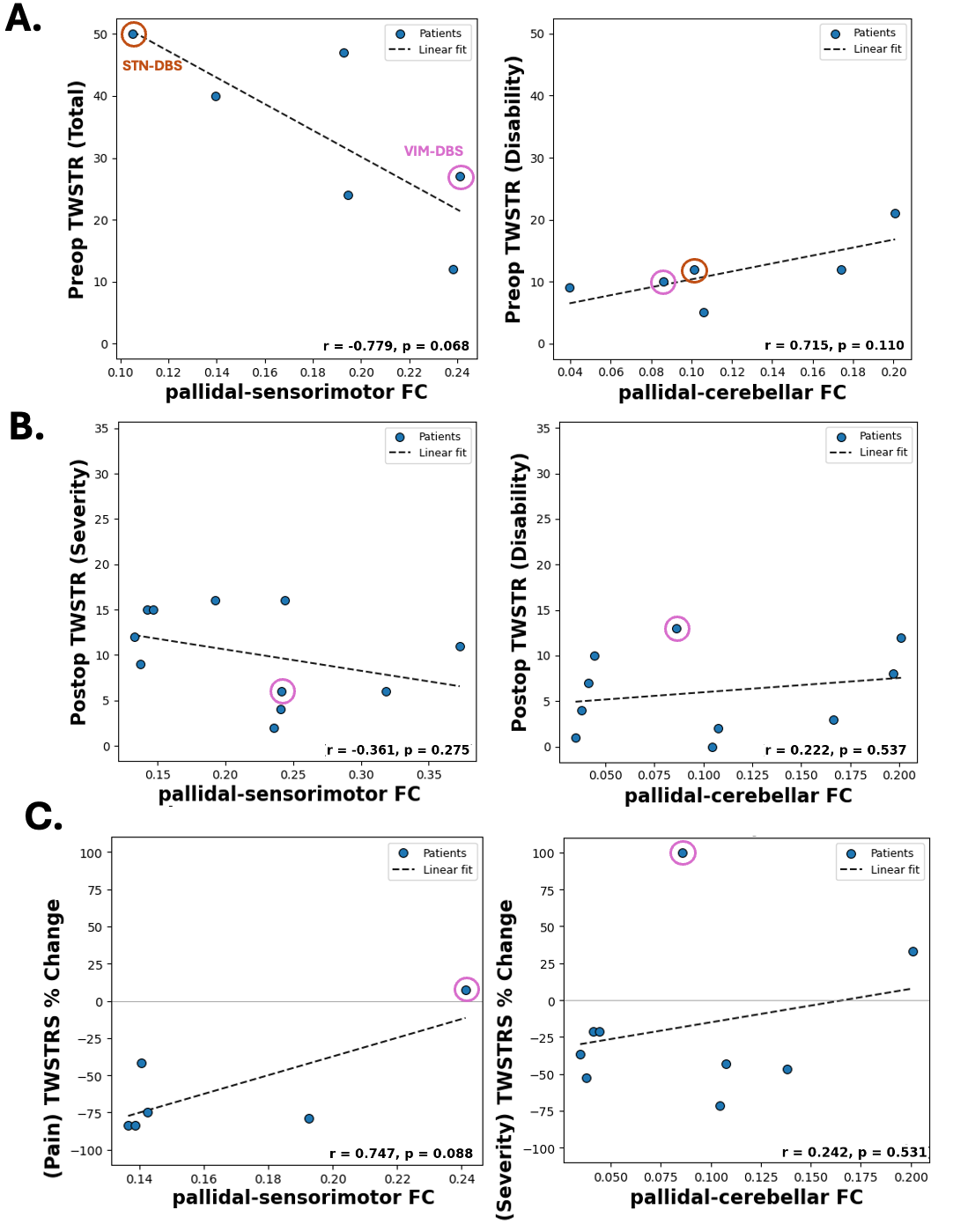
Fig 2: Connectivity versus TWSTRS scores.
References: 1. Volkmann J, Wolters A, Kupsch A, et al. Pallidal deep brain stimulation in patients with primary generalised or segmental dystonia: 5-year follow-up of a randomised trial. Lancet Neurol 2012;11:1029–38.
2. Filip P, Jech R, Fečíková A, et al. Restoration of functional network state towards more physiological condition as the correlate of clinical effects of pallidal deep brain stimulation in dystonia. Brain Stimulat 2022;15:1269–78.
3. Loh A, Elias GJB, Germann J, et al. Neural Correlates of Optimal Deep Brain Stimulation for Cervical Dystonia. Ann Neurol 2022;92:418–24.
4. Bledsoe IO, Morrison MA. Functional imaging of deep brain stimulation in dystonia: a review. Dystonia 2023;2.
5. Okromelidze L, Tsuboi T, Eisinger RS, et al. Functional and Structural Connectivity Patterns Associated with Clinical Outcomes in Deep Brain Stimulation of the Globus Pallidus Internus for Generalized Dystonia. Am J Neuroradiol 2020;41:508–14.
6. Corp DT, Joutsa J, Darby RR, et al. Network localization of cervical dystonia based on causal brain lesions. Brain 2019;142:1660–74.
To cite this abstract in AMA style:
E. Cito, S. Deutsch, S. Wang, D. Mikhael, J. Ostrem, M. San Luciano, I. Bledsoe, M. Morrison. Longitudinal motor network responses to pallidal DBS in cervical dystonia: an ongoing DBS-fMRI study [abstract]. Mov Disord. 2026; 41 (suppl 1). https://www.mdsabstracts.org/abstract/longitudinal-motor-network-responses-to-pallidal-dbs-in-cervical-dystonia-an-ongoing-dbs-fmri-study/. Accessed October 1, 2026.« Back to 2026 International Congress
MDS Abstracts - https://www.mdsabstracts.org/abstract/longitudinal-motor-network-responses-to-pallidal-dbs-in-cervical-dystonia-an-ongoing-dbs-fmri-study/