
Category: Parkinson's Disease: Genetics
Objective: To systematically characterize the spectrum, haplotypes, and cumulative burden of LRRK2 variants and determine their associations with PD risk in the multi-ancestry Malaysian population.
Background: Variants in LRRK2 gene are linked to PD. Previous studies in the multiethnic Malaysian population have focused on a limited targeted LRRK2 variants, including pathogenic variants (R1067Q,R1441C)[1,2], risk variants (A419V,R1628P,G2385R)[3], and protective variants (N551K,R1398H)[4]. However, the broader mutational spectrum of LRRK2, including haplotype structure and cumulative rare-variant effects, remains incompletely characterized in this population.
Method: Samples underwent targeted sequencing using the CENTOGENE panel, NBA Array genotyping[5], and/or whole genome sequencing through the Global Parkinson’s Genetics Program(GP2,Release11). Genetic ancestry of the samples were inferred using PCA with the Singapore Whole Genome reference panel (SG10K)[6]. Association analyses were performed using logistic regression. Haplotype analyses were conducted using haplo.stats, and rare-variant burden tests were performed using RVtests with SKAT and SKAT-O models.
Results: A total of 2034 PD and 1059 controls representing Malays, Chinese, Indians, and Indigenous groups were analyzed. We identified 77 non-synonymous variants [figure1], including 3 pathogenic variants (R1067Q,R1441C/H). R1067Q was first found in a South Asian PD patient, while R1441H was detected the first time in a Malay patient. In addition, 52 variants of uncertain significance (VUS) including R1325Q and A1413T, which have been reported to increase kinase activity, and 5 novel VUS variants with CADD>20 (L162F,D523N,F877S,E1566D,D1858A).
Case-control analysis [table1] validated the association of the R1628P and G2385R with increased PD risk, while N551K and R1398H were associated with reduced PD risk in the Chinese subgroup. Double heterozygous R1628P-G2385R carriers showed a trend toward earlier diagnosis (54.3±12.1yrs) compared to non-carriers (59.1±12.0yrs). Domain-based burden analyses identified significant association within the WD40 domain, largely driven by G2385R [table2].
Conclusion: This study provides the most comprehensive catalog of LRRK2 variation in the multi-ancestry Malaysian population to date and serves as a resource for future genetic studies and for identifying patients who may benefit from LRRK2-targeted therapies.
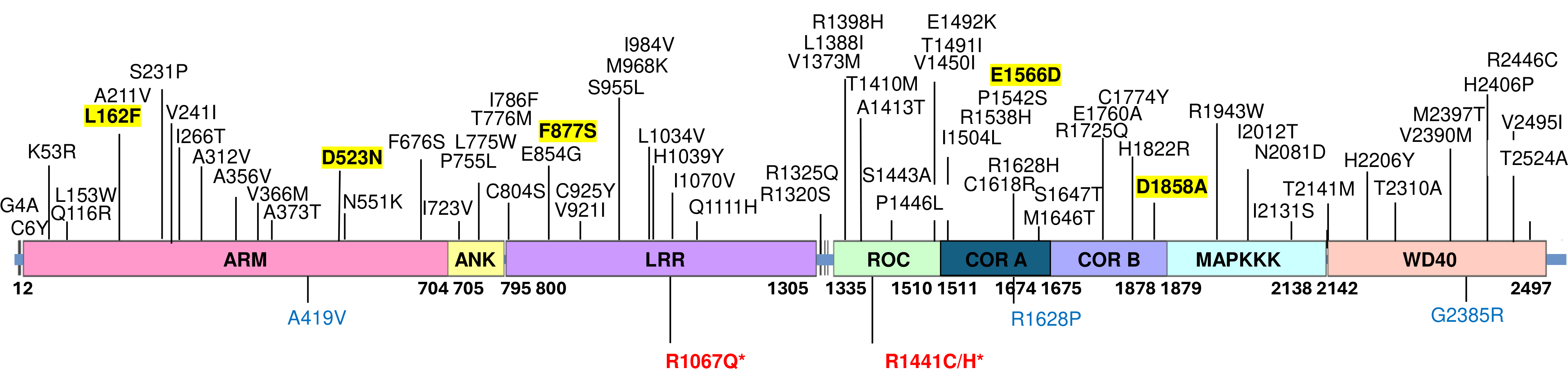
Figure 1:LRRK2 variants identified in Malaysian
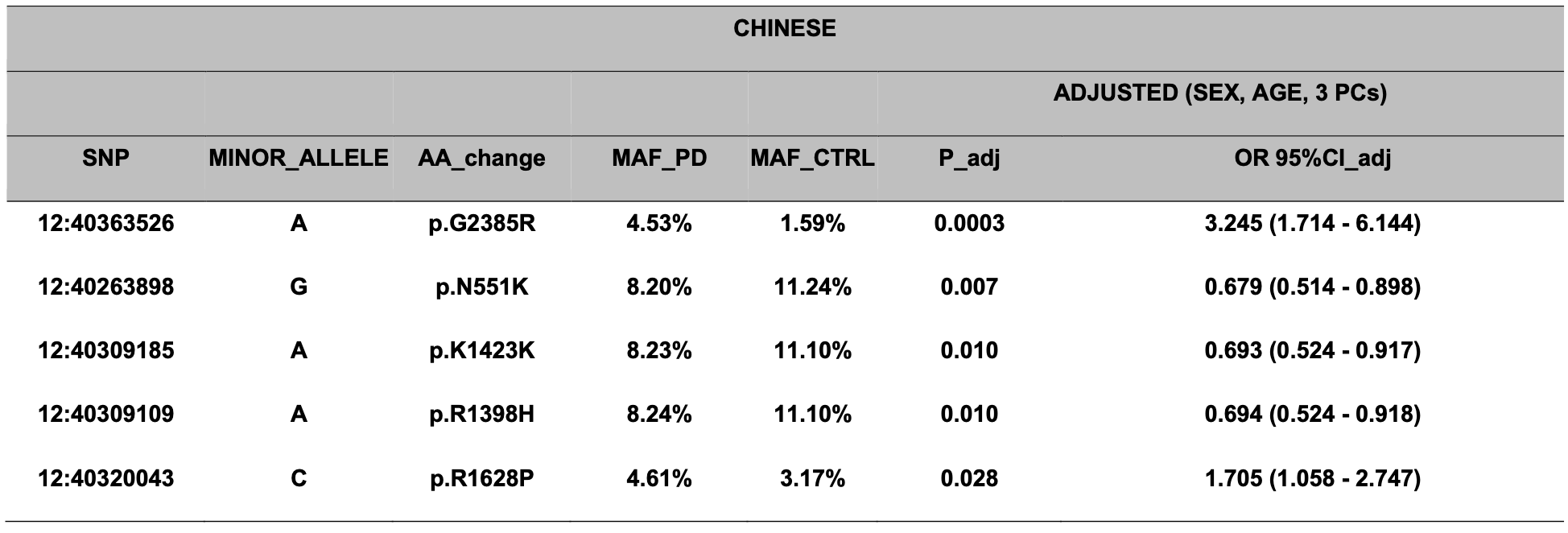
Table 1:Significant LRRK2 associations in Chinese
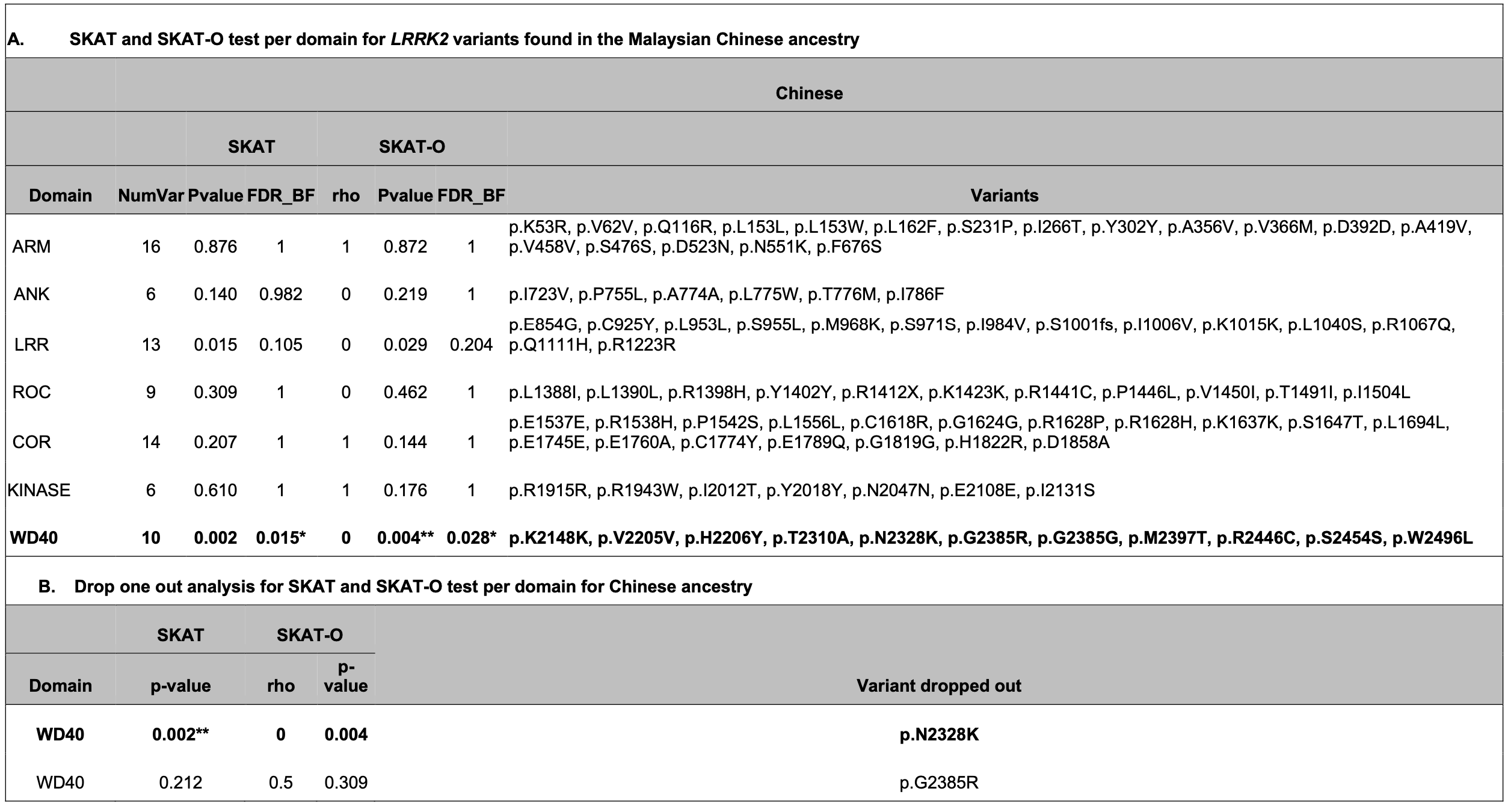
Table 2:LRRK2 domain burden tests (MAF <5%)
References: [1] Lim, SY., Toh, T.S., Hor, J.W. et al. Clinical and functional evidence for the pathogenicity of the LRRK2 p.Arg1067Gln variant. npj Parkinsons Dis. 11, 34 (2025). https://doi.org/10.1038/s41531-025-00884-6
[2] Lim, S. Y., Lim, J. L., Ahmad-Annuar, A., Lohmann, K., Tan, A. H., Lim, K. B., Tay, Y. W., Shing, Y. L., Muthusamy, K. A., Bauer, P., Rolfs, A., & Klein, C. (2020). Clinical Phenotype of LRRK2 R1441C in 2 Chinese Sisters. Neuro-degenerative diseases, 20(1), 39–45. https://doi.org/10.1159/000508131
[3] Goh, J.W., Lim, J.L., Toh, T.S. et al. LRRK2 p.G2385R and p.R1628P variants in a multi-ethnic Asian Parkinson’s Cohort: epidemiology and clinical insights. npj Parkinsons Dis.11, 320 (2025). https://doi.org/10.1038/s41531-025-01166-x
[4] Gopalai, A. A., Lim, J. L., Li, H. H., Zhao, Y., Lim, T. T., Eow, G. B., Puvanarajah, S., Viswanathan, S., Norlinah, M. I., Abdul Aziz, Z., Lim, S. K., Tan, C. T., Tan, A. H., Lim, S. Y., Tan, E. K., & Ahmad Annuar, A. (2019). LRRK2 N551K and R1398H variants are protective in Malays and Chinese in Malaysia: A case-control association study for Parkinson’s disease. Molecular genetics & genomic medicine, 7(11), e604. https://doi.org/10.1002/mgg3.604
[5] Bandres-Ciga, S., Faghri, F., Majounie, E., Koretsky, M.J., Kim, J., Levine, K.S., Leonard, H., Makarious, M.B., Iwaki, H., Crea, P.W., Hernandez, D.G., Arepalli, S., Billingsley, K., Lohmann, K., Klein, C., Lubbe, S.J., Jabbari, E., Saffie-Awad, P., Narendra, D., Reyes-Palomares, A., Quinn, J.P., Schulte, C., Morris, H.R., Traynor, B.J., Scholz, S.W., Houlden, H., Hardy, J., Dumanis, S., Riley, E., Blauwendraat, C., Singleton, A., Nalls, M., Jeff, J., Vitale, D. and the Global Parkinson’s Genetics Program (GP2) and the Center for Alzheimer’s and Related Dementias (CARD) (2024), NeuroBooster Array: A Genome-Wide Genotyping Platform to Study Neurological Disorders Across Diverse Populations. Mov Disord, 39: 2039-2048. https://doi.org/10.1002/mds.29902
[6] Wu, D., Dou, J., Chai, X., Bellis, C., Wilm, A., Shih, C. C., Soon, W. W. J., Bertin, N., Lin, C. B., Khor, C. C., DeGiorgio, M., Cheng, S., Bao, L., Karnani, N., Hwang, W. Y. K., Davila, S., Tan, P., Shabbir, A., Moh, A., Tan, E. K., … Wang, C. (2019). Large-Scale Whole-Genome Sequencing of Three Diverse Asian Populations in Singapore. Cell, 179(3), 736–749.e15. https://doi.org/10.1016/j.cell.2019.09.019
To cite this abstract in AMA style:
K. Lim, J. Lim, M. Periñan, Y. Tay, T. Toh, L. Lit, A. Khairul Anuar, H. Ding, K. Ibrahim, A. Mawardi, Y. Chia, J. Ooi, T. Lim, J. Schee, Y. Beh, L. Screven, S. Bandres-Ciga, S. Lim, A. Tan, A. Ahmad-Annuar. LRRK2 Mutation Spectrum and Association Study in a Multi-ethnic Cohort of Malaysian Parkinson’s Disease Patients [abstract]. Mov Disord. 2026; 41 (suppl 1). https://www.mdsabstracts.org/abstract/lrrk2-mutation-spectrum-and-association-study-in-a-multi-ethnic-cohort-of-malaysian-parkinsons-disease-patients/. Accessed October 1, 2026.« Back to 2026 International Congress
MDS Abstracts - https://www.mdsabstracts.org/abstract/lrrk2-mutation-spectrum-and-association-study-in-a-multi-ethnic-cohort-of-malaysian-parkinsons-disease-patients/