
Objective: To quantify multidimensional motor dysfunction in early-stage Parkinson’s disease (H&Y 1-2) and identify the most sensitive parameters for staging identification, with a focus on turning velocity as a potential biomarker for disease progression.
Background: Early-stage PD is often underestimated by subjective clinical scales. Quantitative motion analysis provides objective tools for early identification. However, comprehensive assessments of anticipatory postural adjustments (APA), gait, trunk control, sit-to-stand, and turning in early PD are limited. Turning, a complex motor task requiring multisensory integration, may be particularly vulnerable early on, but its value as a biomarker remains underexplored.
Method: We enrolled 79 healthy controls (NC), 51 early-stage PD (H&Y 1-2), and 62 mid-stage PD (H&Y 3). Participants underwent quantitative motion analysis assessing APA, arm swing velocity, stride length, lateral step variability, trunk range of motion, sit-to-stand duration, and turning function. Group comparisons used t-tests/Mann-Whitney U tests/chi-square tests, and correlations with MDS UPDRS-III were analyzed using Pearson/Spearman tests. A random forest model distinguished NC from H&Y 1-2.
Results: Compared to NC, H&Y 1-2 patients showed significant declines across all motor domains: APA duration (p=0.002); arm swing velocity ( p<0.001); stride length (p<0.001); trunk ROM in all planes (all p<0.001); sit-to-stand duration (p<0.001) ; turning duration (p<0.001) and velocity (p<0.001).
Turning velocity demonstrated the largest effect size (Cohen’s d=1.68) for distinguishing NC from H&Y 1-2, and was the only parameter showing significant decline from H&Y 1-2 to H&Y 3 (143.29±45.80 vs 105.46±40.16°/s, p<0.001). Turning velocity correlated most strongly with MDS UPDRS-III (r=-0.349, p=0.0001).
The random forest model achieved high accuracy distinguishing NC from H&Y 1-2: accuracy 0.982, sensitivity 0.818, specificity 0.893, AUC=0.917.
Conclusion: Early-stage PD patients show widespread motor dysfunction. Turning velocity emerges as the most sensitive parameter for early-stage detection and disease progression, correlating strongly with severity. Machine learning using motion parameters can precisely differentiate early PD from healthy controls, supporting the integration of quantitative motion analysis into routine PD evaluation.
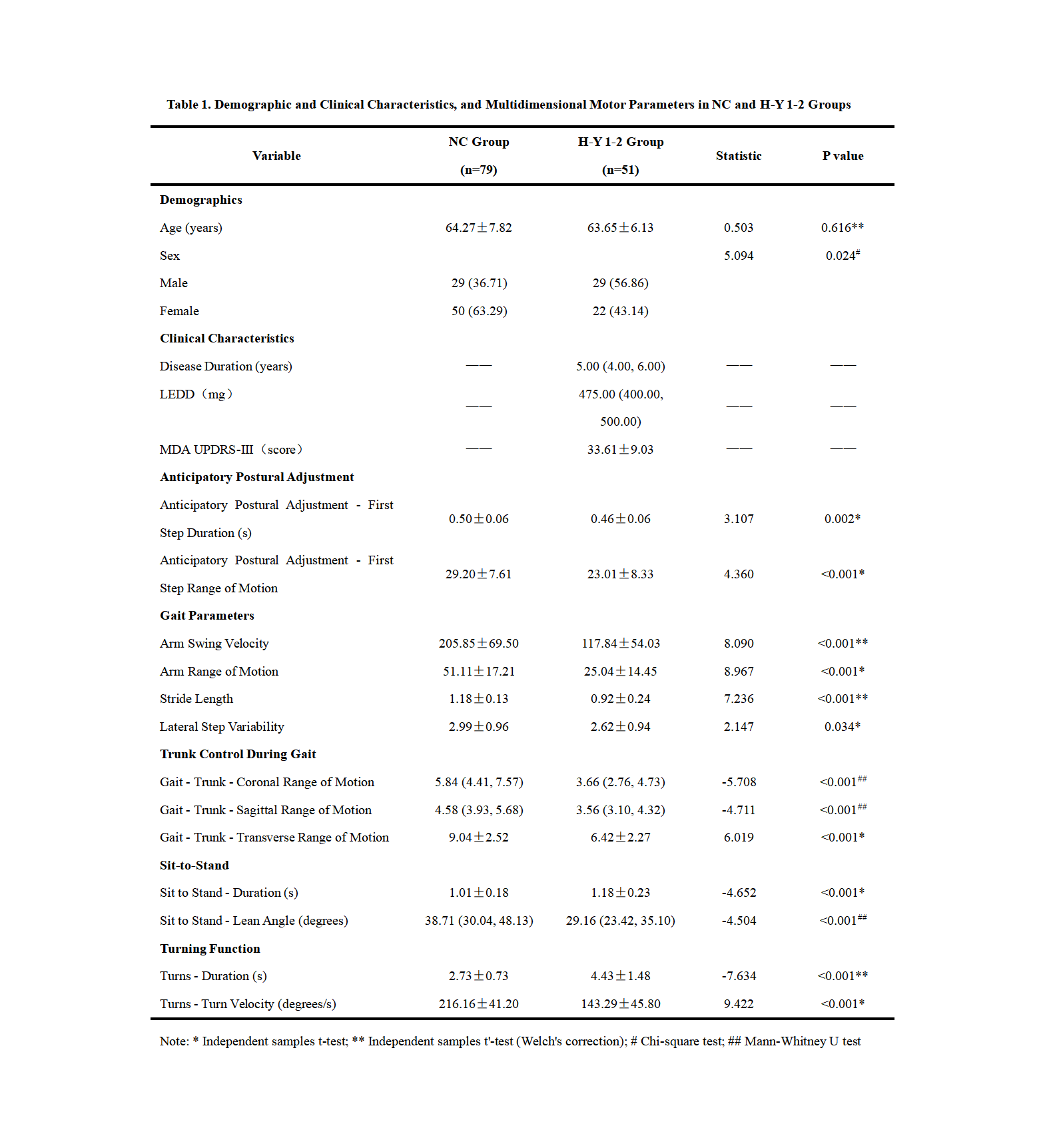
Table 1.Demographic and Clinical Characteristics
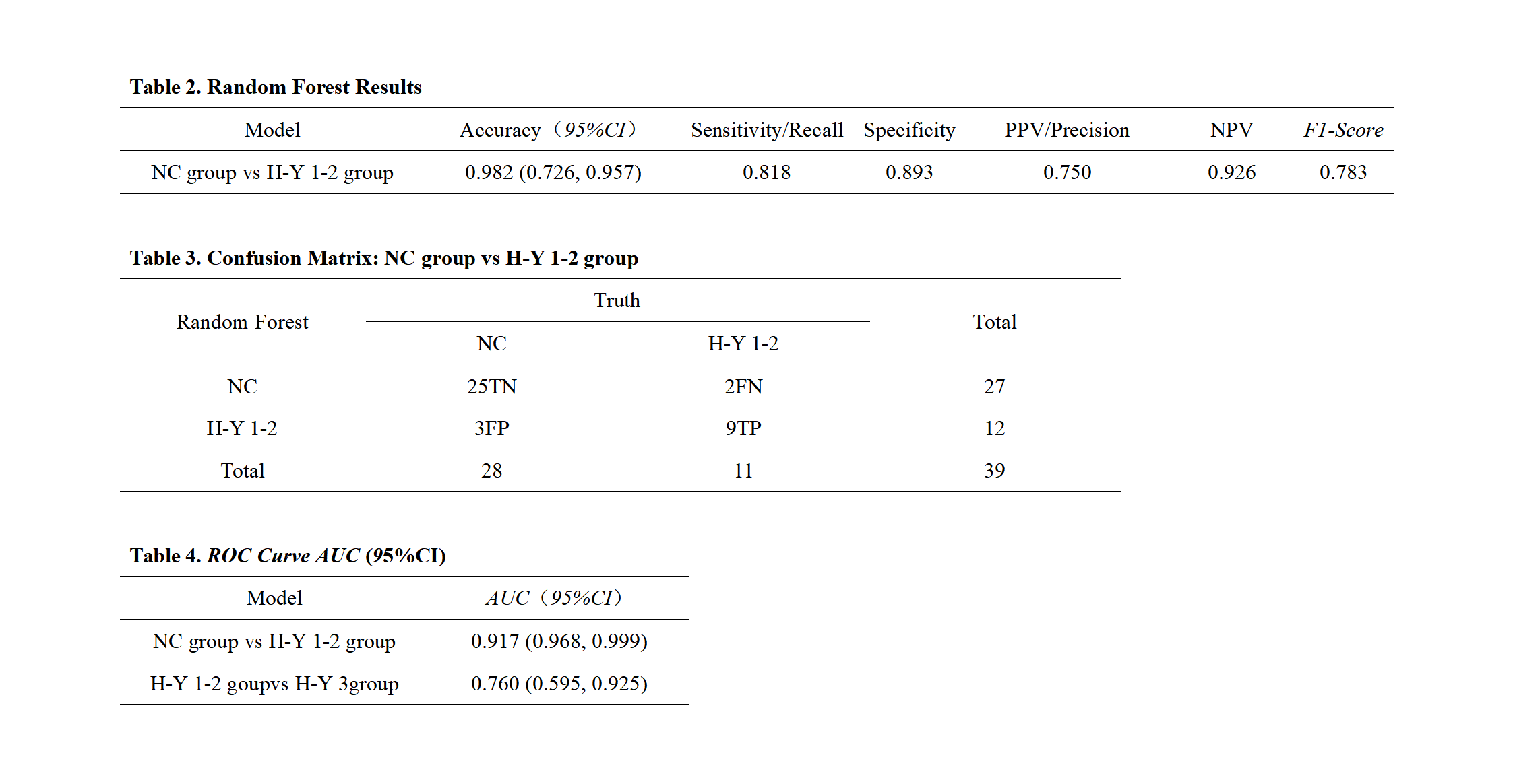
Table2. Random Forest Results
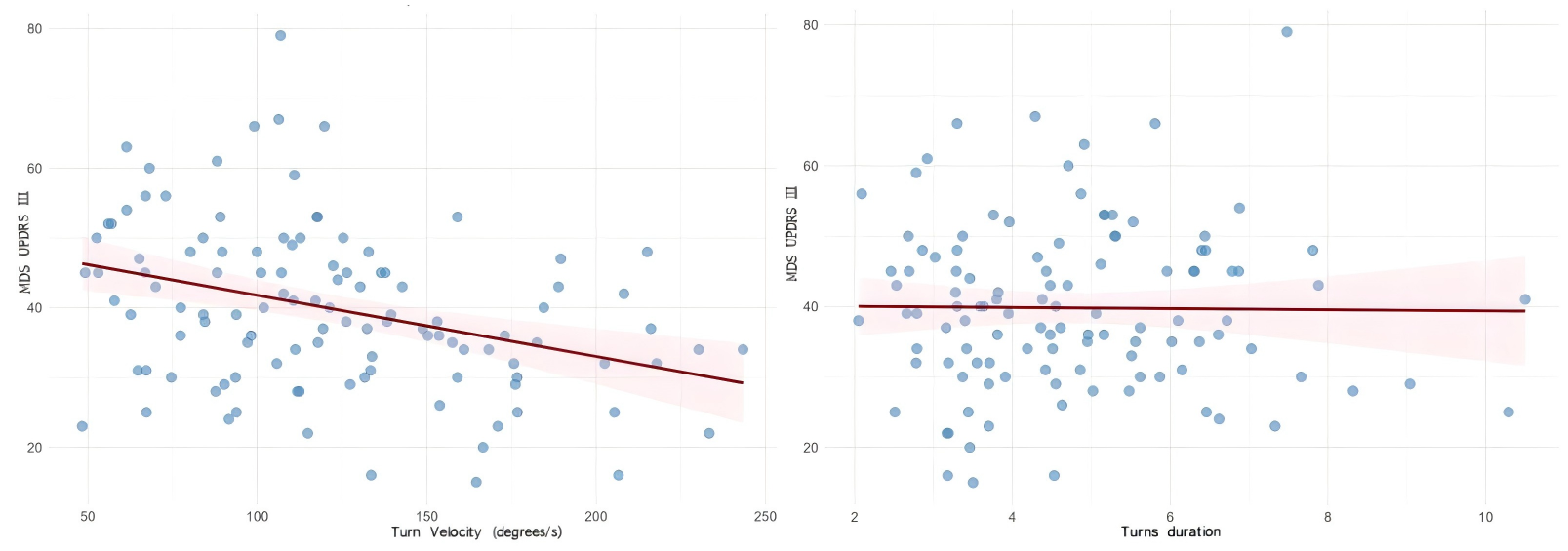
Fig 1. Scatter plot of correlation
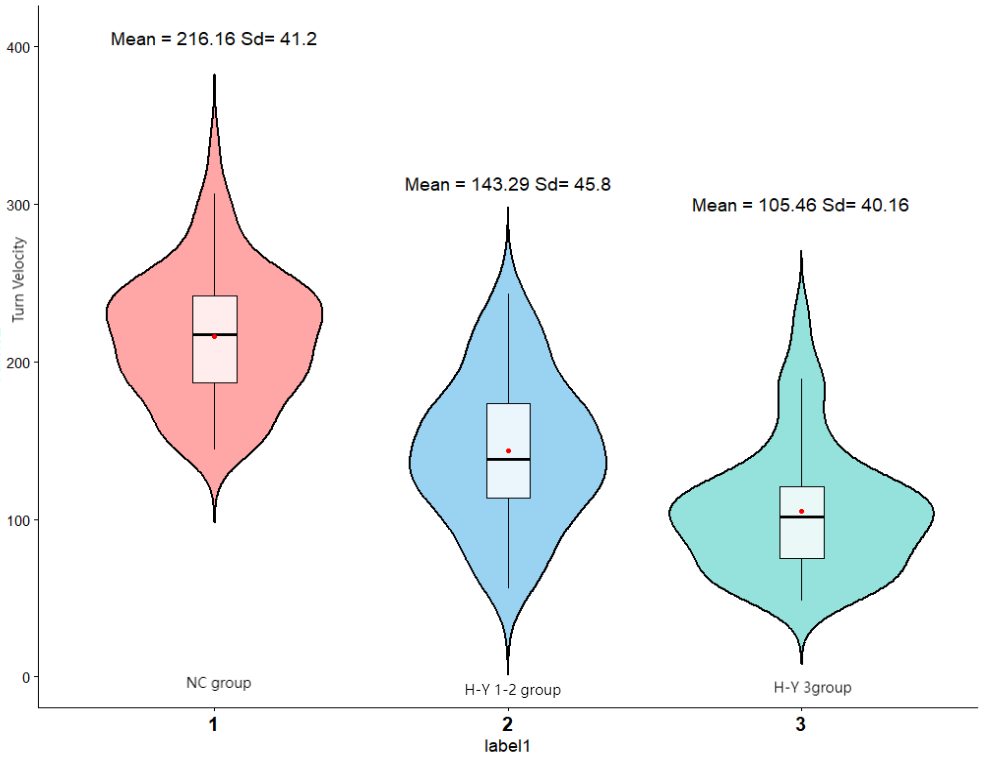
Fig 2.Comparison of Turn Velocity among groups
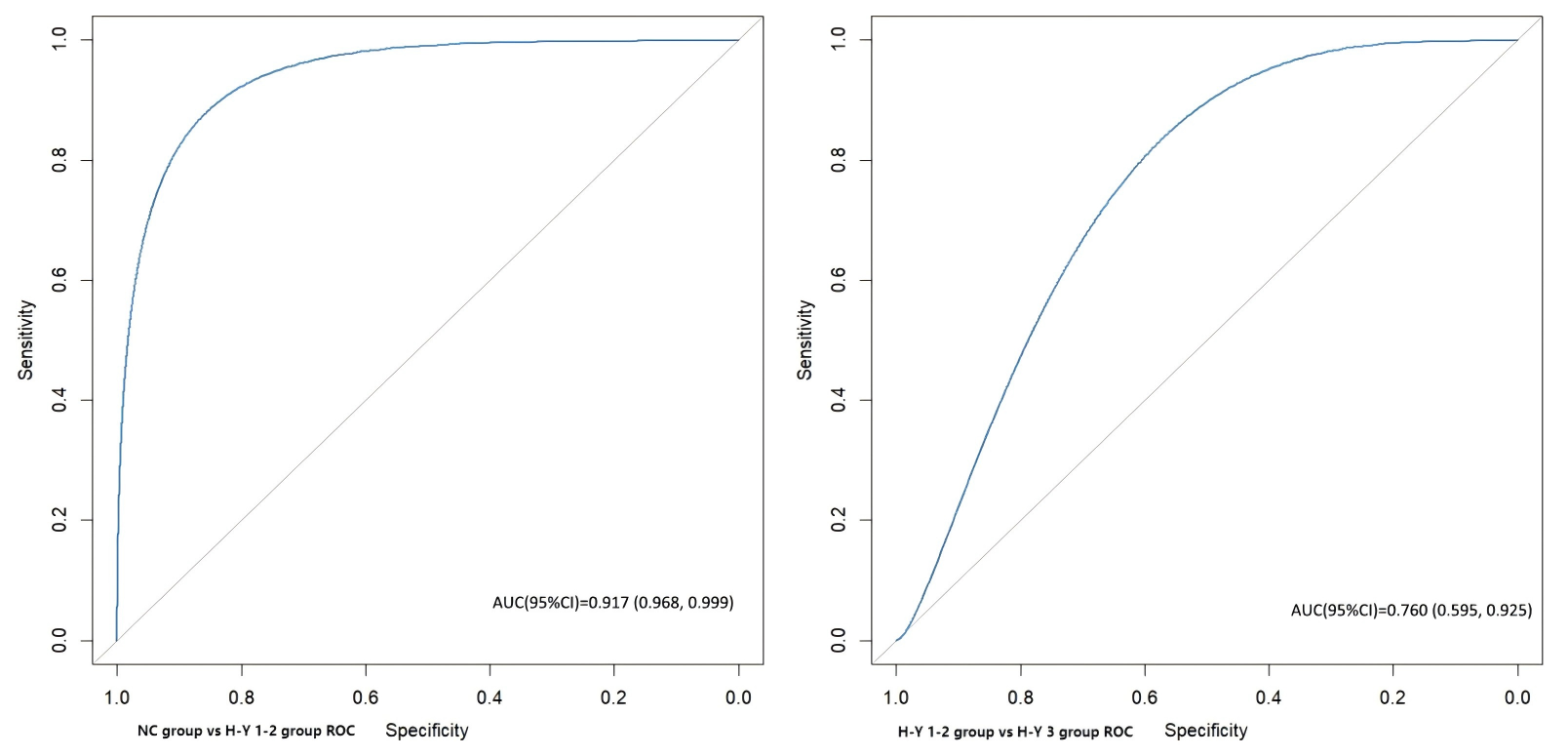
Fig 3. ROC of groups
To cite this abstract in AMA style:
P. Liu, J. Wu. Multidimensional Motor Dysfunction in Early Parkinsons Disease With Turning Velocity as a Sensitive Staging Biomarker [abstract]. Mov Disord. 2026; 41 (suppl 1). https://www.mdsabstracts.org/abstract/multidimensional-motor-dysfunction-in-early-parkinsons-disease-with-turning-velocity-as-a-sensitive-staging-biomarker/. Accessed October 1, 2026.« Back to 2026 International Congress
MDS Abstracts - https://www.mdsabstracts.org/abstract/multidimensional-motor-dysfunction-in-early-parkinsons-disease-with-turning-velocity-as-a-sensitive-staging-biomarker/