
Objective: To investigate whether olfactory function as measured by a standardized odor identification (Sniffin’ Stick) test, differs between patients with Parkinson’s disease (PD), Alzheimer’s disease (AD), idiopathic REM sleep behavior disorder (iRBD), and healthy controls (HC).
Background: As previous studies have shown, the prevalence of olfactory dysfunction increases with age and may result from various causes including neurodegenerative diseases [1]. Over recent years, the correlation between olfactory dysfunction and neurodegeneration has increasingly been recognized, often preceding clinical diagnosis by several years thus indicating its function as a prodromal marker [2]. However, a direct cross-group comparison of olfactory function in PD, AD, and iRBD remains understudied.
Method: We conducted a prospective cross-sectional analysis including a total of 339 participants across four independent groups: patients diagnosed with PD (n = 111, mean age = 64.56 ± 9.78 years), AD (n = 71, mean age = 70.83 ± 9.32 years), iRBD (n = 91, mean age = 66.39 ± 6.52 years), and HC (n = 66, mean age = 52.48 ± 17.74 years). Olfactory function was assessed using the 12-item Sniffin’ Sticks identification test (SST) with scores ranging from 0 to 12 [3]. The Kolmogorov-Smirnov test was used to assess normality of data distribution. Group differences were analysed using the Kruskal-Wallis test, followed by pairwise post-hoc comparisons using Dunn’s test with Bonferroni correction for multiple comparisons.
Results: A significant overall group difference in SST total scores was observed (p < .001). Post-hoc comparisons revealed that all three patient groups performed significantly worse than HC (all p < .001; see Fig.1). PD patients showed the greatest olfactory impairment (M = 5.31, SD ± 2.55), performing significantly worse than AD (p < .001) and iRBD (p = .016). No significant difference was found between AD and iRBD (p = .457). Further analyses will be presented at the conference.
Conclusion: Our findings suggest that olfactory dysfunction represents a relevant prodromal marker across neurodegenerative diseases. PD patients showed the most severe impairment, thus emphasizing the significance of olfactory assessment in early detection and diagnosis of PD.
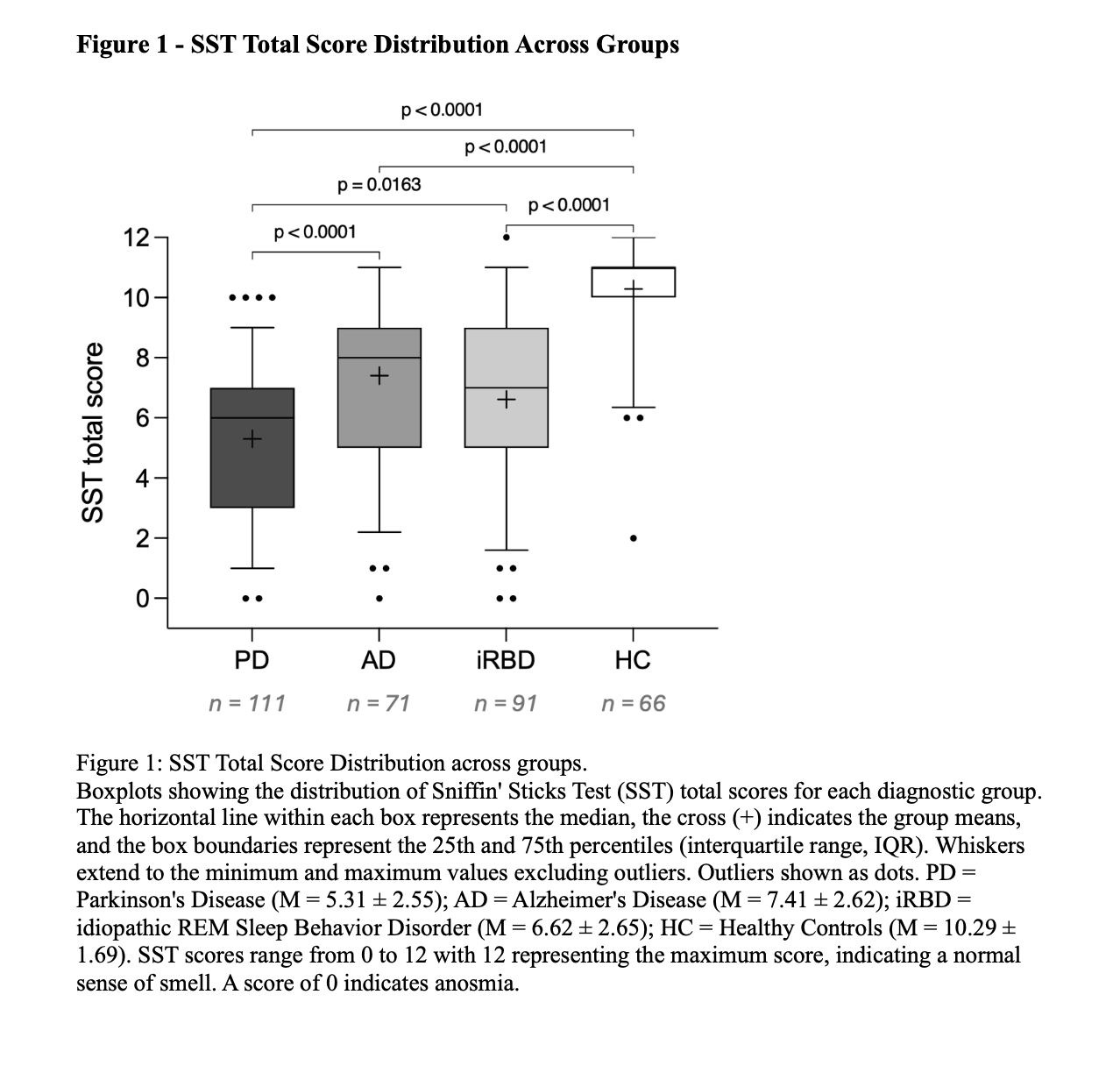
Fig. 1 SST Total Score Distribution Across Groups
References: [1] J. Mullol u. a., „Furthering the understanding of olfaction, prevalence of loss of smell and risk factors: a population-based survey (OLFACAT study)“, BMJ Open, Bd. 2, Nr. 6, S. e001256, Jan. 2012, doi: 10.1136/bmjopen-2012-001256.
[2] R. L. Doty, „Olfaction in Parkinson’s disease and related disorders“, Neurobiol. Dis., Bd. 46, Nr. 3, S. 527–552, Juni 2012, doi: 10.1016/j.nbd.2011.10.026.
[3] G. Kobal, T. Hummel, B. Sekinger, S. Barz, S. Roscher, und S. Wolf, „‚Sniffin’ sticks‘: screening of olfactory performance“, Rhinology, Bd. 34, Nr. 4, S. 222–226, Dez. 1996.
To cite this abstract in AMA style:
J. Einhaus, E. Kara, H. Jergas, C. Schedlich-Teufer, G. Tamgüney, G. Fink, M. Sommerauer, ö. Onur, M. Barbe. Olfactory Dysfunction Across Neurodegenerative Disorders: A Prospective Cross-Sectional Comparison of Parkinson’s Disease, Alzheimer’s Disease and Idiopathic REM Sleep Behavior Disorder [abstract]. Mov Disord. 2026; 41 (suppl 1). https://www.mdsabstracts.org/abstract/olfactory-dysfunction-across-neurodegenerative-disorders-a-prospective-cross-sectional-comparison-of-parkinsons-disease-alzheimers-disease-and-idiopathic-rem-sleep-behavior-disorder/. Accessed October 1, 2026.« Back to 2026 International Congress
MDS Abstracts - https://www.mdsabstracts.org/abstract/olfactory-dysfunction-across-neurodegenerative-disorders-a-prospective-cross-sectional-comparison-of-parkinsons-disease-alzheimers-disease-and-idiopathic-rem-sleep-behavior-disorder/