
Category: Parkinson's disease: Neuroimaging
Objective: This study aimed to characterize Structural–functional coupling (SFC) reorganization in Parkinson’s disease (PD), examine its associations with motor and cognitive performance, and assess whether baseline SFC predicts longitudinal disease progression.
Background: PD shows marked heterogeneity in motor and cognitive symptoms, complicating prognosis and individualized management. SFC, which quantifies the correspondence between structural and functional connectivity, may provide key insights into the neural mechanisms underlying this heterogeneity.
Method: Participants were recruited from Guangdong Provincial People’s Hospital (GDPH) and the PPMI cohort. Regional SFC was calculated by predicting functional connectivity from structural connectivity–associated networks using multilinear regression. Motor severity was assessed with the Unified Parkinson’s Disease Rating Scale Part III (UPDRS III), cognition with the Montreal Cognitive Assessment (MoCA) and subdomain tests, and longitudinal outcomes with linear mixed-effects models.
Results: Compared with HCs, PD patients showed increased SFC in 44 brain regions (Fig.1). Higher SFC in left cerebellar lobule X, vermis IV-XIII, right hippocampus, and left posterior cingulate gyrus was associated with lower UPDRS III scores (Fig.2). Greater SFC in the default mode, cerebellar, and subcortical networks was positively associated with MoCA scores (Fig.3). Baseline SFC in cerebellar subregions predicted 5-year cognitive decline (Fig.4).
Conclusion: SFC reconfiguration in PD reflects association with clinical symptoms severity and progression, providing a novel framework to explain symptom heterogeneity and progression differences. SFC may serve as a clinically relevant biomarker for identifying patients with greater adaptive capacity, monitoring disease course, and guiding personalized interventions.
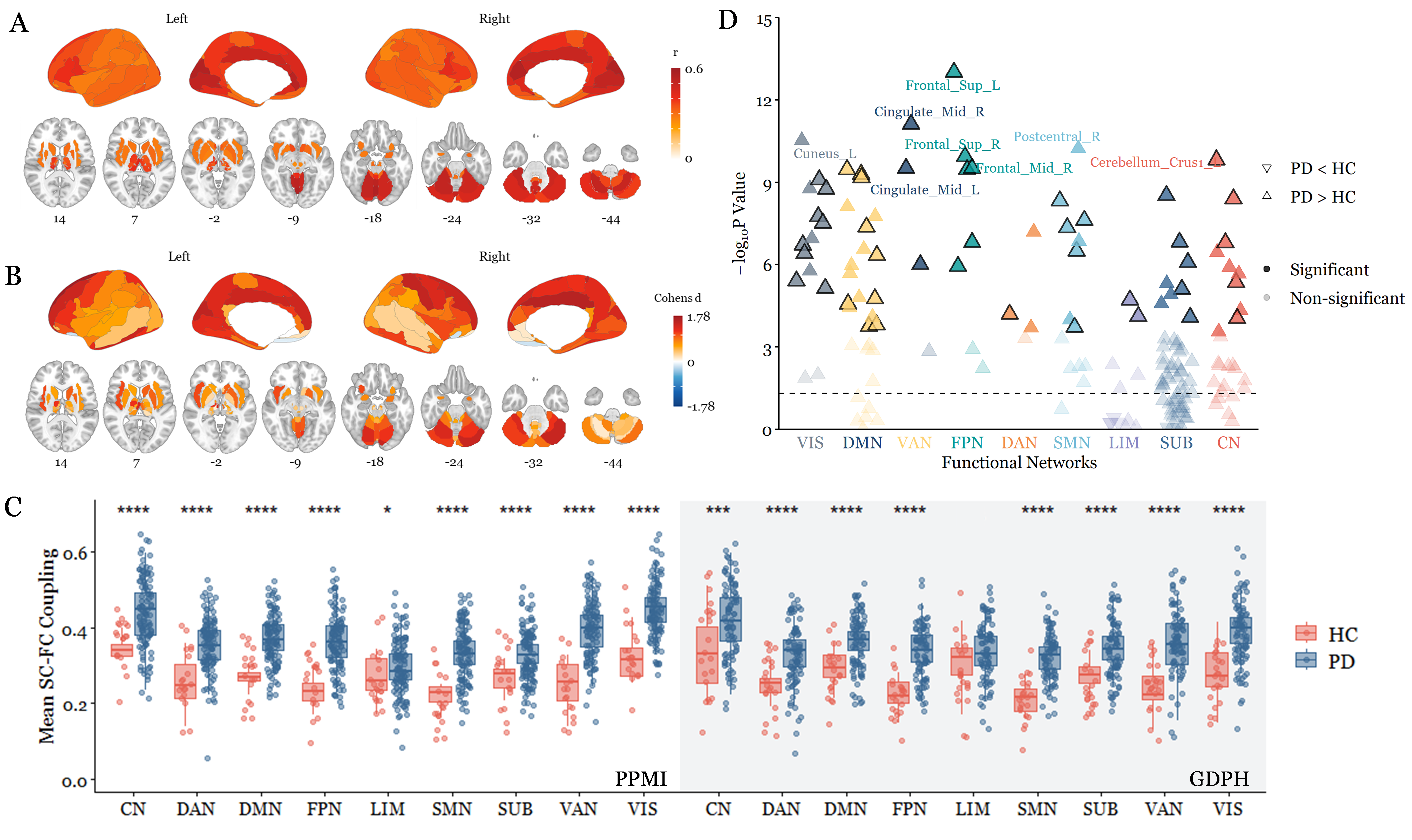
Figure 1
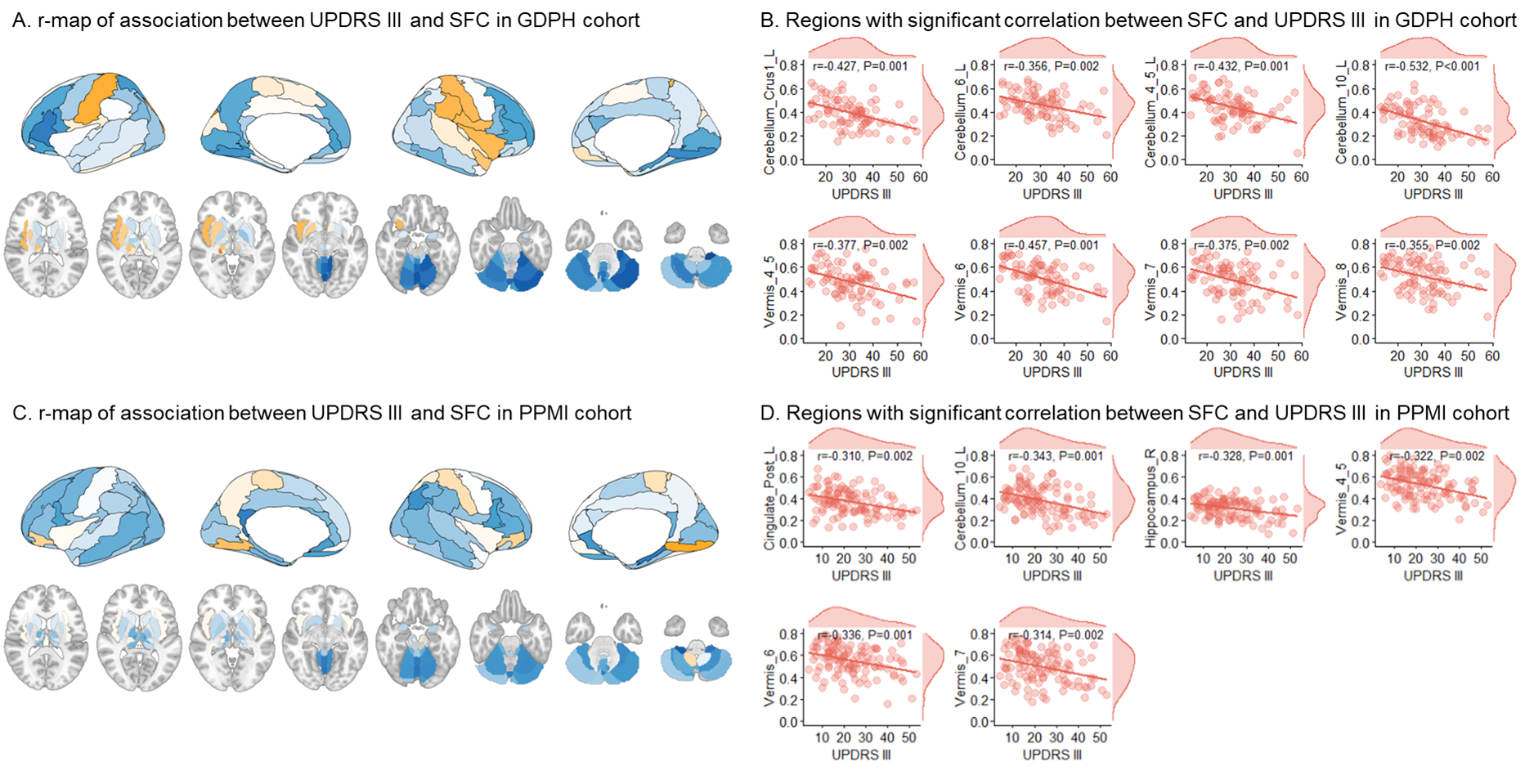
Figure 2
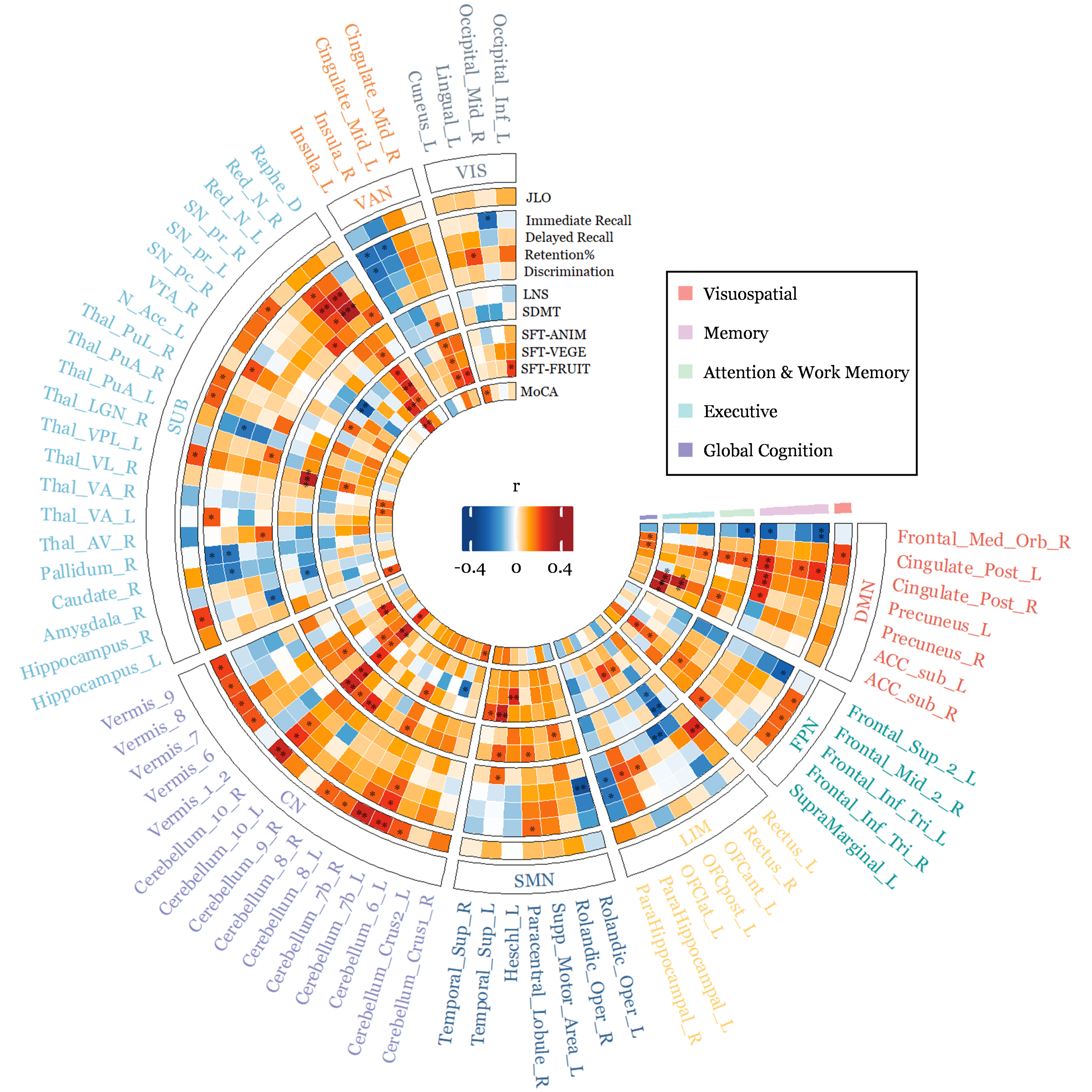
Figure 3
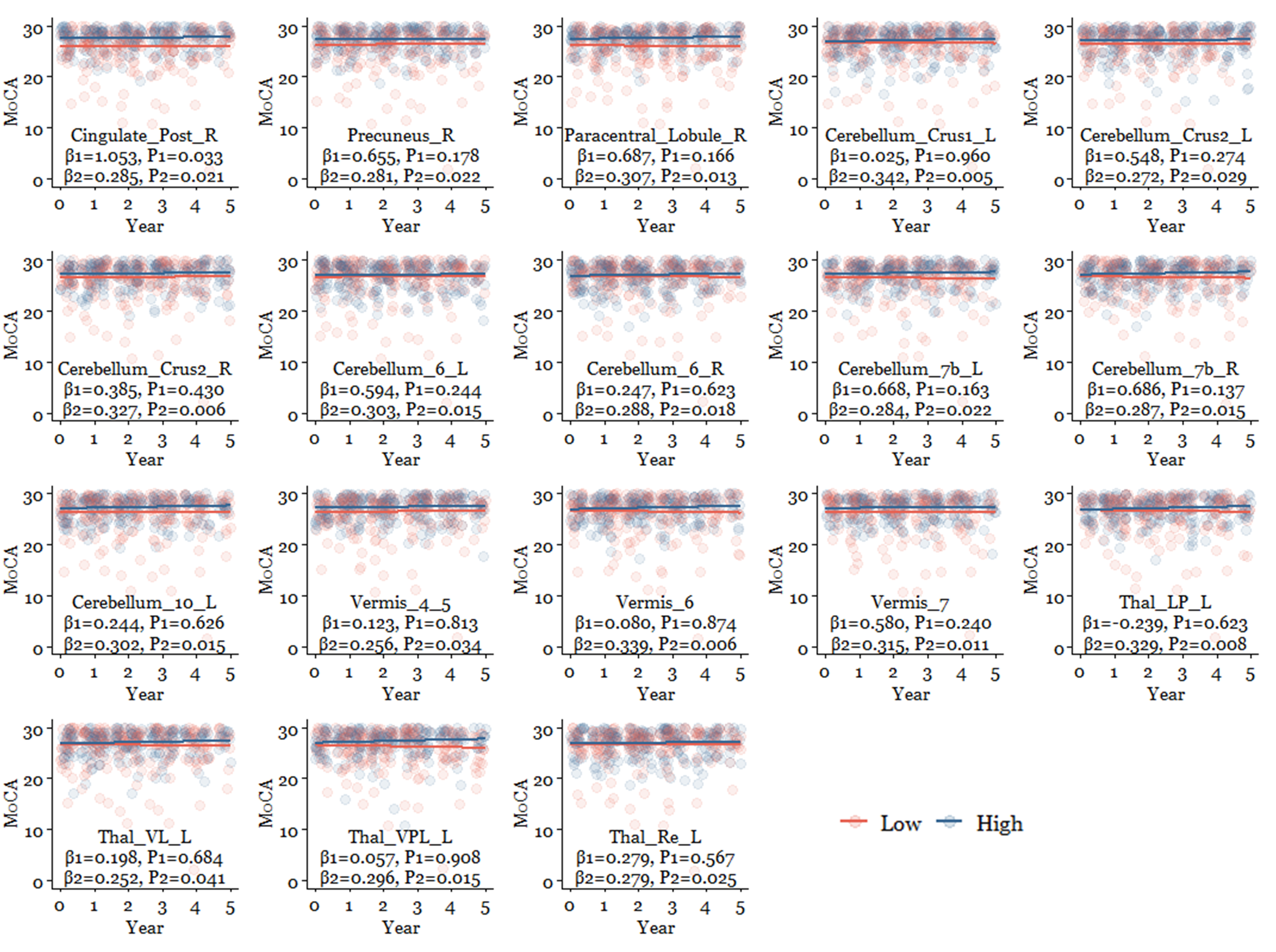
Figure 4
To cite this abstract in AMA style:
Y. Li, P. He, L. Wang, K. Nie. Reconfiguration of Structural-Functional Coupling Associated with Clinical Features and 5-Year Progression in Parkinson’s Disease: A Cross-sectional and Longitudinal Study [abstract]. Mov Disord. 2026; 41 (suppl 1). https://www.mdsabstracts.org/abstract/reconfiguration-of-structural-functional-coupling-associated-with-clinical-features-and-5-year-progression-in-parkinsons-disease-a-cross-sectional-and-longitudinal-study/. Accessed October 1, 2026.« Back to 2026 International Congress
MDS Abstracts - https://www.mdsabstracts.org/abstract/reconfiguration-of-structural-functional-coupling-associated-with-clinical-features-and-5-year-progression-in-parkinsons-disease-a-cross-sectional-and-longitudinal-study/