
Objective: To evaluate the relationships between serum neurofilament light chain (NfL), homocysteine (Hcy), glycated hemoglobin (HbA1c), folic acid, and vitamin B12, and their impact on clinical symptom severity in adolescents co-diagnosed with dystonia and type 1 diabetes mellitus (T1DM).
Background: Dystonia and T1DM share complex neuroinflammatory and metabolic disruptions. While NfL indicates neuronal damage, and Hcy, vitamin B12, and folic acid are crucial for neurologic health, their combined metabolic influence on motor and non-motor outcomes in this pediatric demographic remains unclear.
Method: This cross-sectional analysis evaluated 124 adolescent patients (aged 18 years and under) presenting with both T1DM and dystonia. Exclusion criteria comprised an illness duration exceeding 14 days and any previous administration of steroid therapy or B-vitamin (B12 or folic acid) supplementation. Serum concentrations of Hcy, HbA1c, vitamin B12, and folic acid were quantified via electrochemiluminescence immunoassays, whereas NfL levels were analyzed using single-molecule array (Simoa) technology. Clinical severity was scored employing the Unified Dystonia Rating Scale (UDRS) and the Global Dystonia Rating Scale (GDRS). Data correlations were assessed using Spearman’s rank methodology.
Results: Compared to healthy cohorts, the dystonia group demonstrated significantly higher concentrations of serum NfL and Hcy (p=0.005), which corresponded with intensified motor deficits. Patients undergoing polytherapy exhibited a biochemical profile of elevated Hcy and HbA1c alongside depleted folic acid relative to monotherapy cohorts. Treatment variations involving specific dopamine antagonists (tiapride or risperidone) yielded no significant biomarker disparities. A positive correlation was identified between disease duration and levels of NfL, Hcy, and HbA1c, whereas folic acid demonstrated an inverse relationship. Among non-motor symptoms, cognitive impairment was dominant (64.5%), with rigidity notably absent. Furthermore, escalations in HbA1c and Hcy were significantly tied to worsening non-motor clinical features.
Conclusion: In the context of adolescent T1DM with dystonia, neurodegenerative and metabolic markers (elevated NfL, Hcy, HbA1c) coupled with nutritional deficits (low vitamin B12 and folic acid) serve as strong indicators of exacerbated disease severity.
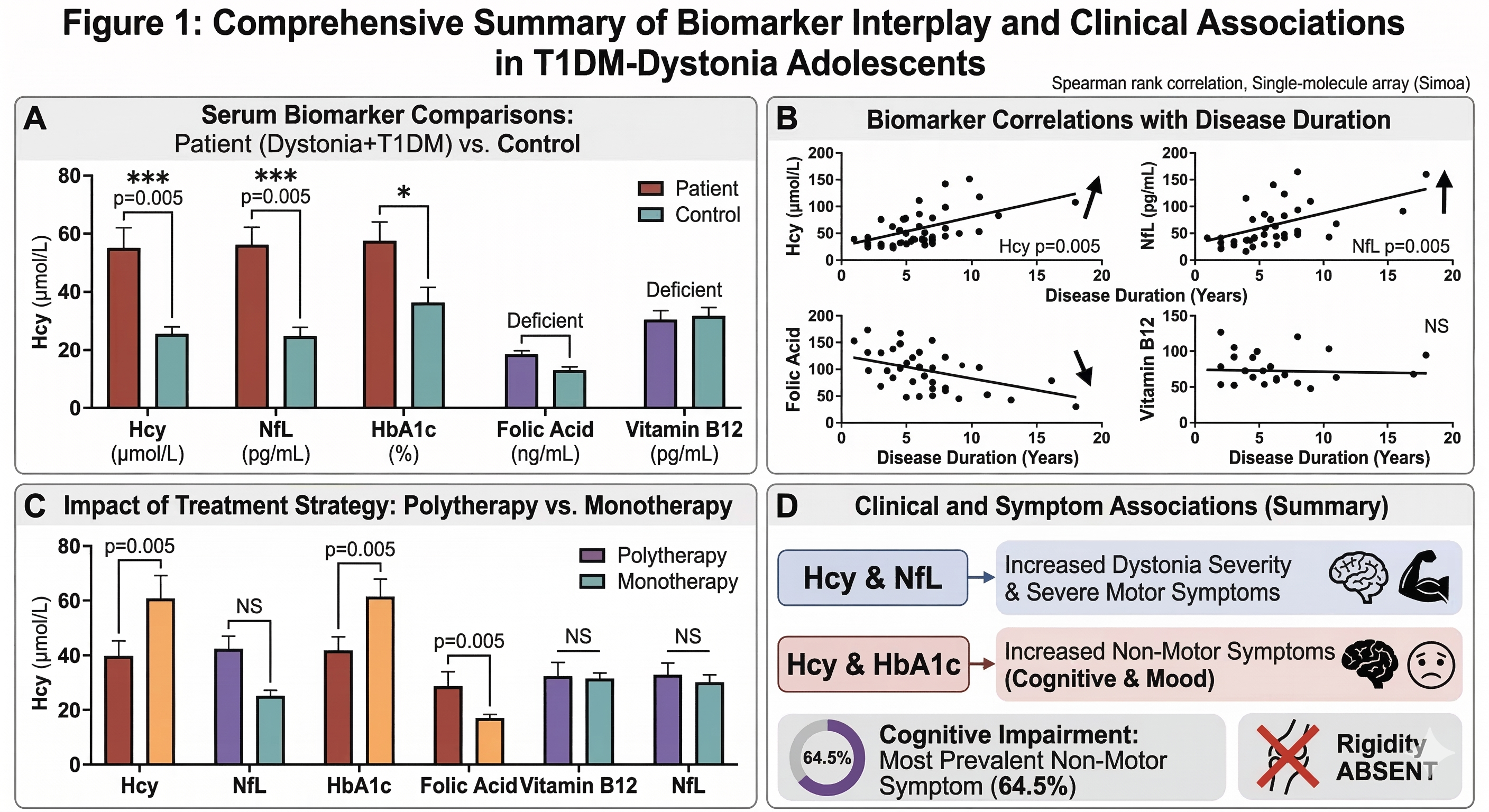
Biomarker in T1DM-Dystonia Patients
To cite this abstract in AMA style:
A. Kumar, P. Mishra. Serum Biomarker Profiles in Adolescents with Type 1 Diabetes-Associated Dystonia: The Role of Neurofilament Light Chain and Metabolic Indices [abstract]. Mov Disord. 2026; 41 (suppl 1). https://www.mdsabstracts.org/abstract/serum-biomarker-profiles-in-adolescents-with-type-1-diabetes-associated-dystonia-the-role-of-neurofilament-light-chain-and-metabolic-indices/. Accessed October 1, 2026.« Back to 2026 International Congress
MDS Abstracts - https://www.mdsabstracts.org/abstract/serum-biomarker-profiles-in-adolescents-with-type-1-diabetes-associated-dystonia-the-role-of-neurofilament-light-chain-and-metabolic-indices/