
Category: Ataxia
Objective: To report a rare coexistence of normal pressure hydrocephalus (NPH) in a patient with genetically confirmed spinocerebellar ataxia (SCA) type 12 and present a structured literature review on the overlap between NPH and neurodegenerative disorders
Background: NPH is a potentially reversible cause of gait impairment, cognitive decline, and urinary dysfunction. Increasing evidence suggests that neurodegenerative diseases may coexist with NPH, complicating diagnosis and treatment decisions. Overlap has been reported with conditions such as Alzheimer’s disease, Parkinson’s disease, and other synucleinopathies and tauopathies, but coexistence with hereditary SCAs is extremely rare
Method: We describe a 63-year-old man with genetically confirmed SCA type 12 (CAG repeat 59) diagnosed at age 58 who presented with progressive gait worsening and urinary symptoms for two years, recurrent falls for one year, and recent cognitive decline. Examination showed cerebellar dysarthria, axial and appendicular ataxia (SARA 25), bradykinesia, hyperreflexia, and executive dysfunction (MMSE 23). Brain MRI demonstrated ventriculomegaly disproportionate to cortical atrophy (Figure 1). A cerebrospinal fluid (CSF) tap test with standardized gait assessment was performed.A literature review using predefined keywords for NPH and neurodegenerative disorders identified 78 records in PubMed, 566 in Embase, and 662 in Scopus. After duplicate removal and screening, 22 studies published between 1986 and 2026 were included
Results: In our patient, CSF removal resulted in objective gait improvement (shown in Figure 2) and he subsequently underwent programmable ventriculoperitoneal shunt placement, with sustained improvement in gait and urinary symptoms at 2-year follow-up. Literature review demonstrated multiple reports of NPH coexisting with neurodegenerative disorders, with preserved gait responsiveness to CSF diversion in many cases (Table 1).
Conclusion: Symptomatically treatable CSF dynamic disorders such as NPH may coexist with neurodegenerative diseases, including hereditary ataxias. Recognising this overlap is crucial because targeted evaluation with CSF tap testing may identify patients who benefit from CSF diversion surgery as symptomatic therapy despite underlying neurodegeneration.
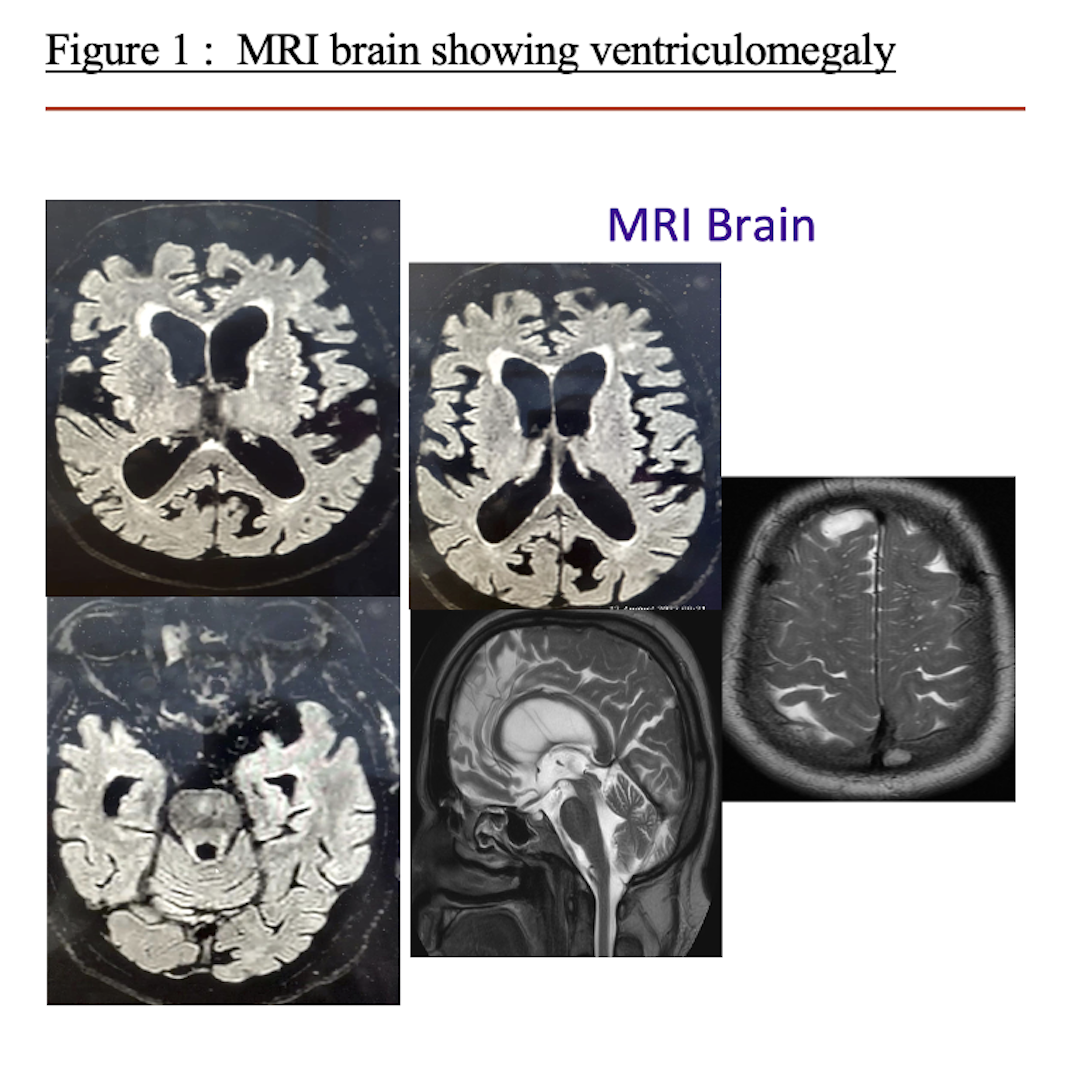
Figure 1 : MRI brain showing ventriculomegaly
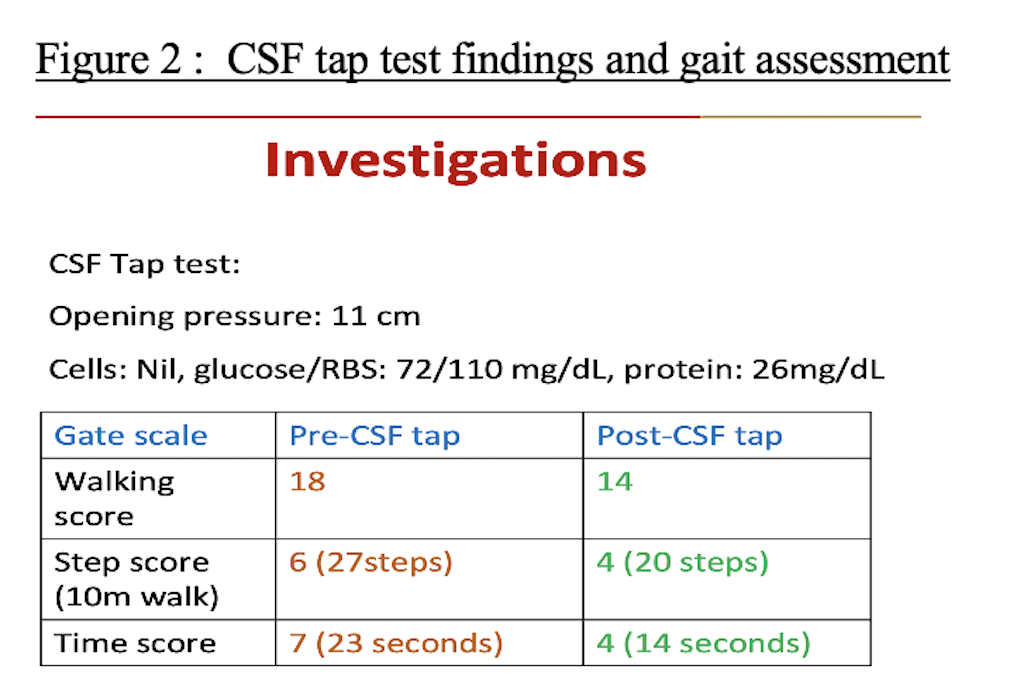
Figure 2: CSF Tap test findings
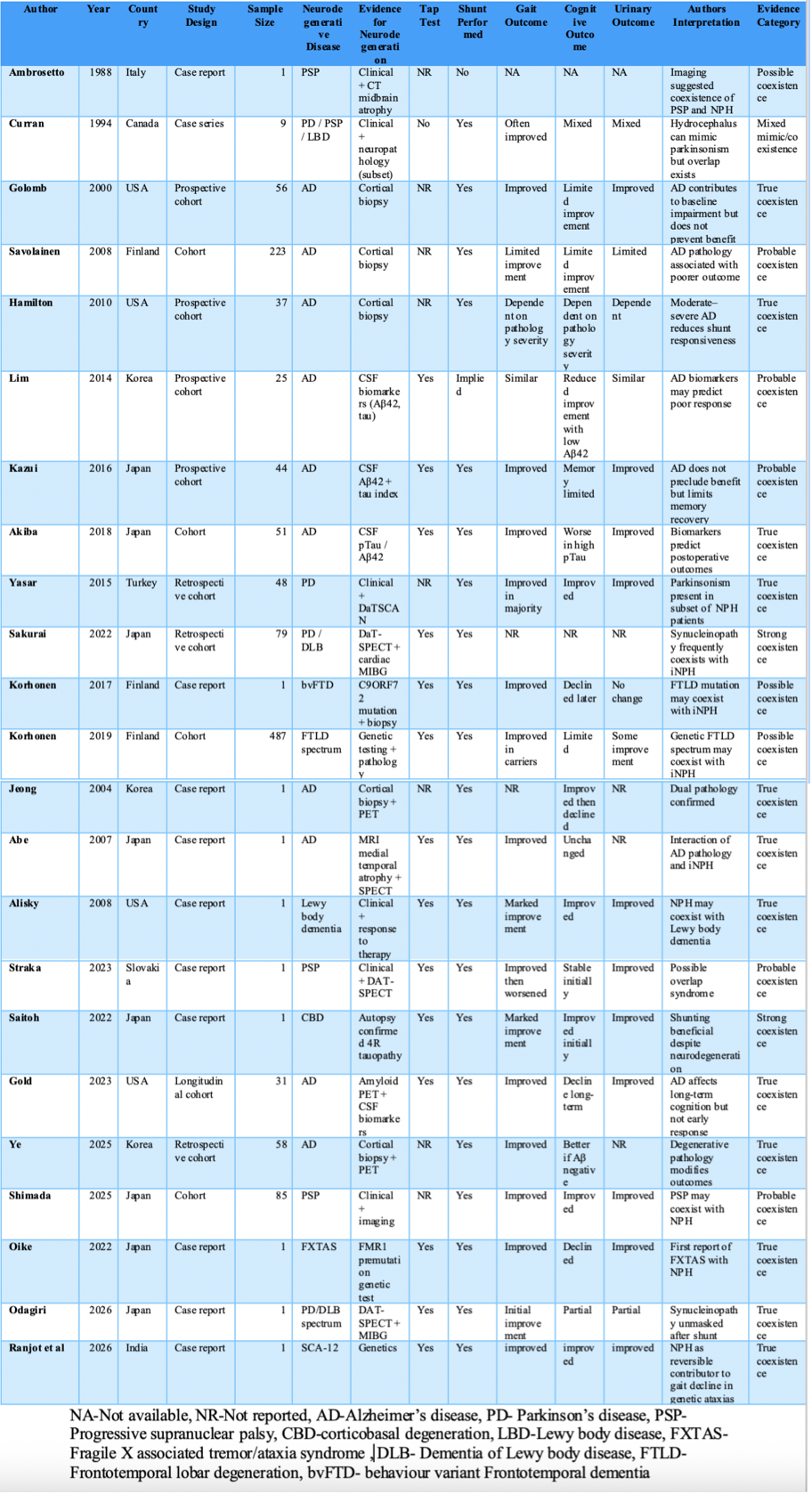
Table 1: Literature Review
References: Oike R, et al. Idiopathic normal pressure hydrocephalus associated with neurodegenerative disorders. Clin Neurol Neurosurg. 2022;218:107303.
Saitoh Y, et al. Pathologically verified corticobasal degeneration mimicking Richardson’s syndrome coexisting with clinically and radiologically shunt-responsive normal pressure hydrocephalus. Mov Disord Clin Pract. 2022;9(3):404-407.
Hwang I, et al. Idiopathic normal pressure hydrocephalus associated with neurodegenerative disorders: a clinical study. Dement Neurocogn Disord. 2016;15(3):83-88.
To cite this abstract in AMA style:
R. Kaur, B. Prajapati, R. Sharma, A. Srivastava, D. Radhakrishnan. Shunt‑Responsive Normal Pressure Hydrocephalus in Spinocerebellar Ataxia Type 12: A Case Illustrating Treatable Neurodegenerative Overlap [abstract]. Mov Disord. 2026; 41 (suppl 1). https://www.mdsabstracts.org/abstract/shunt-responsive-normal-pressure-hydrocephalus-in-spinocerebellar-ataxia-type-12-a-case-illustrating-treatable-neurodegenerative-overlap/. Accessed October 1, 2026.« Back to 2026 International Congress
MDS Abstracts - https://www.mdsabstracts.org/abstract/shunt-responsive-normal-pressure-hydrocephalus-in-spinocerebellar-ataxia-type-12-a-case-illustrating-treatable-neurodegenerative-overlap/