
Objective: To investigate whether microcirculatory impairment-induced hypoxia contributes to the emergence of a late-stage disease-associated microglia (DAM) phenotype and impaired α-synuclein clearance in Parkinson’s disease (PD).
Background: Microglial engulfment of pathological α-synuclein is an early event in PD, but the mechanisms underlying their subsequent dysfunction and contribution to neurodegeneration remain unclear. Given the age-related microvascular decline in PD brains, we hypothesize that localized hypoxia resulting from microcirculatory impairment may alter microglial function and metabolic state.
Method: We analyzed midbrain public scRNA-seq data GSE157783 from controls and PD patients via GSEA, sub-clustering, and Monocle pseudotime. Bioinformatics predictions were validated in vivo in 9-month-old A53T mice by immunofluorescence for microcirculation and microglial pathology, and in vitro using BV2 cells challenged with hypoxia and α-synuclein pre-formed fibrils (PFFs).
Results: Our scRNA-seq analysis showed concurrent upregulation of hypoxia and inflammatory pathways in PD microglia [Figure 1]. Specifically, HIF1A and its downstream glycolytic targets were enriched in the expanded DAM (APOE+, SPP1+) subset [Figure 2], with pseudotime analysis showing progressive upregulation of HIF1A along the disease trajectory [Figure 3]. In vivo, 9-month-old A53T mice showed reduced microvascular density (CD31⁺) in the substantia nigra, consistent with microcirculatory impairment. Concurrently, IBA1⁺ microglia in these mice showed HIF-1α accumulation and contained ThioS⁺/α-Syn⁺ amyloid inclusions, suggestive of impaired α-synuclein clearance. Furthermore, in vitro, hypoxia exacerbated the intracellular accumulation of internalized α-synuclein PFFs in BV2 cells, suggesting impaired degradation.
Conclusion: Our findings suggest that microcirculatory impairment-induced hypoxia contributes to microglial dysfunction in PD, linking HIF-1α stabilization to glycolytic reprogramming, DAM polarization, and impaired α-synuclein clearance. Targeting this hypoxia-HIF-1α axis may represent a potential therapeutic strategy.
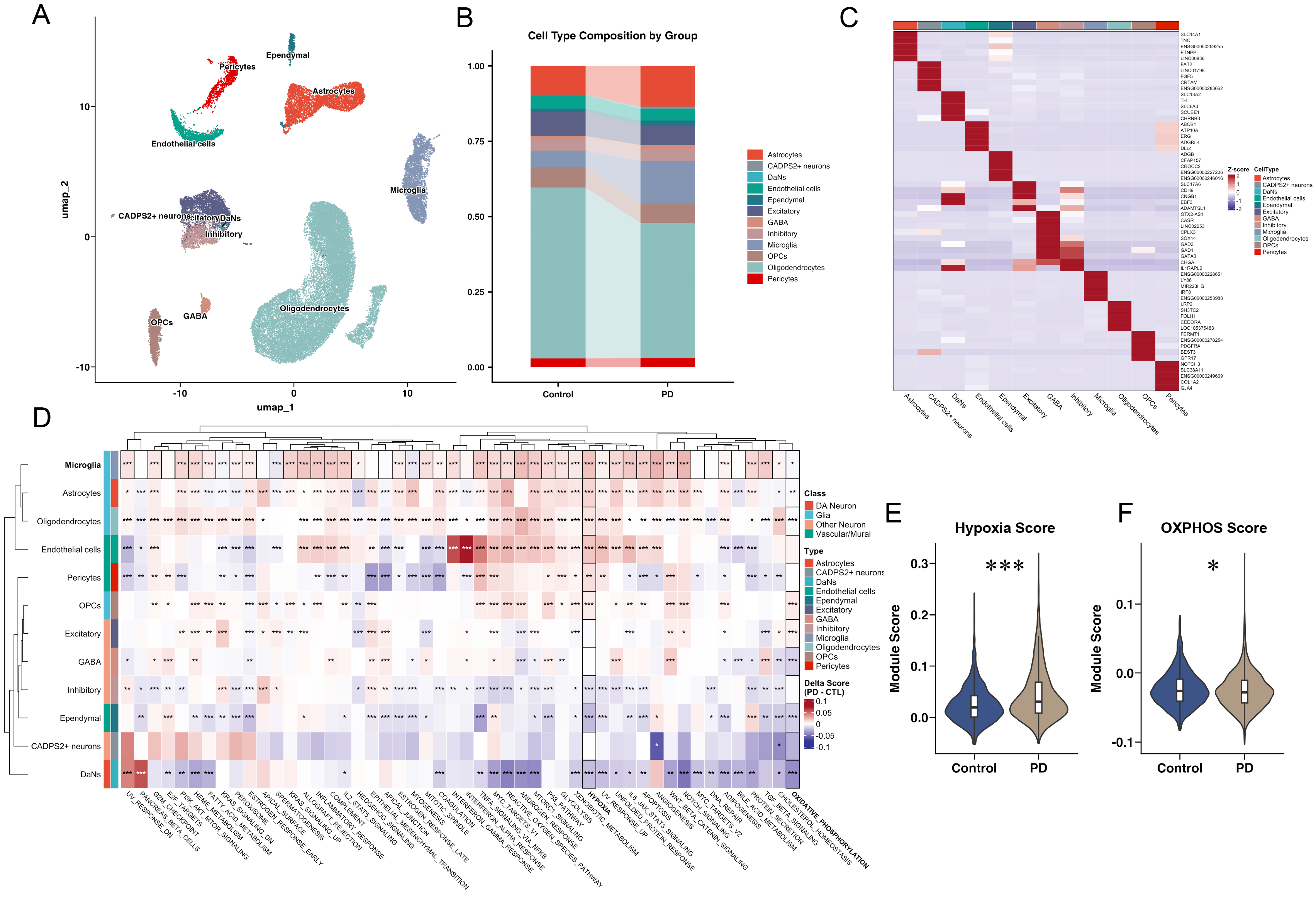
scRNA-seq: hypoxic & metabolic shifts in PD MG
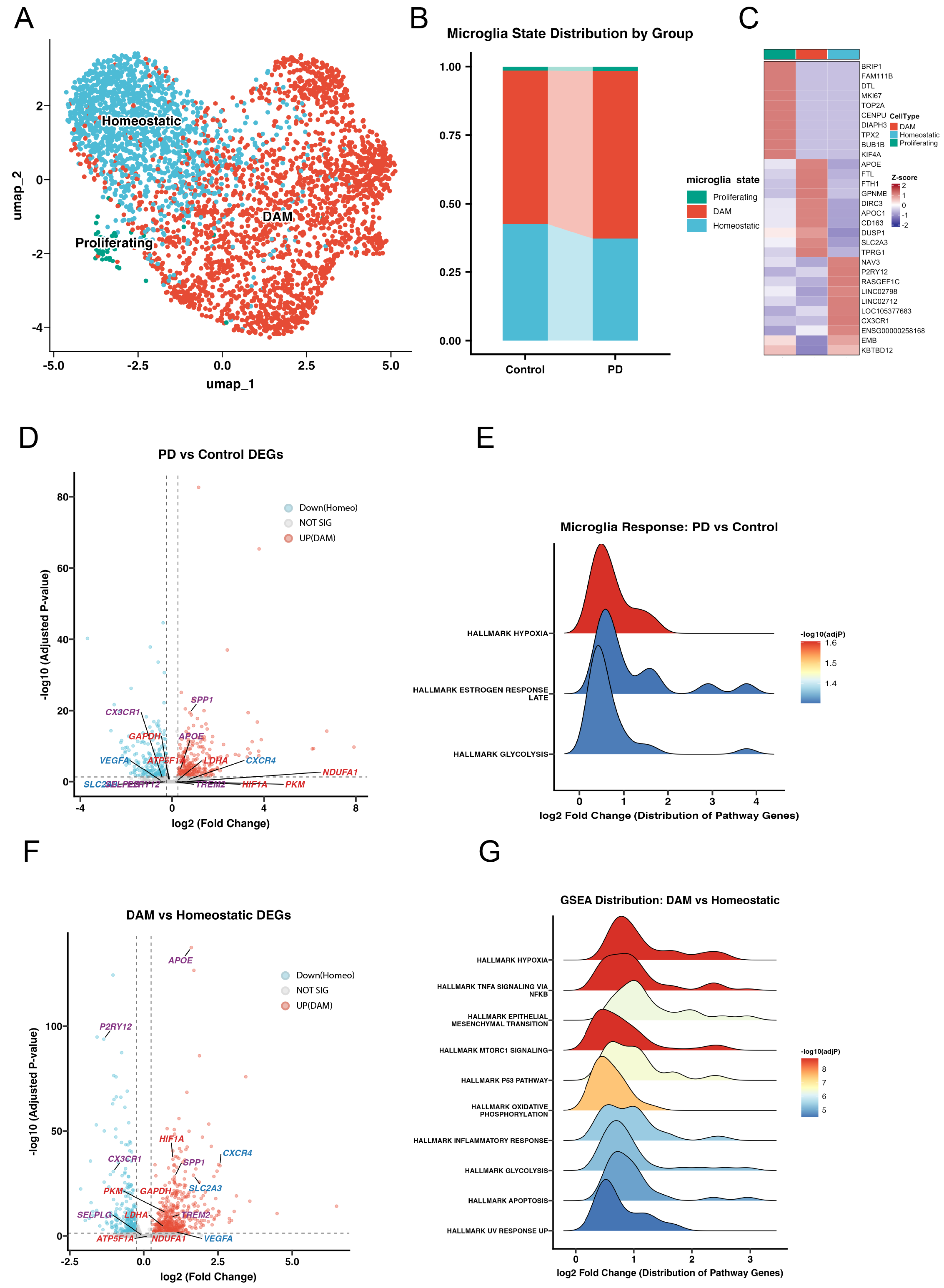
Hypoxic/glycolytic reprogramming enriched in DAM
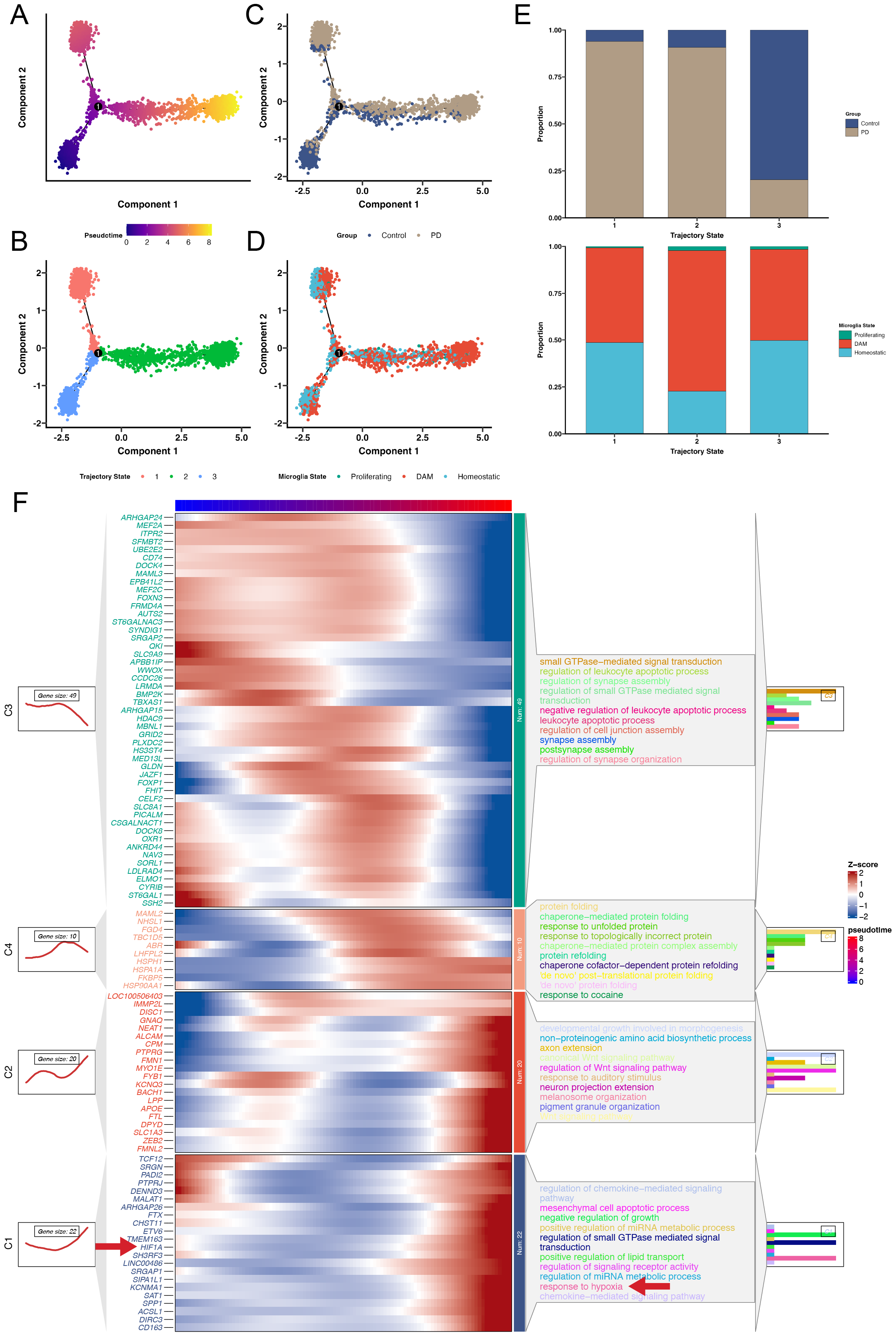
Hypoxia drives late-stage microglial polarization
To cite this abstract in AMA style:
H. Wang, Z. Zhu, Z. Yin, K. Zhang. Single-Cell Transcriptomics and Experimental Models Implicate Functional Hypoxia in Microglial DAM Polarization and α-Synuclein Accumulation, with Involvement of HIF-1α, in Parkinson’s Disease [abstract]. Mov Disord. 2026; 41 (suppl 1). https://www.mdsabstracts.org/abstract/single-cell-transcriptomics-and-experimental-models-implicate-functional-hypoxia-in-microglial-dam-polarization-and-%ce%b1-synuclein-accumulation-with-involvement-of-hif-1%ce%b1-in-parkinsons-dise/. Accessed October 1, 2026.« Back to 2026 International Congress
MDS Abstracts - https://www.mdsabstracts.org/abstract/single-cell-transcriptomics-and-experimental-models-implicate-functional-hypoxia-in-microglial-dam-polarization-and-%ce%b1-synuclein-accumulation-with-involvement-of-hif-1%ce%b1-in-parkinsons-dise/