
Category: Parkinson's Disease: Surgical Therapy
Objective: To understand the impact of demographic factors on skull density ratio (SDR) in Hawai‘i patients.
Background: SDR is a validated indicator of the ability of ultrasound energy to pass through a skull. In magnetic resonance-guided focused ultrasound (MRgFUS) thalamotomy, high SDRs are associated with lower energy requirements for achieving a therapeutic temperature. A correlation between SDR and sex was noted in a Korean cohort, and a correlation between SDR and age in females was noted in a Latin American cohort. An assumption that Asians have lower SDRs than Western populations is often cited. However, we were unable to find documentation of this being tested. Hawai‘i’s diverse population provides an opportunity to compare SDRs of different racial and ethnic groups in a single cohort.
Method: We reviewed medical records of Hawai‘i patients evaluated for MRgFUS thalamotomy for essential tremor and Parkinson’s disease between 2023 and 2025. We collected sex, race/ethnicity, SDR, age at SDR measurement, and BMI at SDR measurement. A linear regression model was created in MATLAB R2025b. Two-sided t-tests were used to test the significance of factors on SDR.
Results: Of 131 patients, the average age was 72. 65.7% were male, 61.1% identified as White, 1.5% as Black, 26.0% as Asian, 2.2% as Native American/Alaskan, 19.1% as Native Hawaiian/Pacific Islander (NHPI), and 7.6% as Hispanic/Latino.
SDR values were consistent with a normal distribution (Shapiro-Wilk test p=0.608, mean=0.486, σ=0.105). 83.2% of patients had SDRs eligible for MRgFUS thalamotomy (≥0.4).
There was no correlation between SDR and age (p=0.124), sex (p=0.946), or BMI (p=0.606). The six race/ethnicity variables combined showed correlation with SDR (p=0.00562), though individually, only the Native American/Alaskan (n=3) indicator variable was significant at the 5% level. A combined nine-variable linear model has an R-squared value of 0.153.
Conclusion: The predictive power of our linear model is limited – only explaining 15.3% of the variation in SDR. In contrast to previous work, we did not see correlation between sex and SDR or between SDR and age in females (p=0.658). Race/ethnicity appears to be correlated with SDR, but our data did not support the SDRs of Asian populations being significantly lower than non-Asians’. Our study is small (n=131) – more studies are needed to corroborate or refute these findings and identify other factors that may impact SDR.
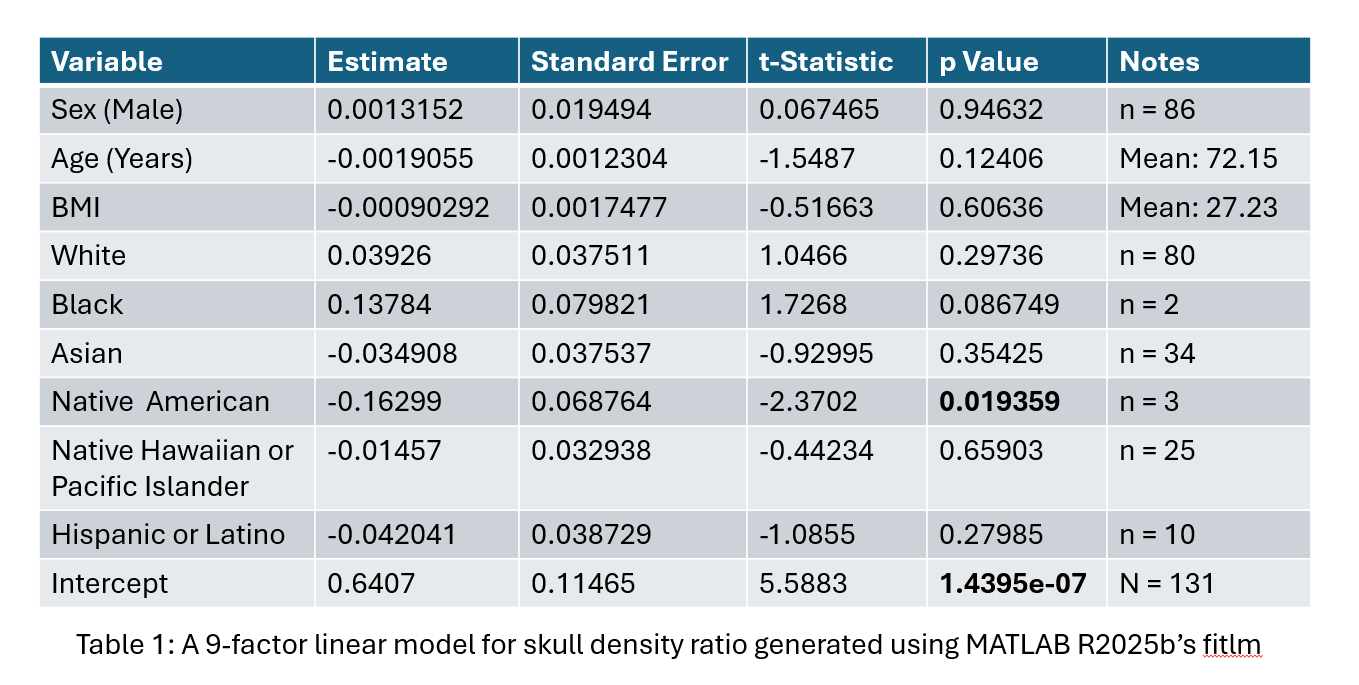
Table 1: A 9-factor linear model for SDR
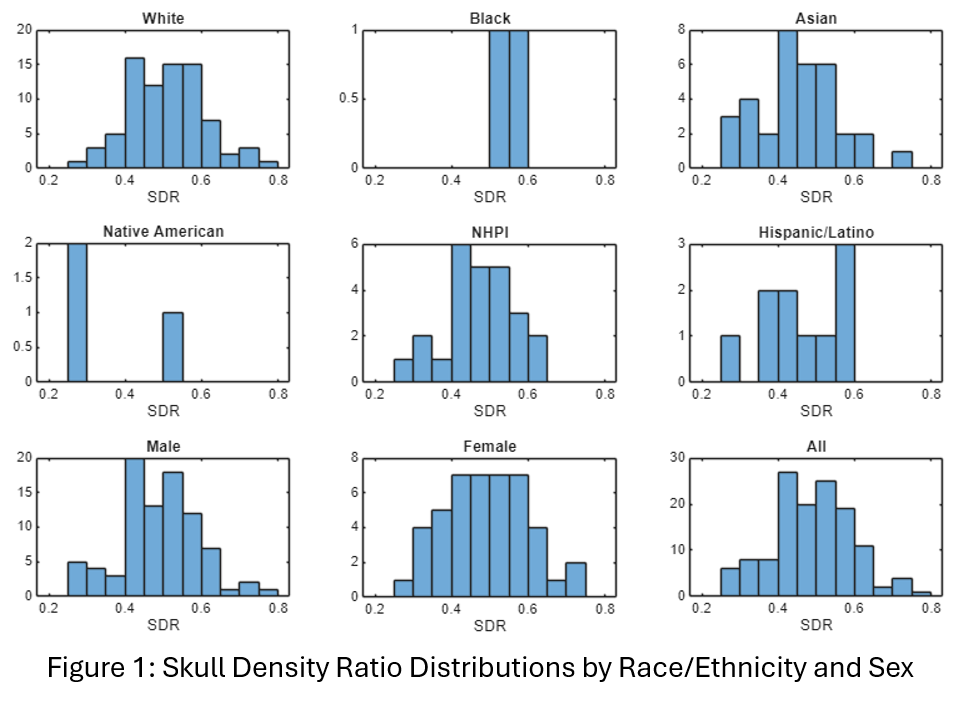
Figure 1: SDR Distributions by demographic factors
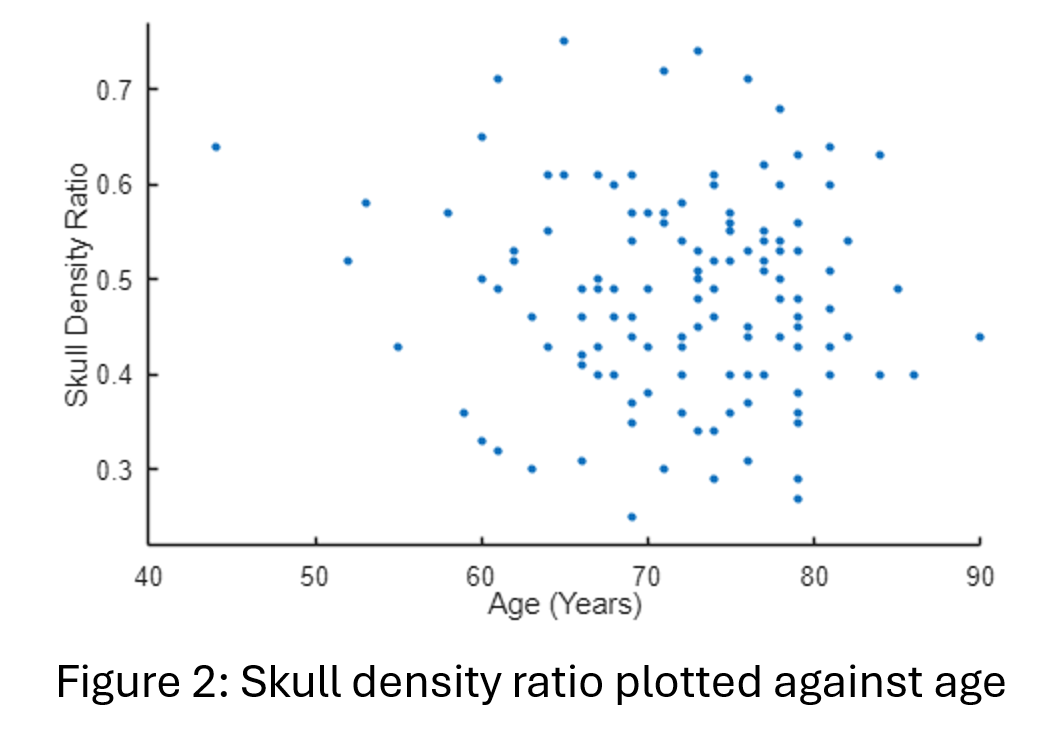
Figure 2: SDR plotted against age
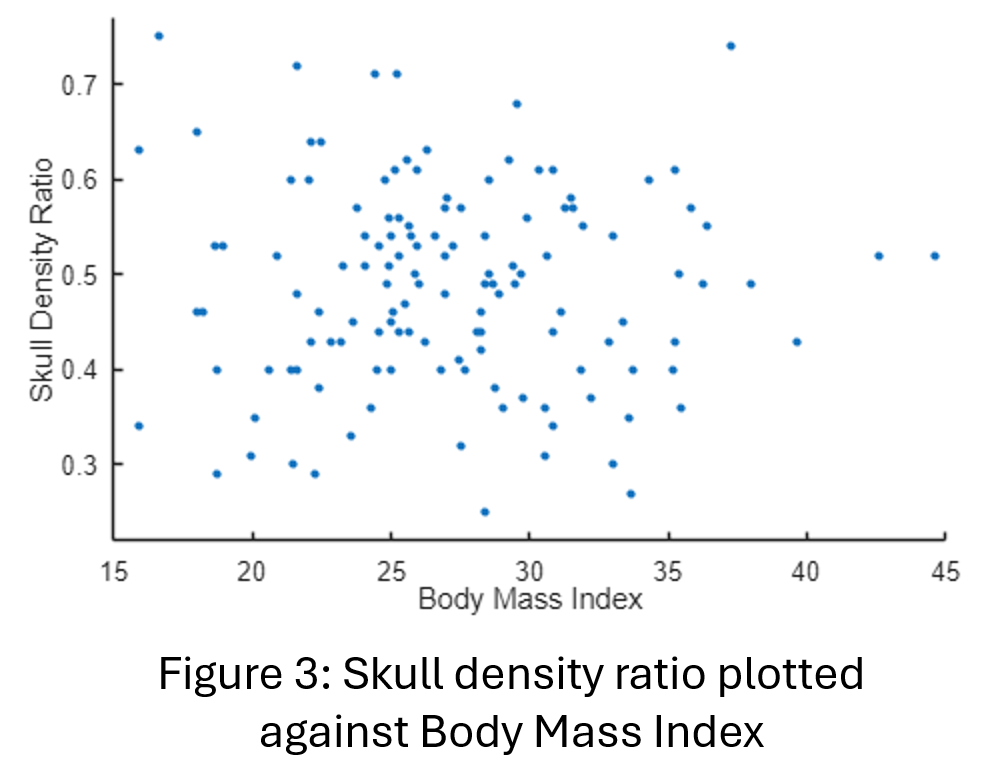
Figure 3: SDR plotted against Body Mass Index
References: 1. Ng PR, Blitz SE, Chua MMJ, Cosgrove GR. Magnetic resonance-guided focused ultrasound thalamotomy for essential tremor patients with low skull density ratio: a case-matched analysis. Front Neurol. 2024 Apr 22;15:1370574. doi: 10.3389/fneur.2024.1370574. PMID: 38711556; PMCID: PMC11071343.
2. Chang KW, Park YS, Chang JW. Skull Factors Affecting Outcomes of Magnetic Resonance-Guided Focused Ultrasound for Patients with Essential Tremor. Yonsei Med J. 2019 Aug;60(8):768-773. doi: 10.3349/ymj.2019.60.8.768. PMID: 31347332; PMCID: PMC6660436.
3. Boutet A, Gwun D, Gramer R, Ranjan M, Elias GJB, Tilden D, Huang Y, Li SX, Davidson B, Lu H, Tyrrell P, Jones RM, Fasano A, Hynynen K, Kucharczyk W, Schwartz ML, Lozano AM. The relevance of skull density ratio in selecting candidates for transcranial MR-guided focused ultrasound. J Neurosurg. 2019 May 3;132(6):1785-1791. doi: 10.3171/2019.2.JNS182571. PMID: 31051458.
4. Pineda-Pardo JA, Martínez-Fernández R, Natera-Villalba E, Ruiz-Yanzi A, Rodríguez-Rojas R, Del Alamo M, Jiménez-Castellanos T, Matarazzo M, Gasca-Salas C, Rascol O, Obeso JA. Skull Density Ratio as Arm-Allocation Parameter for a Controlled Focused Ultrasound Trial in Parkinson’s Disease. Mov Disord Clin Pract. 2024 Jul;11(7):825-829. doi: 10.1002/mdc3.14040. Epub 2024 May 13. PMID: 38741245; PMCID: PMC11233930.
5. Abe, Keiichi MD, PhD; Horisawa, Shiro MD; Yamaguchi, Toshio MD, PhD; Hori, Hiroki PhD; Yamada, Kazumichi MD, PhD; Kondo, Kimito MD, PhD; Furukawa, Hironori MD; Kamada, Hajime MD, PhD; Kishima, Haruhiko MD, PhD; Oshino, Satoru MD, PhD; Mochizuki, Hideki MD, PhD; Kanemoto, Manabu MD; Hirabayashi, Hidehiro MD, PhD; Fukutome, Kenji MD; Ohnishi, Hideyuki MD, PhD; Igase, Keiji MD, PhD; Matsubara, Ichiro MD, PhD; Ohnishi, Takanori MD, PhD; Sadamoto, Kazuhiko MD, PhD; Taira, Takaomi MD, PhD. Focused Ultrasound Thalamotomy for Refractory Essential Tremor: A Japanese Multicenter Single-Arm Study. Neurosurgery 89(Supplement_2):p S110, December 2021. | DOI: 10.1093/neuros/nyaa536_S110
6. Torii, J., Maesawa, S., Nakatsubo, D., Tsugawa, T., Kato, S., Ishizaki, T., Takai, S., Shibata, M., Wakabayashi, T., Tsuboi, T., Suzuki, M., & Saito, R. (2023). Cutoff values for the best management strategy for magnetic resonance–guided focused ultrasound ablation for essential tremor. Journal of Neurosurgery, 138(1), 38-49. https://doi.org/10.3171/2022.3.JNS212460
To cite this abstract in AMA style:
K. Thai, F. Gao, M. Morita, R. Shuman, M. Faouzi, E. Krening, M. Bruno. The Impact of Demographic Factors on Skull Density Ratios in a Hawaii Cohort [abstract]. Mov Disord. 2026; 41 (suppl 1). https://www.mdsabstracts.org/abstract/the-impact-of-demographic-factors-on-skull-density-ratios-in-a-hawaii-cohort/. Accessed October 1, 2026.« Back to 2026 International Congress
MDS Abstracts - https://www.mdsabstracts.org/abstract/the-impact-of-demographic-factors-on-skull-density-ratios-in-a-hawaii-cohort/