
Category: Parkinsonism (Other)
Objective: To evaluate the utility of DaTscan imaging in a cohort of paediatric patients referred to a tertiary neurology centre (Great Ormond Street Hospital, GOSH).
Background: Dopamine transporter imaging (DaTscan;123I-ioflupane SPECT) is a validated tool for assessing nigrostriatal dopaminergic integrity in adults with parkinsonian syndromes. However, it is not licensed for paediatric use, and so utility in children remains poorly understood.
Method: Paediatric patients referred to GOSH for suspected juvenile parkinsonism or complex movement disorders who underwent DaTscan SPECT were included. Clinical data, including parkinsonian and other movement disorder features, were collected. Scans were classified as normal or abnormal on visual assessment. Semi-quantitative striatal binding ratios were analysed and correlated with clinical and/or genetic diagnoses to aid interpretation of borderline cases.
Results: 16 patients were included. Age at imaging was 3-19y (median 15.5). 10 received a definitive genetic diagnosis (WARS2, PTRHD1, DRD1, DNAJC6, KMT2B, ATL1, FA2H, CAMTA1, TBCK). Visually evident abnormalities were identified in 3/16, while semi-quantitative analysis suggested additional subtle abnormalities in 5. Reduction in tracer uptake was generally balanced between putamen and caudate, with preserved putamen:caudate ratios, in contrast to adult-onset Parkinson’s disease (PD), where putaminal loss predominates. Furthermore, neither visually normal nor abnormal scans demonstrated significant asymmetry, unlike adult PD, where asymmetry is common.
Conclusion: Our data suggests that in the paediatric population, DaTscan imaging may be helpful in identifying striatonigral degeneration, when interpreted in context of clinical and genetic findings. Early analysis suggests potential differences to adults related to putamen:caudate ratio and the degree of symmetry in paediatric nigrostriatal degeneration, which may be related to underlying aetiology, typically metabolic or genetic in children. Future directions include investigating potential correlations between disease severity and quantitative DaTscan measures, as well the establishment of age-appropriate normative values would further aid interpretation of DaTscan in paediatric populations.
*This work was presented by Antonio Spagarino as an oral presentation at the 9th International Symposium on Paediatric Movement Disorders, Barcelona, 13 February 2026.
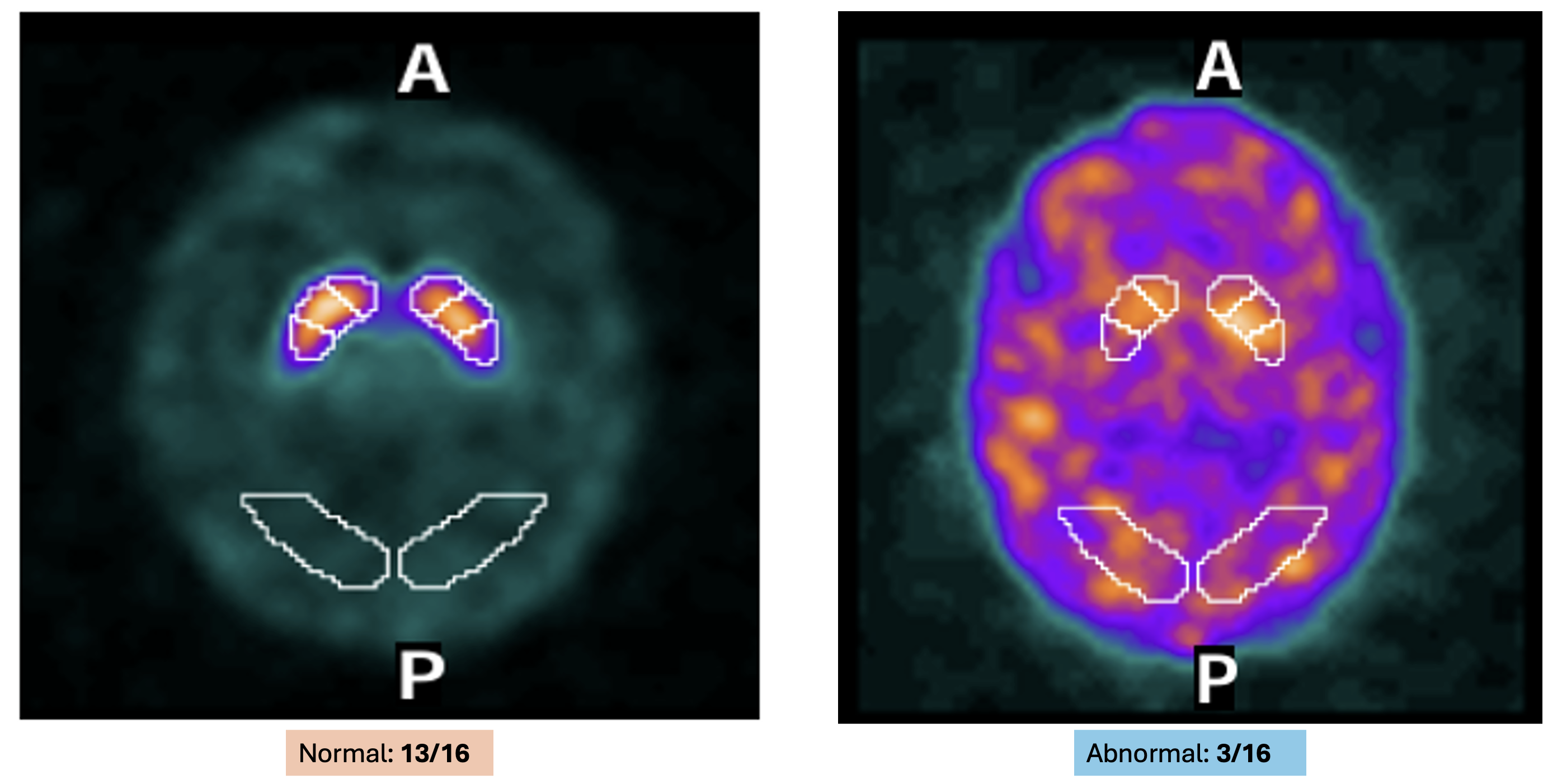
DaTscan visual results
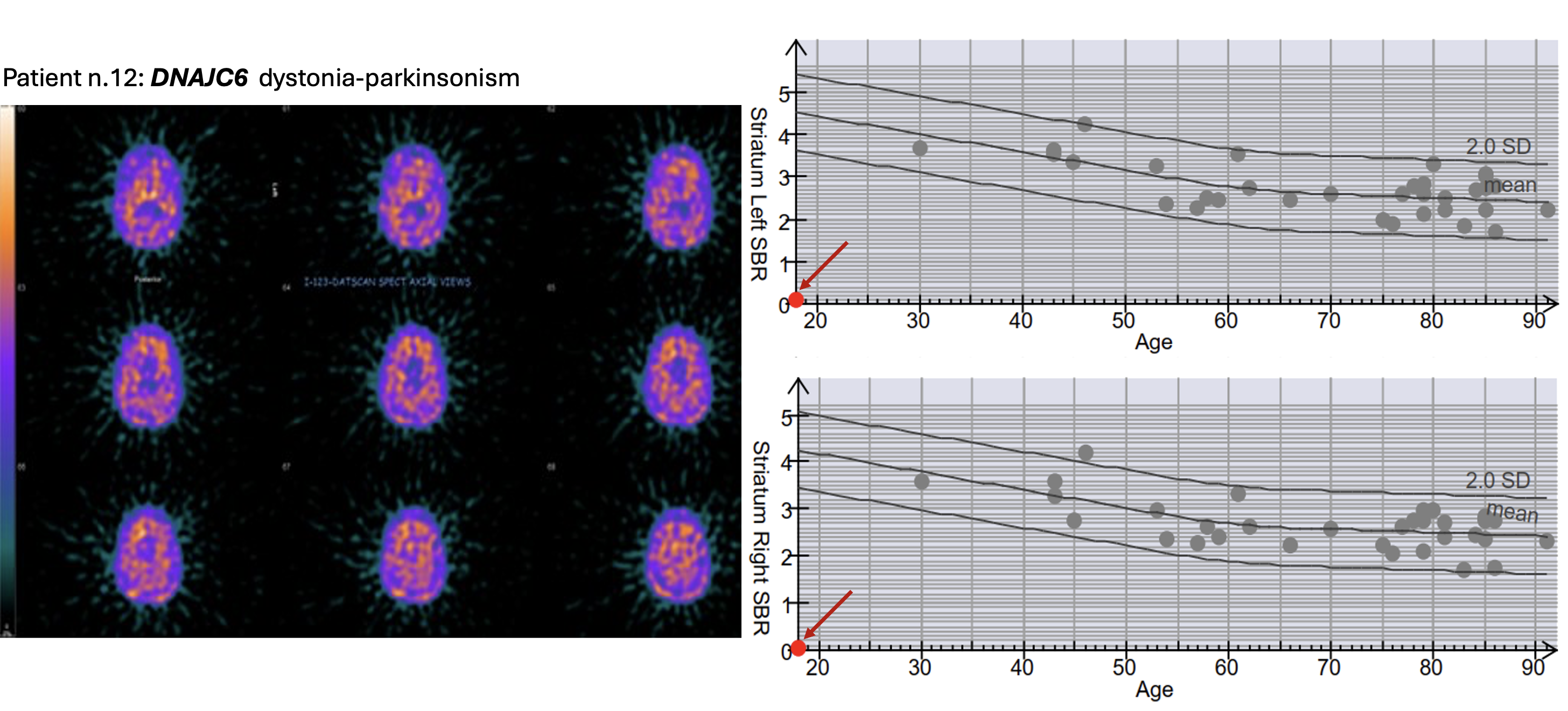
DaTscan semi-quantitative results
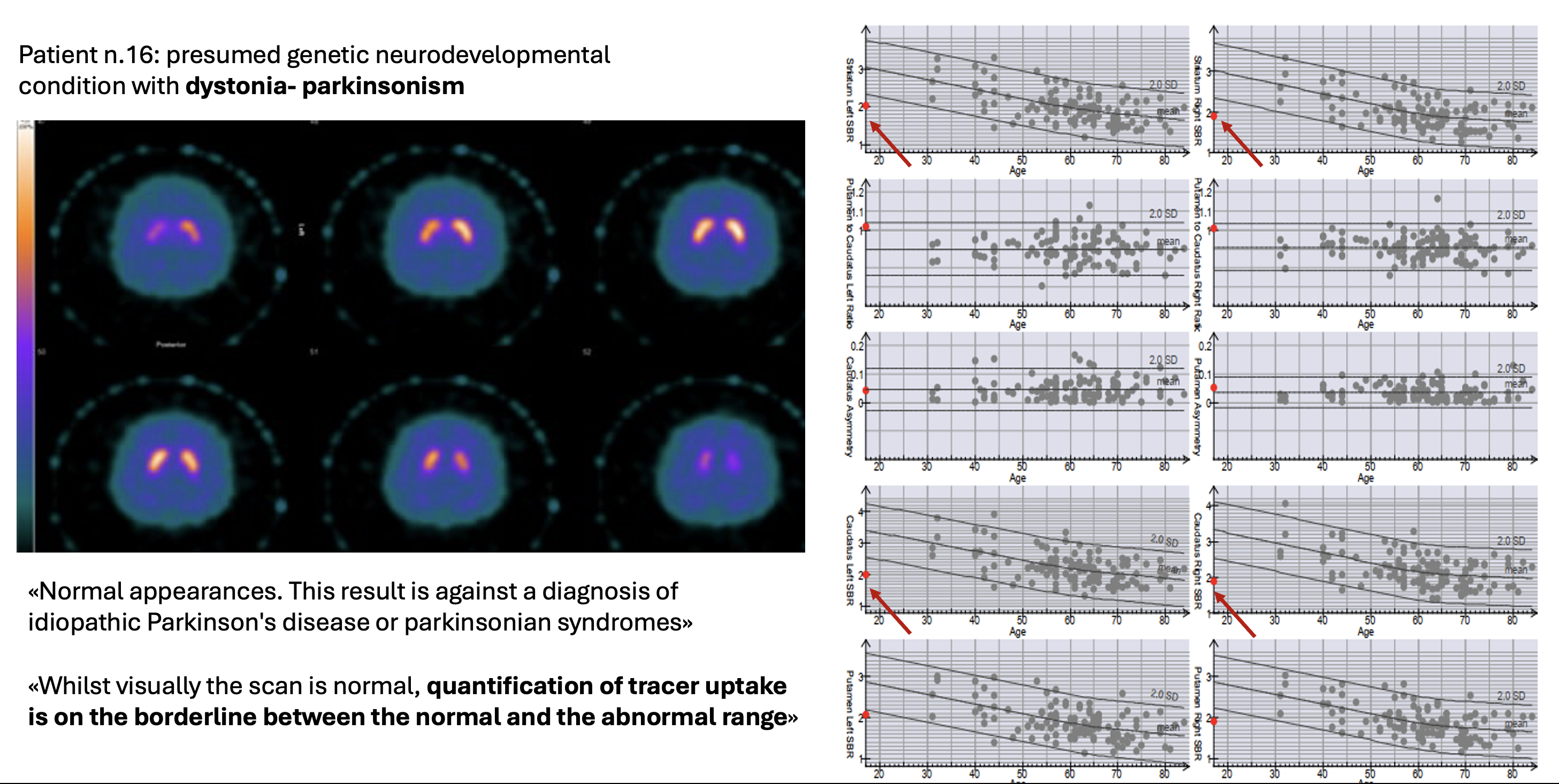
DaTscan semi-quantitative results
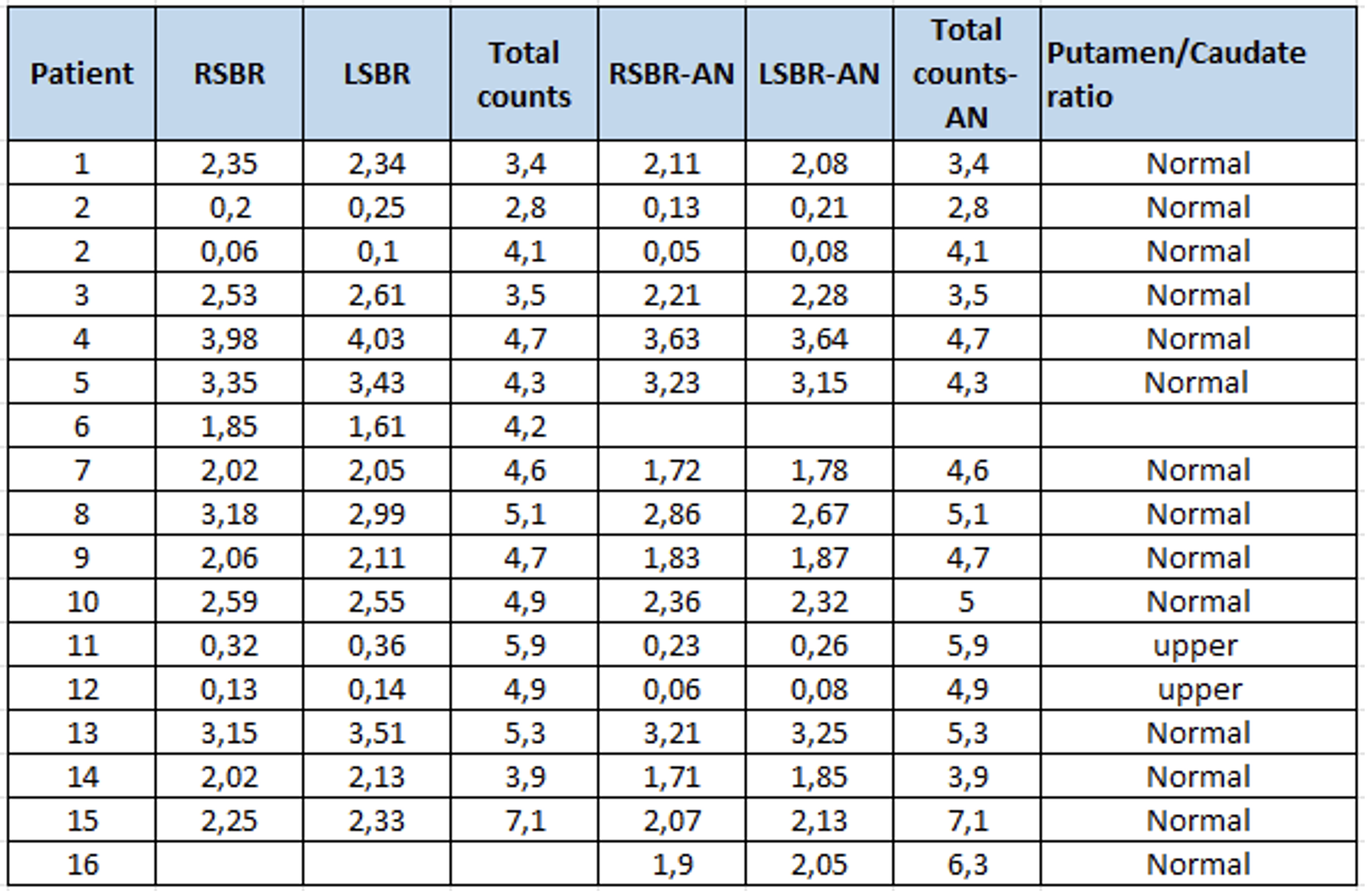
DaTscan semi-quantitative results
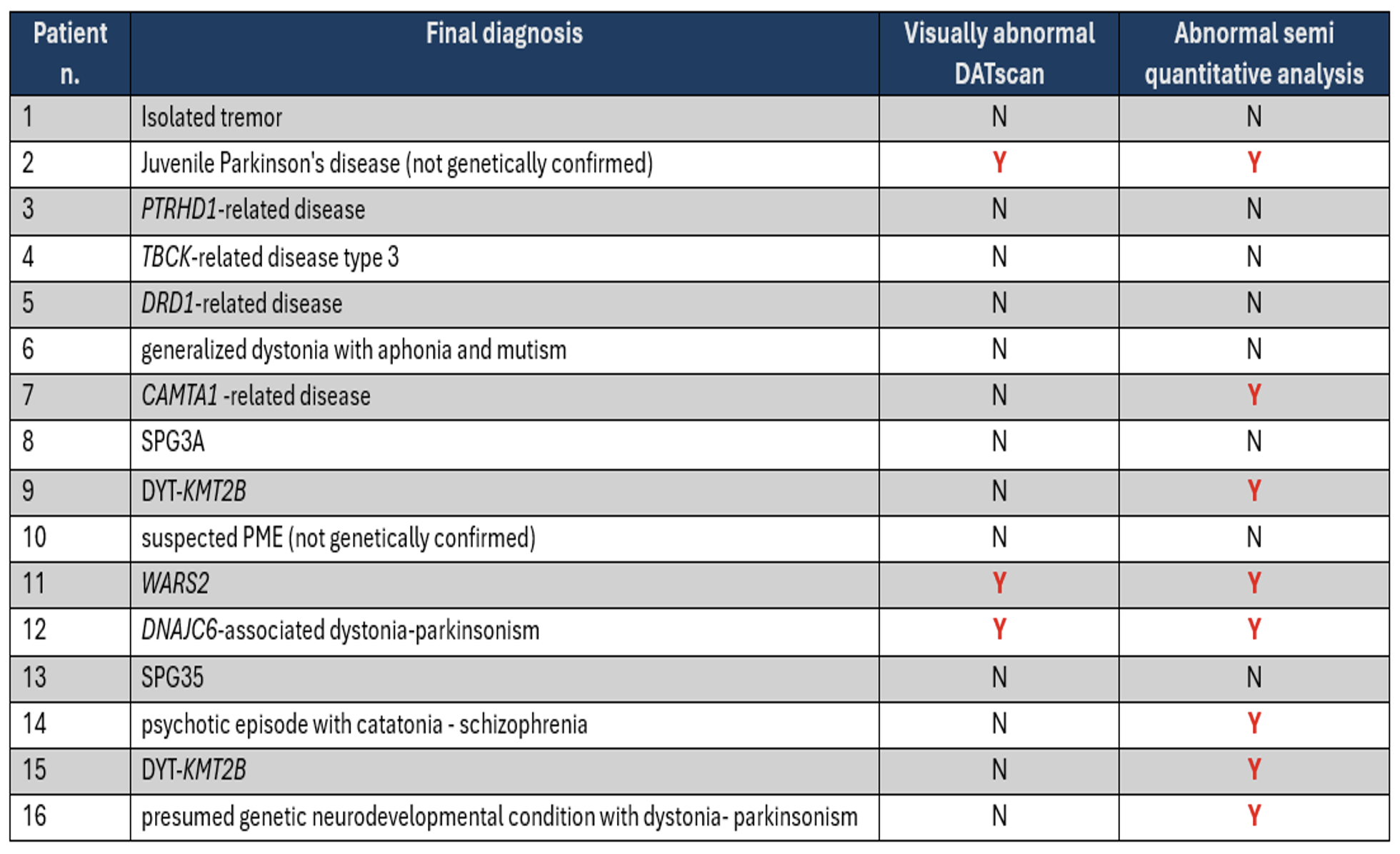
DaTscan results
To cite this abstract in AMA style:
A. Spagarino, A. Salazar-Villacorta, A. Soo, J. Hassell, A. Notghi, L. Biassoni, M. Kurian. Utility of DaTscan in Children with suspected Juvenile Parkinsonism: A Single-Centre Cohort Study [abstract]. Mov Disord. 2026; 41 (suppl 1). https://www.mdsabstracts.org/abstract/utility-of-datscan-in-children-with-suspected-juvenile-parkinsonism-a-single-centre-cohort-study/. Accessed October 1, 2026.« Back to 2026 International Congress
MDS Abstracts - https://www.mdsabstracts.org/abstract/utility-of-datscan-in-children-with-suspected-juvenile-parkinsonism-a-single-centre-cohort-study/