
Objective: To present a case of blepharospasm (BSP) with objective response to serial botulinum toxin injections but persistent subjective symptoms, highlighting the role of sensory triggers and impaired cortical integration.
Background: BSP is characterized by excessive orbicularis oculi spasms. While botulinum toxin injections are the standard of care, a subset of patients reports poor functional improvement despite adequate muscle relaxation. Current models suggest BSP is a disorder of brain networks involving the interplay between sensory and motor cortical zones, extending beyond the basal ganglia-motor cortex loop.
Method: A 54-year-old male with a 3-year history of excessive blinking, triggered by light and wind, was evaluated. Two sessions of botulinum toxin injections (incobotulinumtoxinA) were administered. The first session (50 U) was performed on September 11, 2025. The second session (150 U, pre-tarsal technique) was performed 13 weeks later (December 11, 2025) to assess the effect of a higher dose and modified injection sites (procerus, corrugator, and pretarsal orbicularis). Objective muscle relaxation post-second session was documented. (Figure 1)
Results: Following the second injection, examination at 2 weeks post-procedure showed relaxed orbicularis oculi muscles and reduced blink frequency. Subjectively, the patient reported no improvement in functional symptoms. Notably, he experienced functional benefit from wearing FL-41 filter glasses, particularly while driving.
Conclusion: This case illustrates a dissociation between objective motor response and subjective functional outcome in BSP. It suggests that in some patients, the primary driver of disability may be aberrant processing of sensory afferents (trigeminal, visual) and a breakdown in the dynamic interplay between sensory and motor cortical zones. Botulinum toxin addresses the peripheral motor output but not the central sensory trigger. This supports the model of BSP as a disorder of sensorimotor integration, where sensory tricks (like FL-41 glasses) are a valuable therapeutic adjunct.
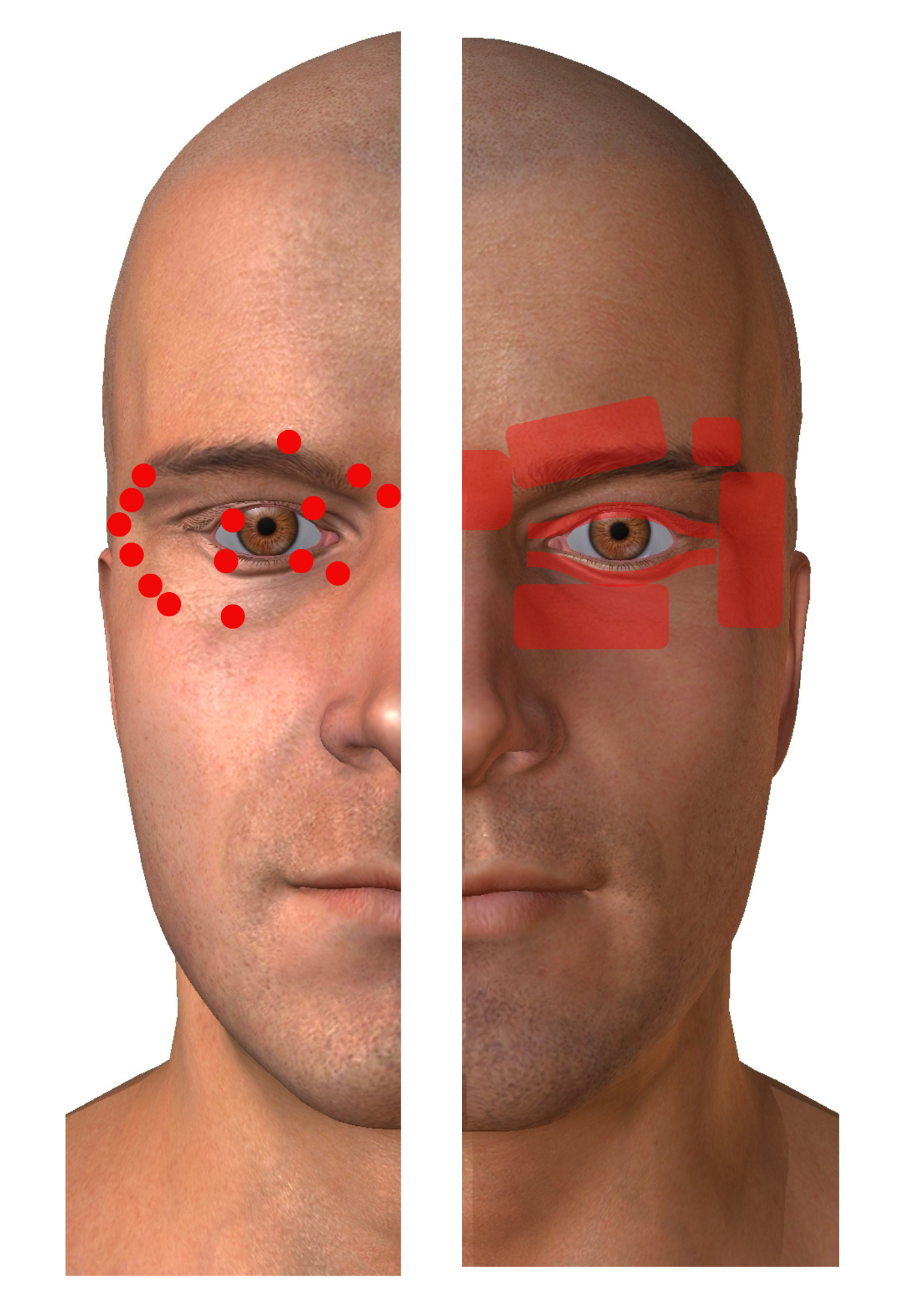
Target points and observed muscle relaxation.
To cite this abstract in AMA style:
VD. Tkachenko, MZ. Makoeva. When Muscles Relax but Symptoms Persist: A Case of Dysfunctional Sensory-Motor Cortical Integration in Botulinum Toxin-Resistant Blepharospasm [abstract]. Mov Disord. 2026; 41 (suppl 1). https://www.mdsabstracts.org/abstract/when-muscles-relax-but-symptoms-persist-a-case-of-dysfunctional-sensory-motor-cortical-integration-in-botulinum-toxin-resistant-blepharospasm/. Accessed October 1, 2026.« Back to 2026 International Congress
MDS Abstracts - https://www.mdsabstracts.org/abstract/when-muscles-relax-but-symptoms-persist-a-case-of-dysfunctional-sensory-motor-cortical-integration-in-botulinum-toxin-resistant-blepharospasm/