
Category: Parkinson's Disease: Surgical Therapy
Objective: To study the clinical characteristics of patients with JPD who have received DBS with their motor and psycho-social outcomes for a maximum of 5 years follow up duration.
Background: Juvenile Parkinson’s disease (JPD) is defined by the onset of parkinsonism before 21 years of age. As compared to Late onset Parkinson’s disease (LOPD), it is rarer, with atypical features like dystonia and early levodopa induced dyskinesias. Motor symptoms respond well to bilateral subthalamic (STN) nucleus deep brain stimulation (DBS) but JPD has higher psychological demands as compared to LOPD.
Method: Patients diagnosed as JPD (age at diagnosis < 21 years), n=7, who received DBS were included. Their demographic, medical and follow up data was collected from hospital medical records. Statistical tools like Wilcoxon signed-rank test, Friedman test and Spearman’s rank correlation were used.
Results: The mean age of onset of symptoms was 15.86 ± 3.34 years. (Table 1) Majority were not able to gain education beyond higher school despite normal cognition. All of them received bilateral STN DBS on an average of 8.4 years (3years to 17 years) after onset of illness. Mean off-phase UPDRS III decreased from 56.00 ± 11.22 at baseline to 34.00 ± 12.93 at 3 years (n = 6), the decline being statically significant (Table 2). This change was accompanied by a mean LEDD reduction from 708.83 ± 425.99 mg/day at baseline to 137.50 ± 97.46 mg/day at 3 years (n = 6) with a mean percentage reduction of 64.55 ± 41.31%. The change size although large, was not statistically significant probably due to small sample size. A similar large but not significant numerical decline was seen in PDQ 39 and its subdomains (Figure 1). Despite motor improvement most of the patients (4/7) remained completely or partly dependent for ADLs while 2 were deceased at the time of analysis.
Conclusion: JPD differs from LOPD by an early age of onset, early motor complications and fluctuations, and a significant neuropsychiatric burden that impairs normal functioning in society(Table 3). Bilateral STN-DBS improves motor symptoms, reduces LEDD, and enhances quality of life. However, despite these motor benefits, the early onset, disrupted education and vocational development, hampers the ability of the patients to integrate with society even after STN-DBS, many being left with a substantial psychosocial burden.
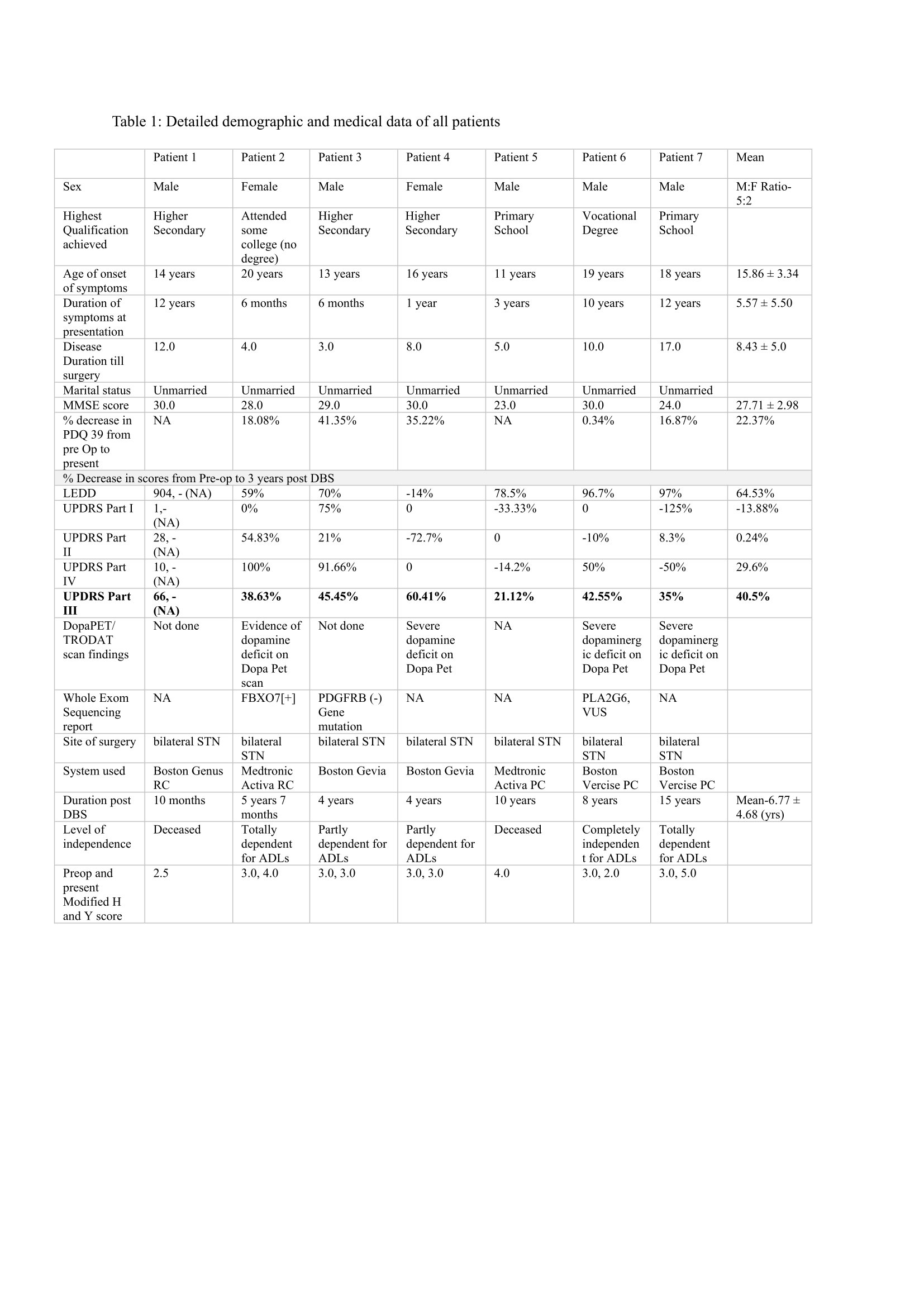
Detailed Demographic data of patients
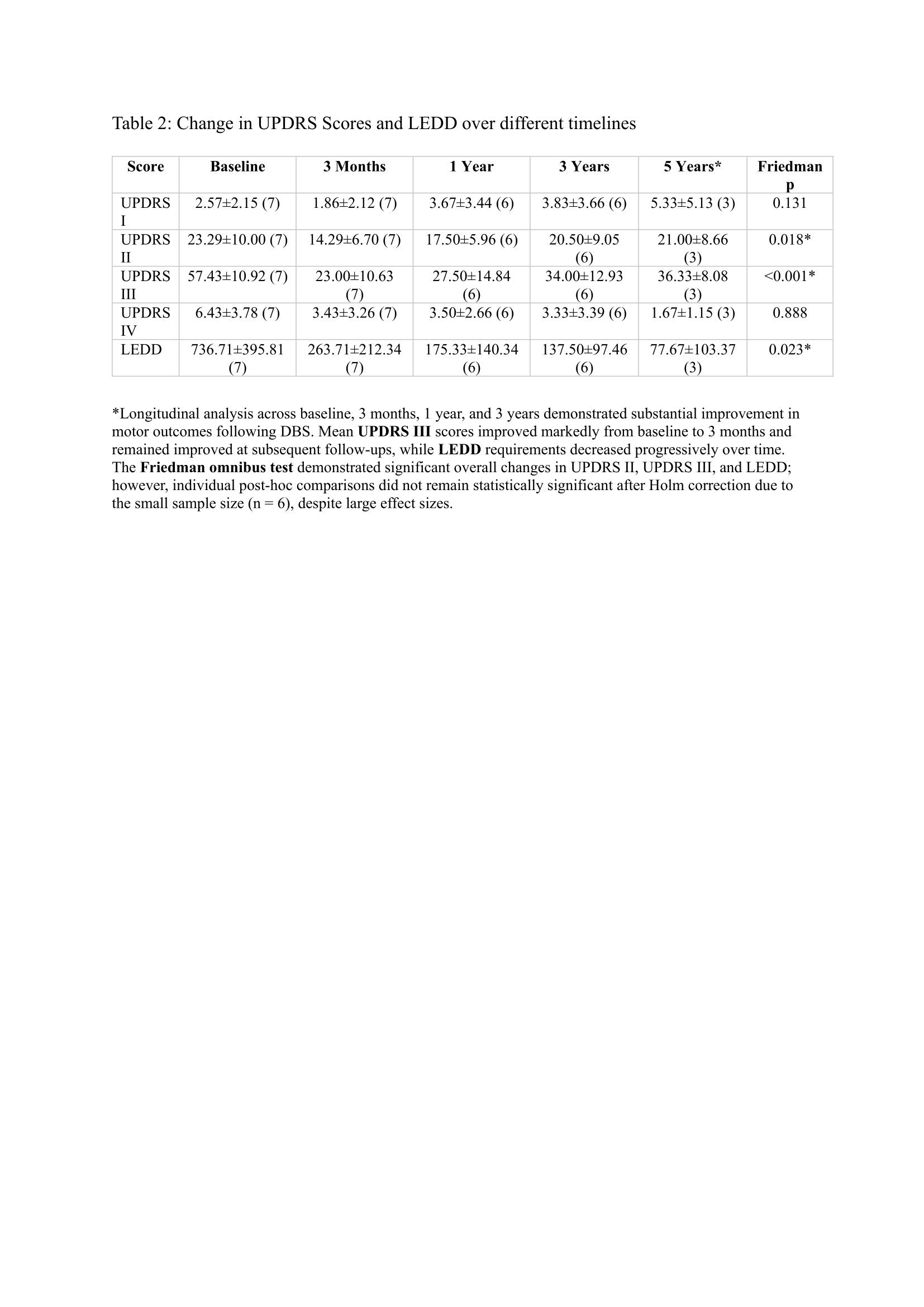
Change in LEDD and UPDRS
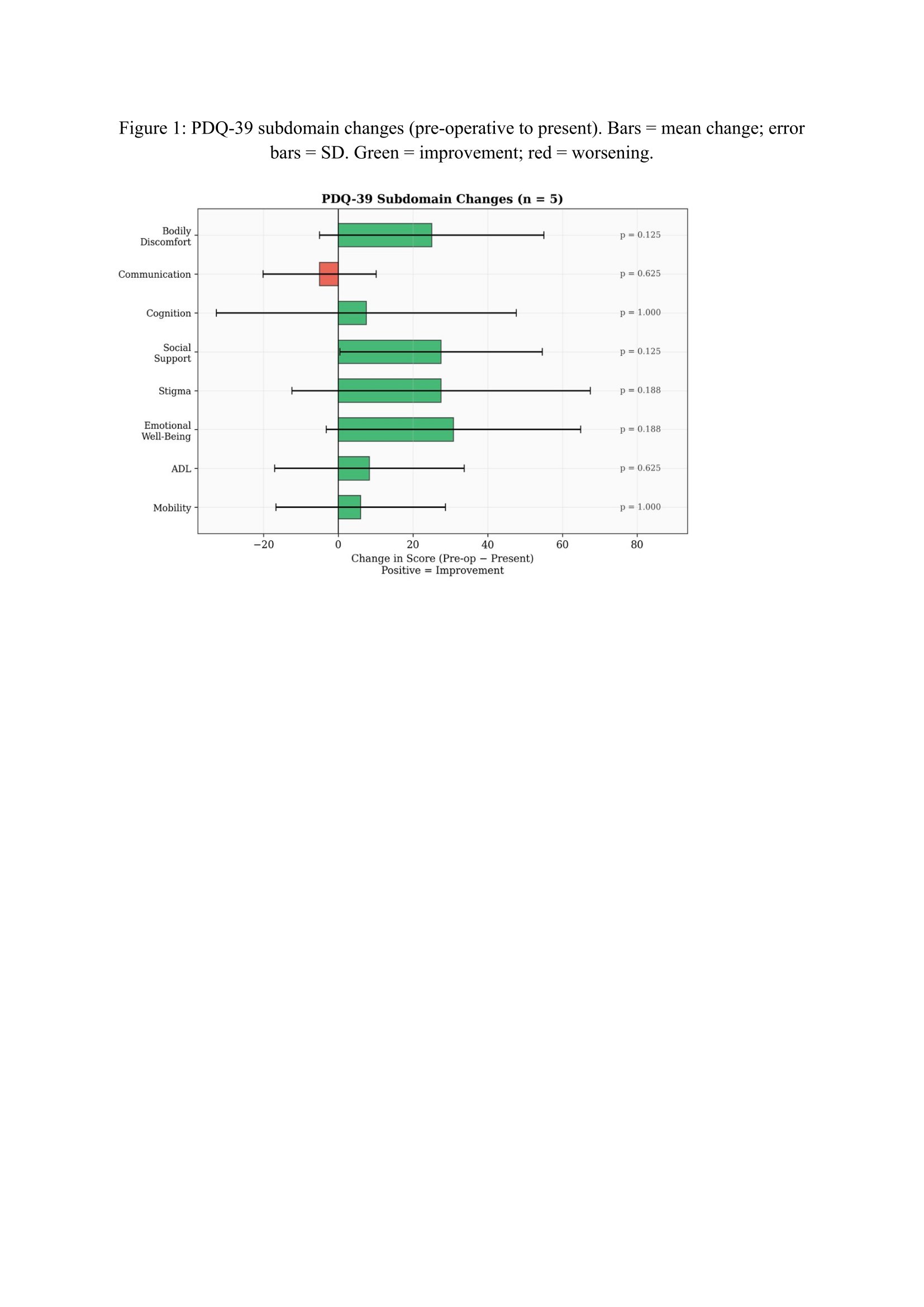
Change in PDQ 39 subdomains
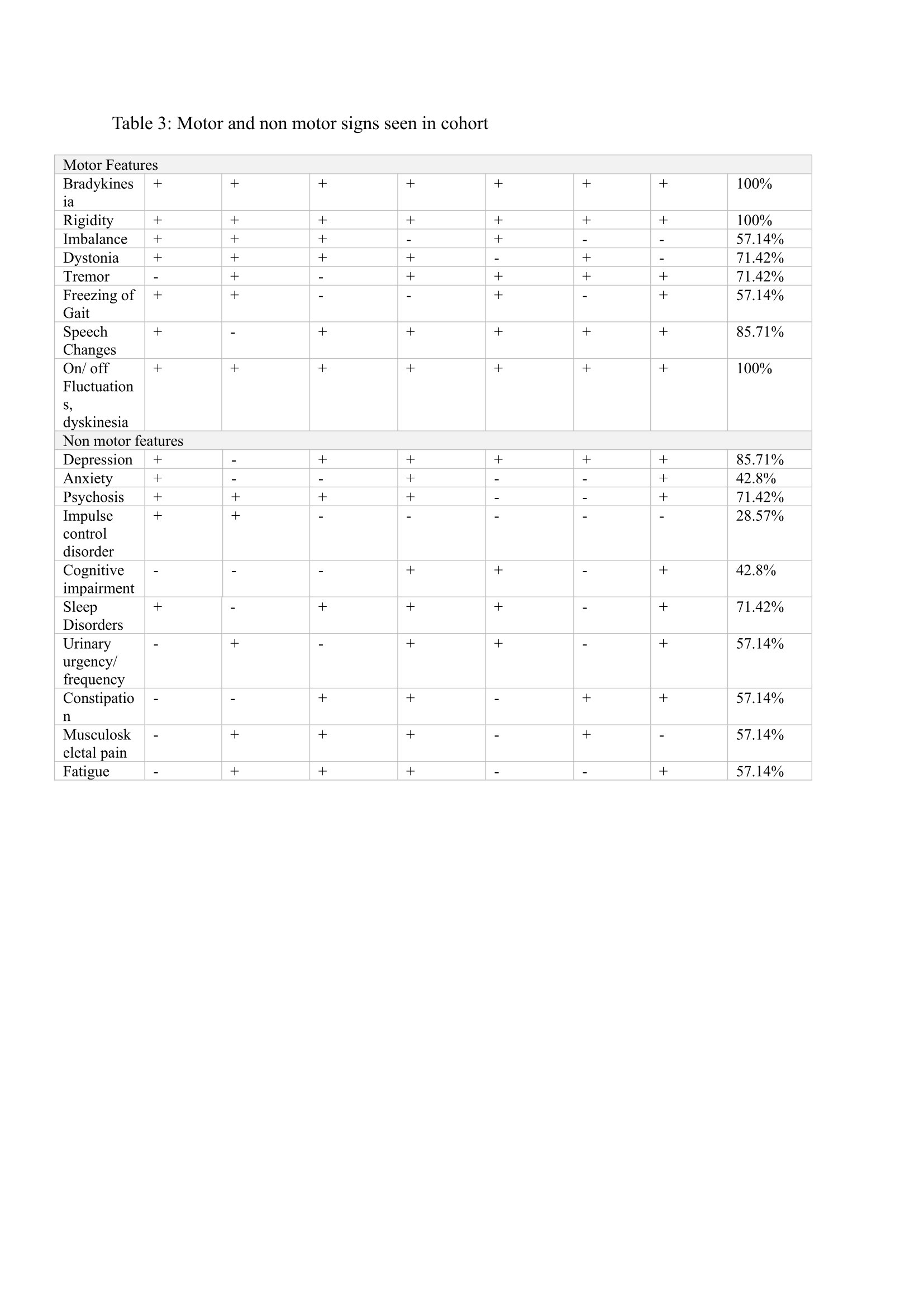
Motor and non motor signs in cohort
To cite this abstract in AMA style:
I. Goyal, P M. Wadia, P. Doshi. A Retrospective Study Of Outcomes Of Deep Brain Stimulation In Juvenile Parkinson’s Disease. [abstract]. Mov Disord. 2026; 41 (suppl 1). https://www.mdsabstracts.org/abstract/a-retrospective-study-of-outcomes-of-deep-brain-stimulation-in-juvenile-parkinsons-disease/. Accessed October 1, 2026.« Back to 2026 International Congress
MDS Abstracts - https://www.mdsabstracts.org/abstract/a-retrospective-study-of-outcomes-of-deep-brain-stimulation-in-juvenile-parkinsons-disease/