
Category: Parkinson's disease: Neuroimaging
Objective: To determine the prevalence of chronic basal ganglia lacunar infarcts (BGLI) and examine their association with dementia and mortality in a population-based cohort of incident parkinsonism.
Background: Lacunar infarcts are small subcortical lesions that frequently affect the basal ganglia. These lesions can mimic parkinsonian symptoms in older individuals and may accelerate clinical progression of Parkinson’s disease [1,2]. However, their role in cognitive dysfunction and mortality among parkinsonism patients remains unclear [2].
Method: Patients with parkinsonism onset from 1991 to 2020 were identified through the Rochester Epidemiology Project record-linkage system. BGLI were defined as chronic lesions measuring 3 to 15 mm on brain CT or MRI. Patients were stratified into three groups: BGLI before parkinsonism onset (n = 73), BGLI after parkinsonism onset (n = 111), and no BGLI (n = 978). Statistical analyses were performed using time-dependent Cox proportional hazards regression to assess the association of BGLI with all-cause mortality and dementia, adjusted for age, sex, and cardinal motor symptoms at onset. Dementia risk was analyzed using competing-risk models with death as a competing event.
Results: Among 1,162 patients with parkinsonism, BGLI were identified in 184 (15.8%) [Table 1]. Among patients with BGLI, the caudate nucleus was most frequently affected (19.6%), followed by lenticular nucleus (13.5%), putamen (11.4%), and globus pallidus (3.3%). All-cause mortality risk was significantly higher among subjects with BGLI before onset (HR = 1.36, p = 0.017) and after onset (HR = 1.53, p < 0.001) compared with patients without BGLI [Figure 1]. Dementia risk was significantly higher among subjects with BGLI after onset compared with both patients without BGLI (HR = 2.07, p < 0.001) and those with BGLI before onset (HR = 2.49, p = 0.001) [Figure 2]. No difference in dementia risk was observed between the latter two groups (HR = 0.83, p = 0.43) [Table 2].
Conclusion: BGLI were relatively common among patients with parkinsonism and were associated with increased all-cause mortality, suggesting that these lesions may serve as an important prognostic factor in this population. Additionally, post-onset BGLI were associated with increased dementia, supporting a potential role for cerebrovascular disease in the neurodegenerative progression of parkinsonism.
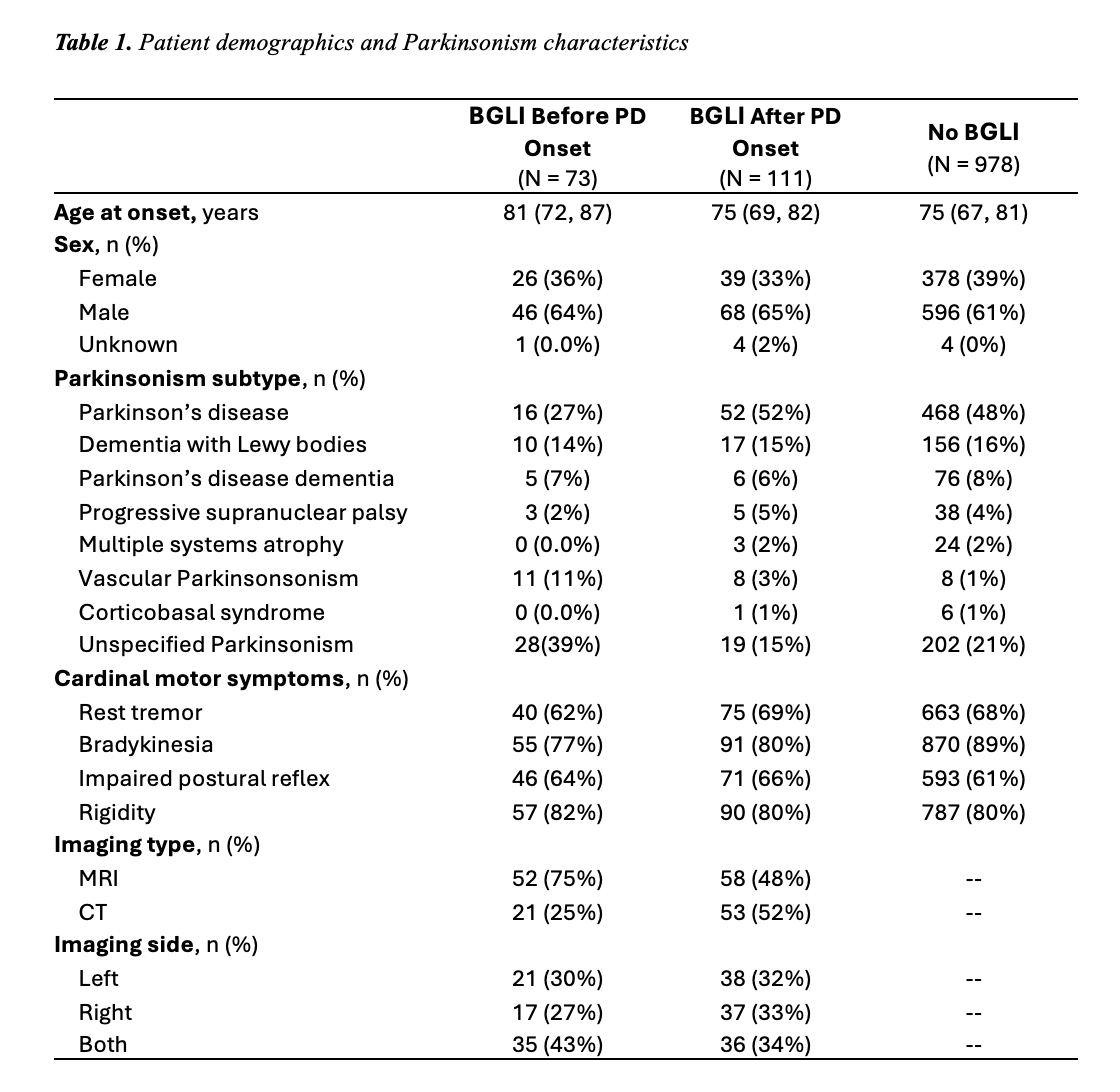
Table 1
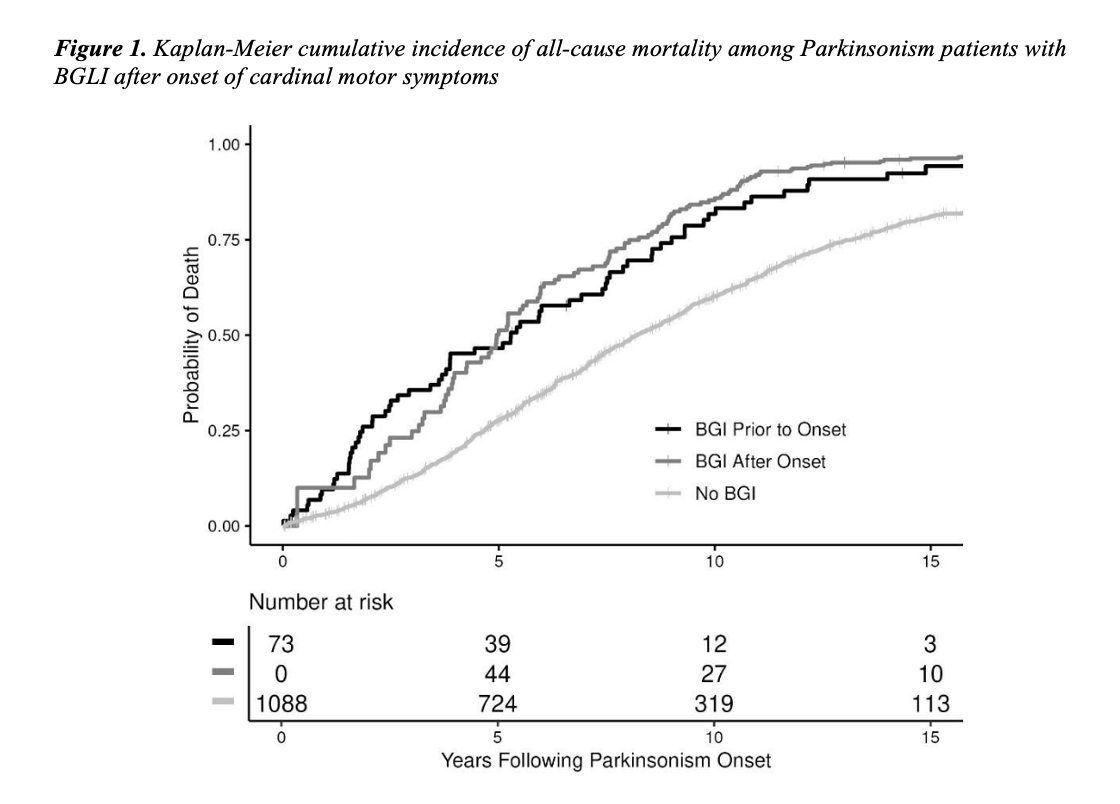
Figure 1
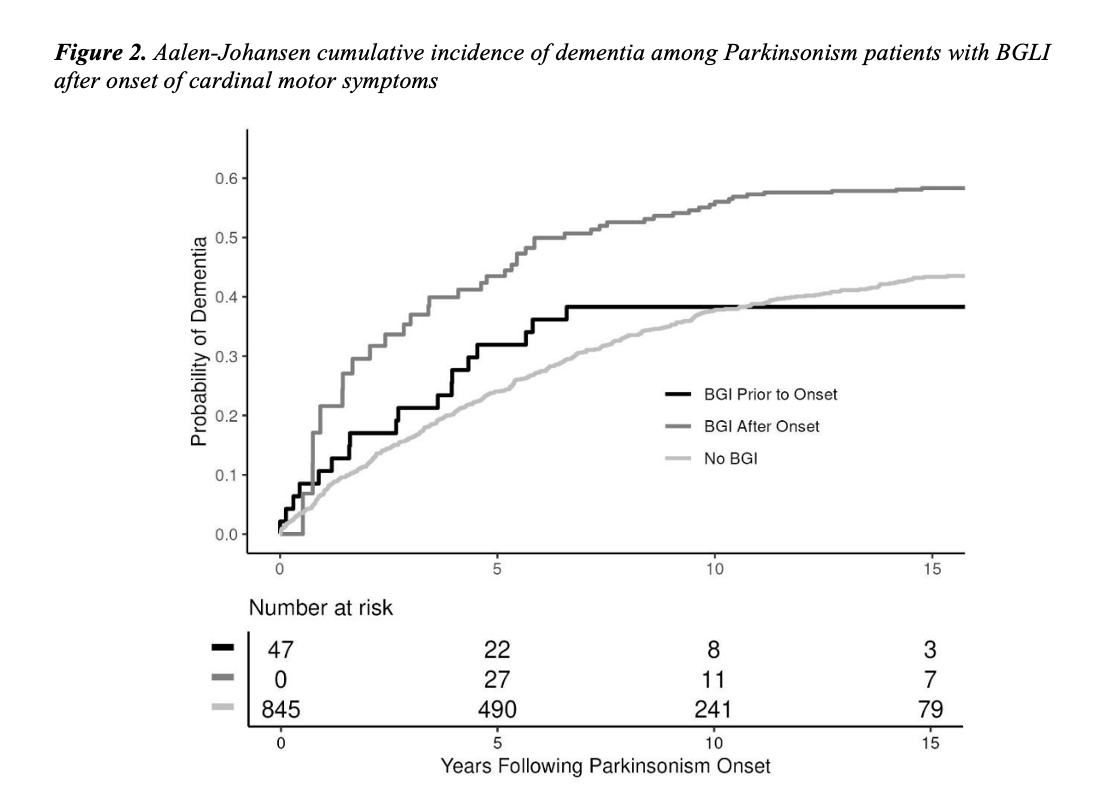
Figure 2
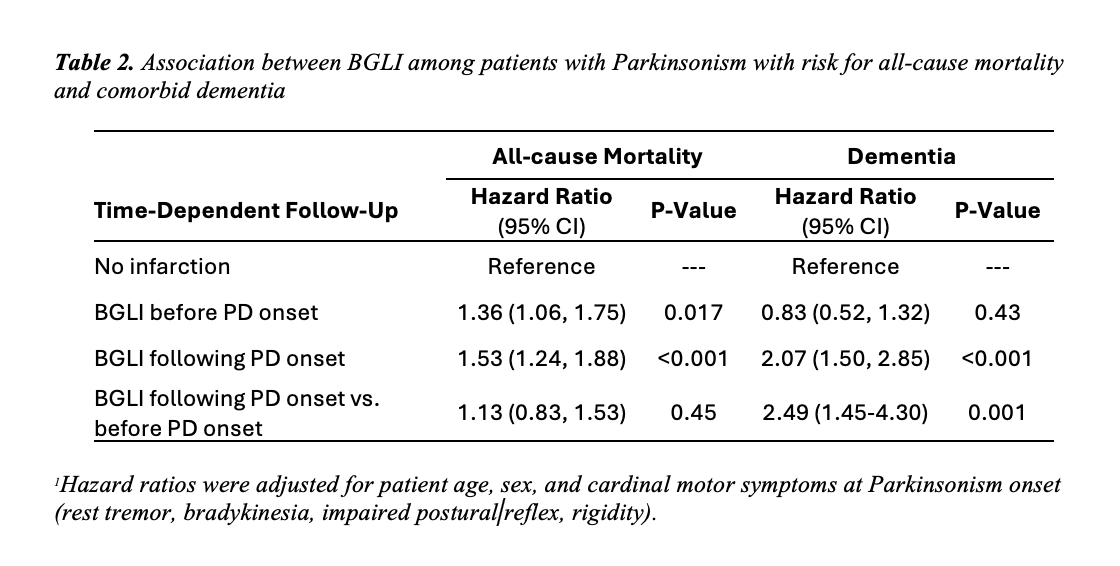
Table 2
References: [1] Jacob MA, Cai M, Bergkamp M, Darweesh SKL, Gelissen LMY, Marques J, Norris DG, Duering M, Esselink RAJ, Tuladhar AM, de Leeuw FE. Cerebral Small Vessel Disease Progression Increases Risk of Incident Parkinsonism. Ann Neurol. 2023 Jun;93(6):1130-1141. doi: 10.1002/ana.26615.
[2] de Laat KF, van Norden AG, Gons RA, van Uden IW, Zwiers MP, Bloem BR, van Dijk EJ, de Leeuw FE. Cerebral white matter lesions and lacunar infarcts contribute to the presence of mild parkinsonian signs. Stroke. 2012 Oct;43(10):2574-9. doi: 10.1161/STROKEAHA.112.657130.
To cite this abstract in AMA style:
L. Malfer, F. Onorati, A. Mullan, R. Savica. Basal Ganglia Lacunar Infarcts and Risk of Mortality and Dementia in Parkinsonism: A Population-Based Study [abstract]. Mov Disord. 2026; 41 (suppl 1). https://www.mdsabstracts.org/abstract/basal-ganglia-lacunar-infarcts-and-risk-of-mortality-and-dementia-in-parkinsonism-a-population-based-study/. Accessed October 1, 2026.« Back to 2026 International Congress
MDS Abstracts - https://www.mdsabstracts.org/abstract/basal-ganglia-lacunar-infarcts-and-risk-of-mortality-and-dementia-in-parkinsonism-a-population-based-study/