
Objective: To systematically analyze the spatiotemporal, kinematic, and electromyographic gait movement disorders in patients with partial SCI for targeted rehabilitation strategies.
Background: Spinal cord injury (SCI) is a life-changing event that profoundly affects an individual’s motor, sensory, and autonomic functions, often leading to severe impairments in gait and mobility [1]. While complete SCI has been extensively studied, there is a significant gap in research focusing on partial SCI, where some neurological function remains. Partial SCI patients often experience deficits in balance, coordination, speed, and efficiency during walking, which impacts their independence, psychological well-being, and overall quality of life [2].
Method: This prospective study involved thirty patients with partial SCI and thirty age- and gender-matched healthy controls. The SCI patients had undergone surgical instrumentation for SCI management, and gait analysis with full body marker protocol was conducted six weeks postoperatively (SMART DX-7000, BTS Bioengineering, Milan, Italy). EMG data was captured for key muscle groups, including the erector spinae, quadriceps, hamstrings, and tibialis anterior.
Results: Our study found significant differences between SCI patients and healthy controls across various gait parameters. SCI patients demonstrated a marked reduction in gait speed (73%) and cadence (44%) (p < 0.001), with step length and stride length significantly decreased. Specifically, the right step length decreased by 54% and the left by 38% (p < 0.01). Kinematic analysis revealed increased trunk and pelvis tilt ranges, indicating compensatory movements to maintain balance. Ankle plantarflexion range was reduced suggesting impaired propulsion and reduced clearance during the gait cycle. EMG results revealed reduced muscle activation, particularly in the erector spinae and tibialis anterior, impairing stability and foot clearance during gait.
Conclusion: Targeted interventions aimed at improving core stability, joint mobility, and muscle re-education. Our study emphasizes the value of 3D gait analysis in understanding gait dysfunction in partial SCI patients. Rehabilitation strategies that address muscle strength, joint flexibility, and postural stability could significantly improve gait efficiency and overall functional outcomes for these individuals.
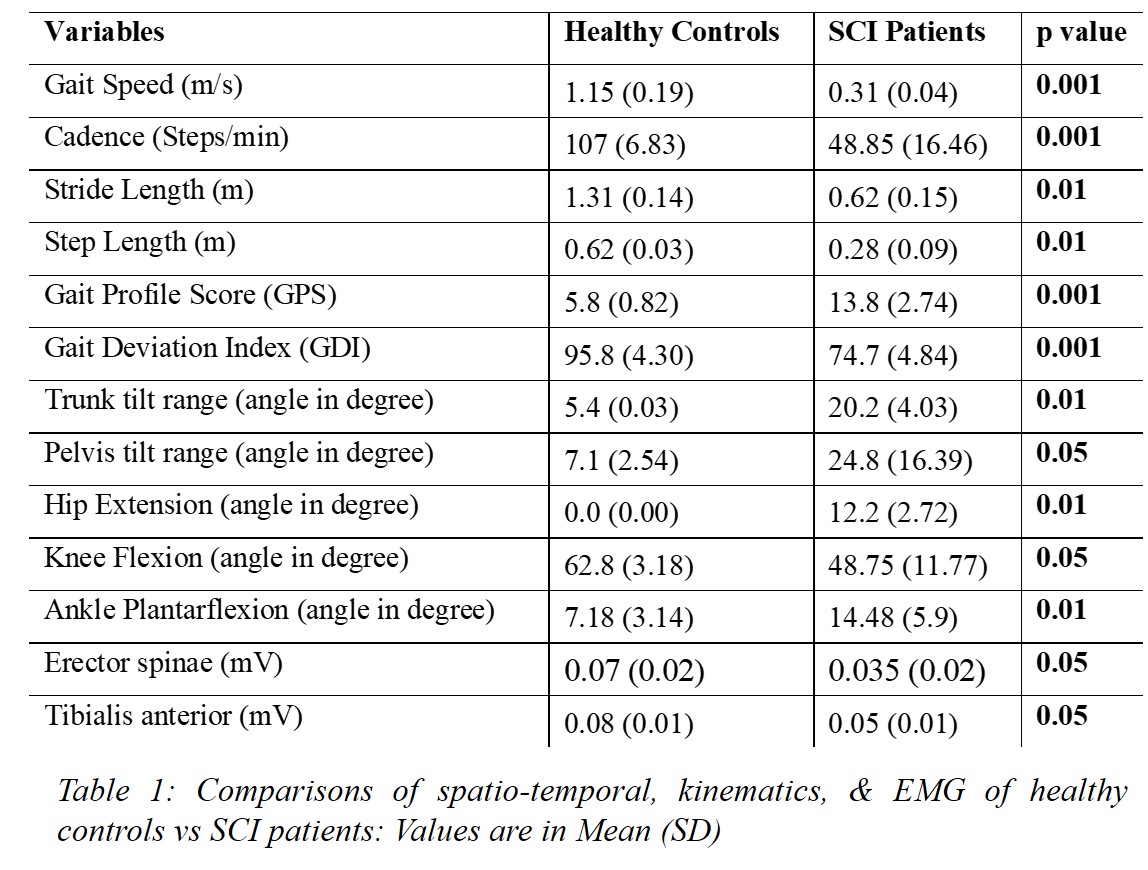
Table 1
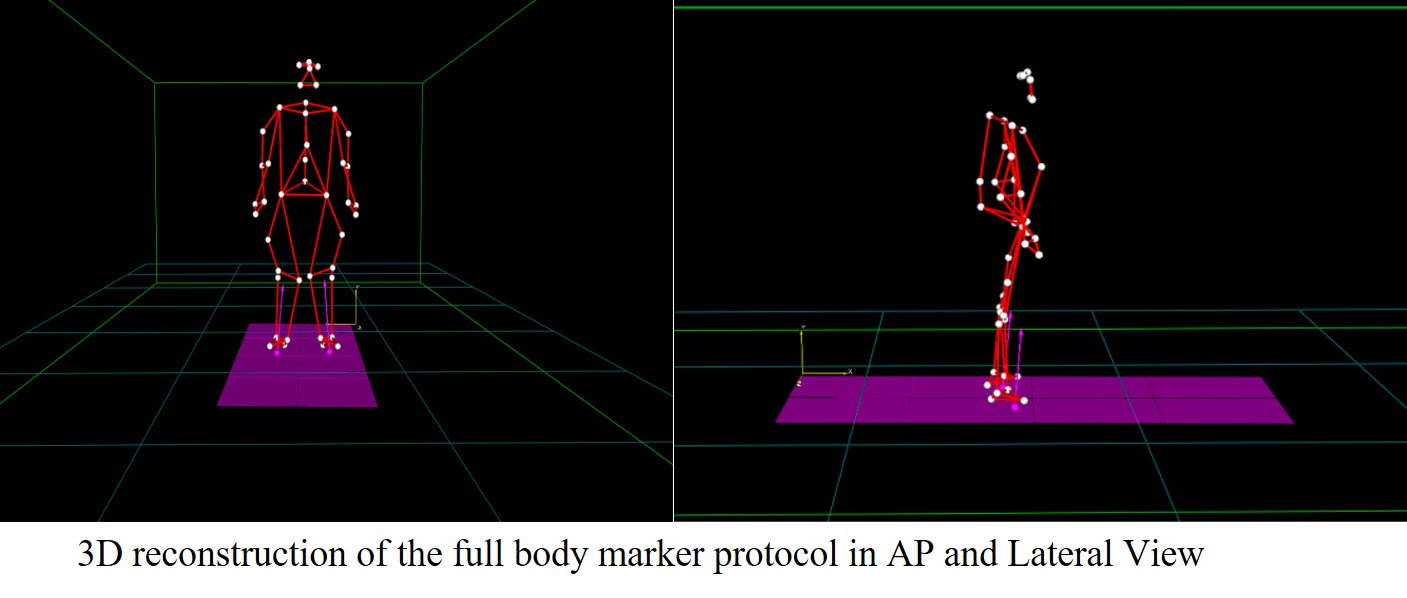
Figure 2
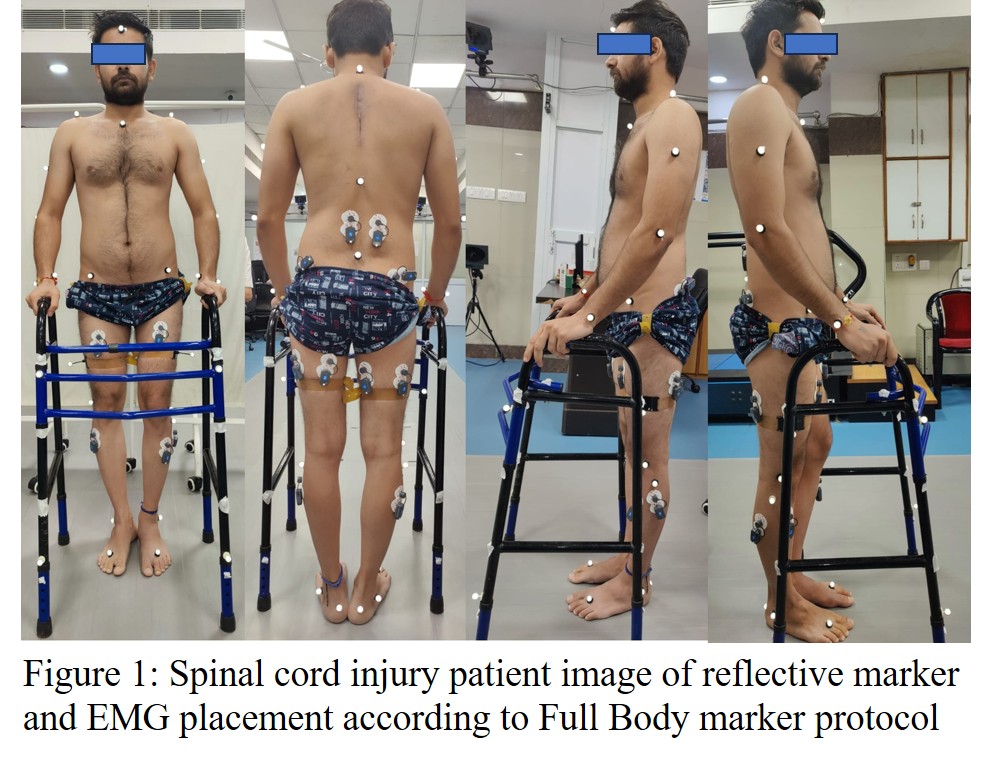
Figure 1
References: [1] Wyndaele, M et al, Spinal Cord, 2006, 44(9), 529.
[2] Maggio MG et al, Brain Sci. 2024 Jan 28;14(2):140
To cite this abstract in AMA style:
M. Gupta, B. Garg. Biomechanical Analysis of Gait Movement Disorders in Spinal Cord Injury and Its Implications for Rehabilitation Strategies [abstract]. Mov Disord. 2026; 41 (suppl 1). https://www.mdsabstracts.org/abstract/biomechanical-analysis-of-gait-movement-disorders-in-spinal-cord-injury-and-its-implications-for-rehabilitation-strategies/. Accessed October 1, 2026.« Back to 2026 International Congress
MDS Abstracts - https://www.mdsabstracts.org/abstract/biomechanical-analysis-of-gait-movement-disorders-in-spinal-cord-injury-and-its-implications-for-rehabilitation-strategies/