
Category: Parkinson's Disease: Surgical Therapy
Objective: To compare motor improvement after subthalamic nucleus deep brain stimulation (STN‑DBS) in patients with LRRK2‑associated Parkinson’s disease (PD) versus idiopathic PD (iPD).
Background: LRRK2 mutations (G2019S, R1441G, G2385R) represent the most common genetic cause of autosomal dominant PD. STN‑DBS generally improves motor symptoms in iPD, yet whether genetic status modifies treatment response remains unclear.
Method: A meta‑analysis was performed using PubMed studies reporting MDS UPDRS‑III outcomes in LRRK2‑PD versus iPD following bilateral STN‑DBS. Mean differences (MD) in MDS UPDRS‑III improvement (OFF-medication) were pooled using inverse‑variance methods under arandom‑effects model. Heterogeneity and subgroup analyses (G2019S, R1441G, G2385R) were conducted. Mixed‑effects REML meta‑regression examined whether age, DBS duration, or study quality moderated DBS outcomes.
Results: Seven studies (n=392; 73 LRRK2 carriers, 319 iPD) were included. There was no significant difference in MDS UPDRS‑III improvement between LRRK2‑PD and iPD using a random‑effects model (MD −3.26; 95% CI −8.81 to 2.29; I²=58%) [Figure 1][Figure 2]. Mutation subgroup analysis revealed no significant differences between G2019S, R1441G, or G2385R carriers (QM p=0.45). Meta‑regression identified DBS duration as the only significant moderator: duration categories explained most between‑study variability (R²=97.2%), reducing I² to 4% with no residual heterogeneity. Compared with 12 months, the 6–12 months group showed greater improvement (β=10.55±3.57, p=0.003), while the ≤6-months group showed a positive but nonsignificant trend (β=14.86±9.29, p=0.11). Age (p=0.84) and study quality (p=0.29) did not moderate outcomes.
Conclusion: Motor outcomes after STN‑DBS in LRRK2‑associated PD are comparable to those of iPD. No specific LRRK2 mutation subtype showed a differential response. DBS duration, rather than genotype, emerged as the only significant moderator of DBS motor benefit. This may reflect early optimization needs and later disability accrual, underscoring need for longer follow‑up. These findings support comparable DBS candidacy considerations for LRRK2‑PD and iPD.
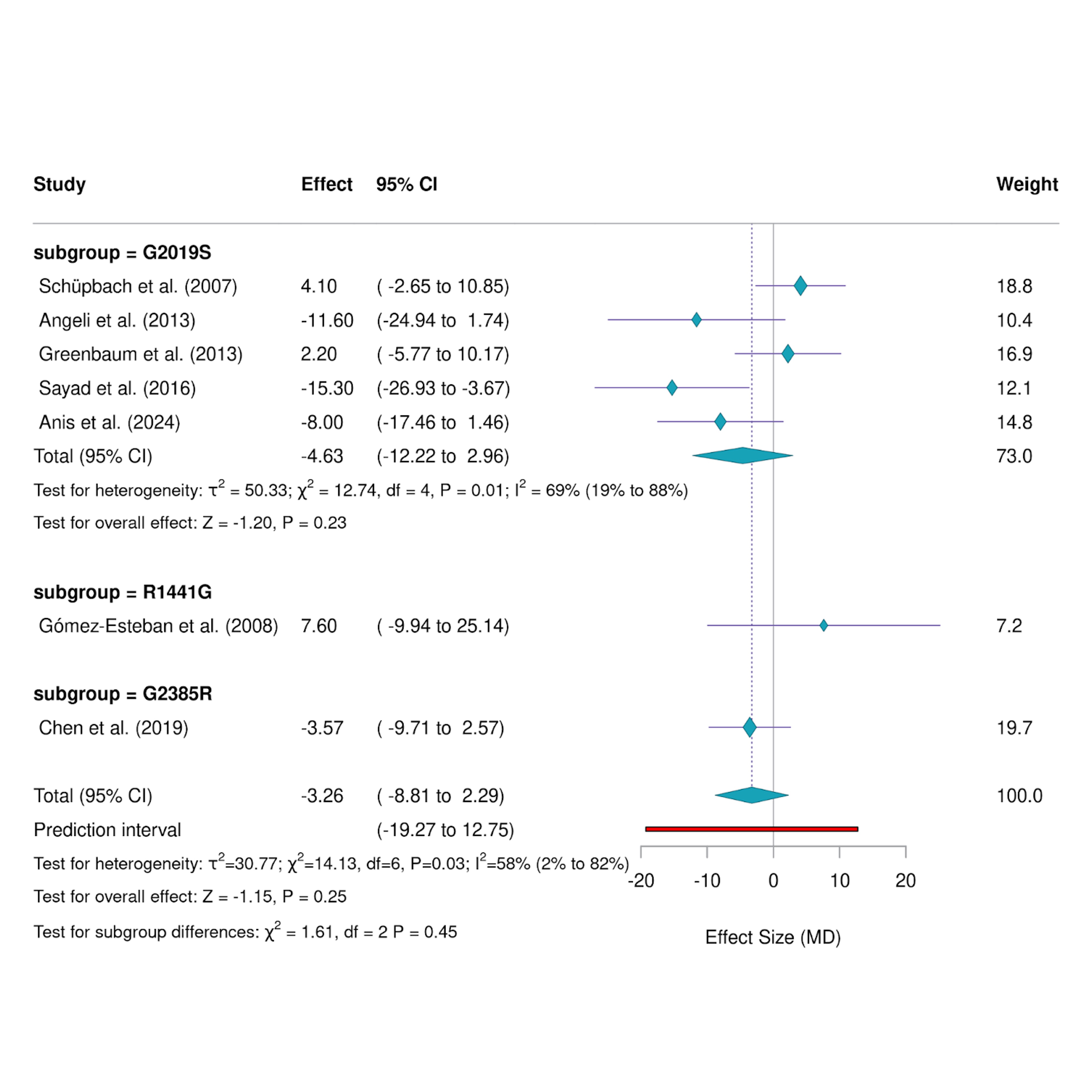
Figure 1. Pooled MD of motor outcomes.
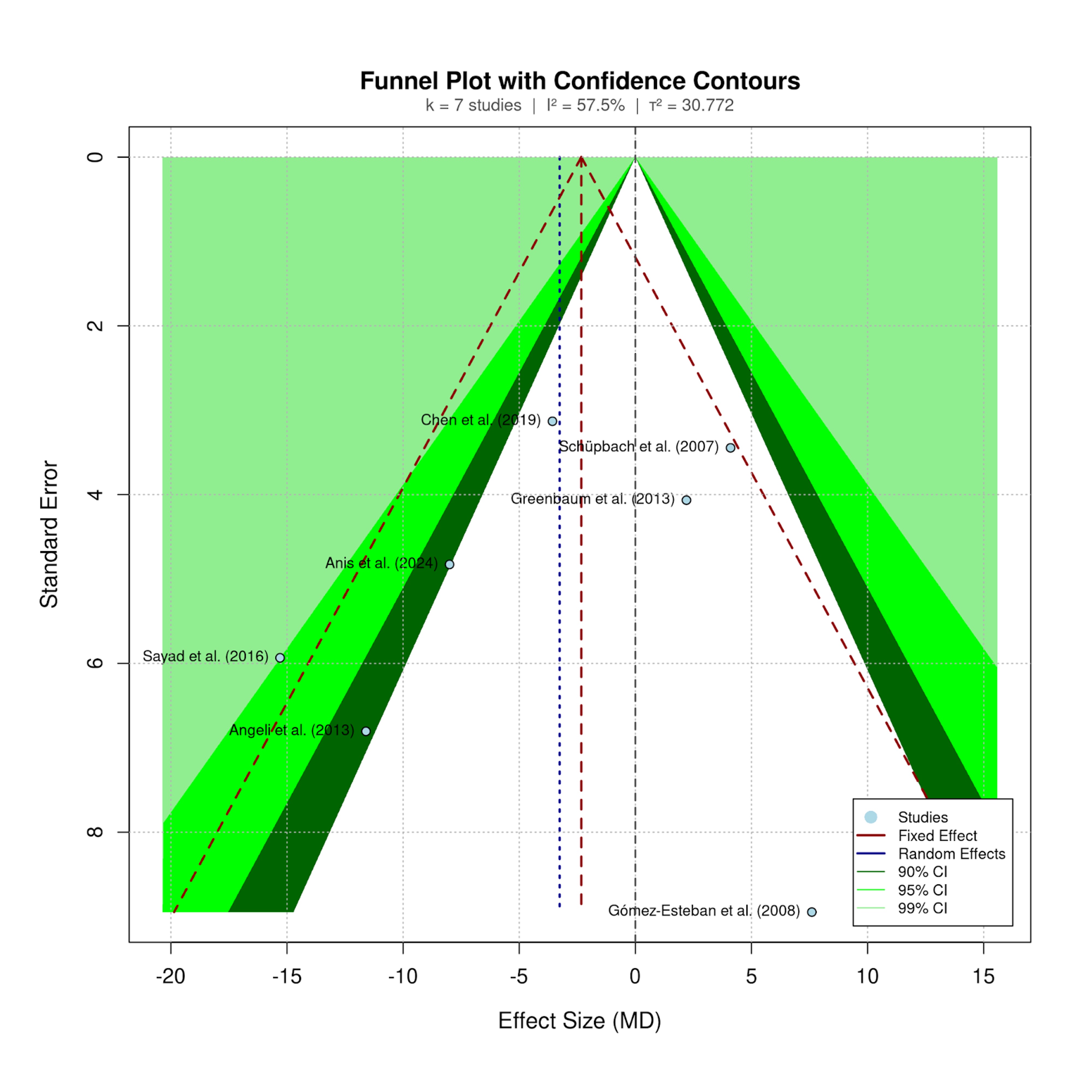
Figure 2 Funnel plot with confidence intervals.
To cite this abstract in AMA style:
J. Pitton Rissardo, J. Patino, A. Fornari Caprara, A. Mcgarry, I. Walker. Comparative Motor Response to Bilateral STN‑DBS in LRRK2‑Related and Idiopathic Parkinson’s Disease [abstract]. Mov Disord. 2026; 41 (suppl 1). https://www.mdsabstracts.org/abstract/comparative-motor-response-to-bilateral-stn-dbs-in-lrrk2-related-and-idiopathic-parkinsons-disease/. Accessed October 1, 2026.« Back to 2026 International Congress
MDS Abstracts - https://www.mdsabstracts.org/abstract/comparative-motor-response-to-bilateral-stn-dbs-in-lrrk2-related-and-idiopathic-parkinsons-disease/