
Category: MSA, PSP, CBS: Neuroimaging
Objective: To evaluate the diagnostic utility of FDG-PET imaging for differentiating Parkinson’s disease (PD), multiple system atrophy (MSA), progressive supranuclear palsy (PSP), and corticobasal syndrome (CBS) in a real-world clinical setting
Background: Clinical differentiation of parkinsonian syndromes remains a persistent challenge, with misdiagnosis rates near 20% even in specialist centers. While FDG-PET is a promising biomarker for regional cerebral glucose metabolism, its effectiveness in routine clinical practice—specifically the sensitivity of established metabolic markers in diverse populations—warrants investigation to clarify its real-world utility.
Method: This retrospective analysis included 34 patients with clinically diagnosed parkinsonism at an Indian tertiary hospital (2015–2019). Final clinical diagnoses based on consensus criteria served as the reference standard. FDG-PET scans were interpreted using visual patterns and 3D-stereotactic surface projection Z-scores (<-2 considered abnormal). Scans not meeting classic patterns were categorized as “inconclusive”. Diagnostic accuracy and concordance (Cohen’s Kappa) were assessed, treating inconclusive scans as a negative test.
Results: The cohort comprised 17 PSP, 9 CBS, 4 MSA, and 4 PD patients. Overall concordance was 41.2% (Kappa=0.328, fair agreement). While specificity was high (80–100%), sensitivity estimates were low and imprecise: PD 100% (95% CI: 51–100%), MSA 50% (15–85%), CBS 56% (27–81%), and PSP 18% (6–41%). Notably, 41.2% of scans were inconclusive. Cerebellar hypometabolism associated with MSA (75%, p<0.001). Midbrain hypometabolism was identified in only 18% of PSP patients, exclusively within the PSP-Richardson’s Syndrome subtype. Basal ganglia hypometabolism did not significantly associate with any group (p=0.395).
Conclusion: Real-world FDG-PET utility is constrained by low sensitivity and high rates of inconclusive findings, contrasting with reported research efficacy. Classic signs, like midbrain hypometabolism in PSP, demonstrated limited sensitivity, especially in non-classic phenotypes. These findings suggest visual and Z-score interpretations may be insufficient for ambiguous cases, supporting the adoption of objective computational tools or AI to enhance clinical reliability.
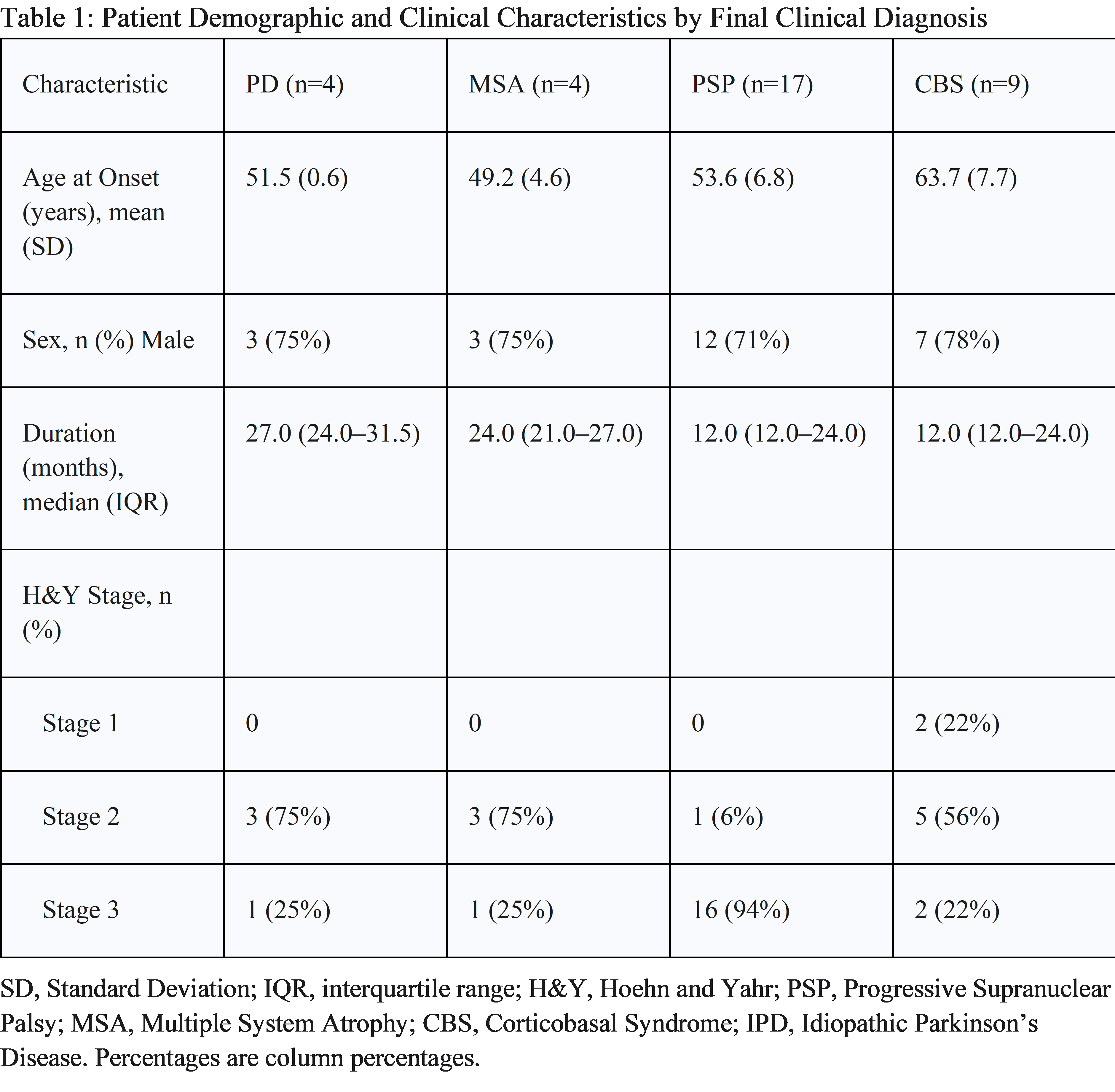
Table 1
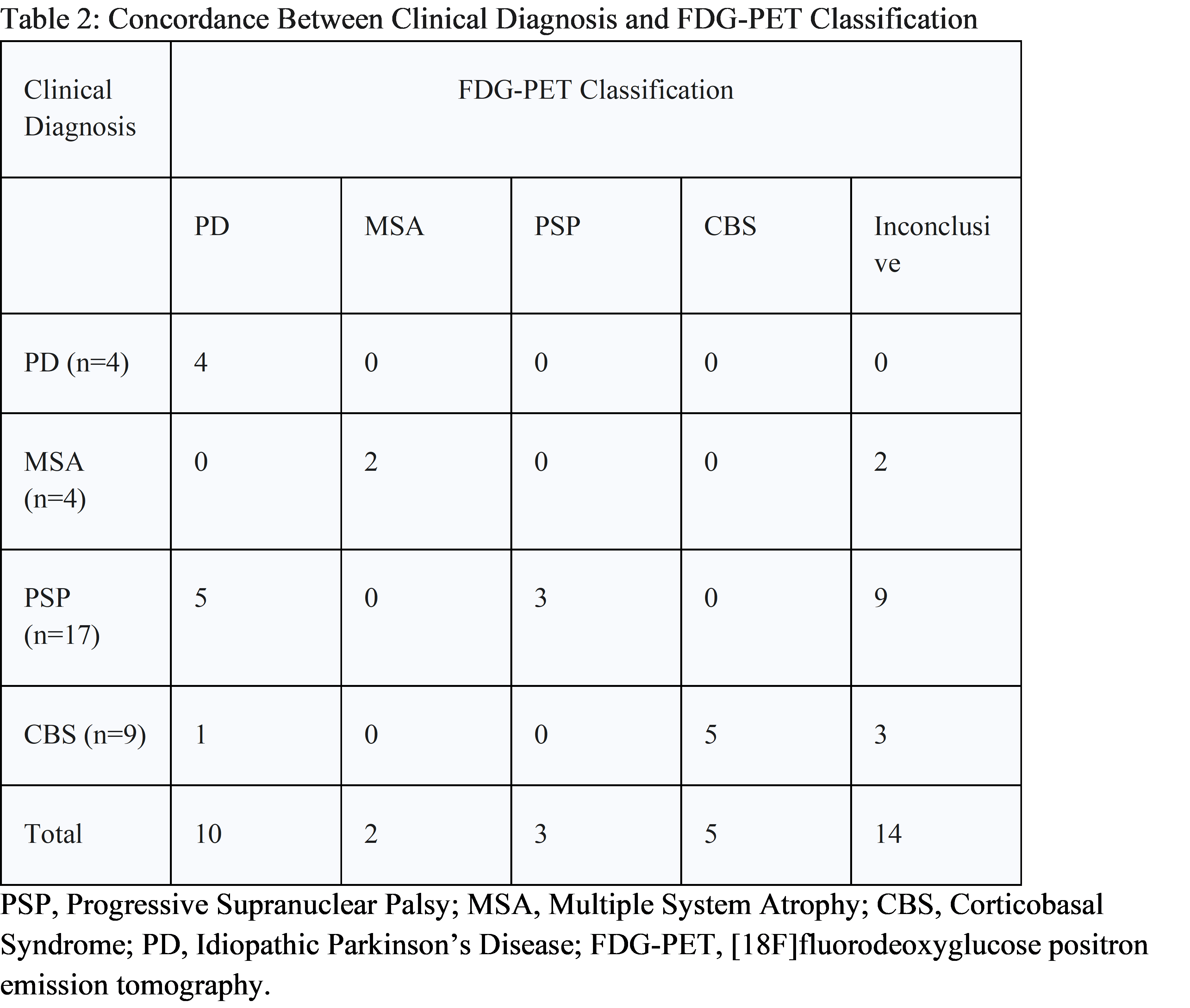
Table 2
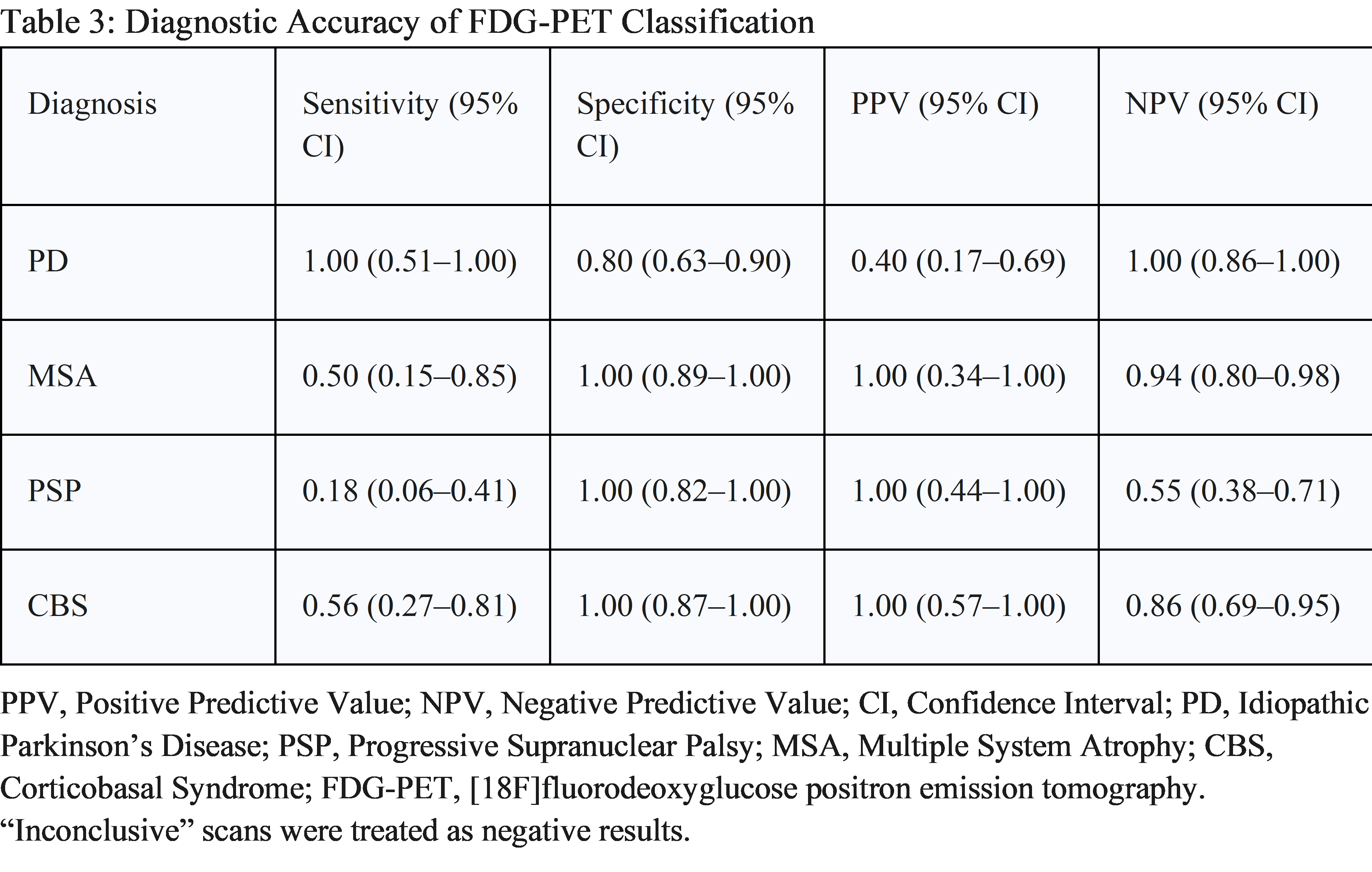
Table 3
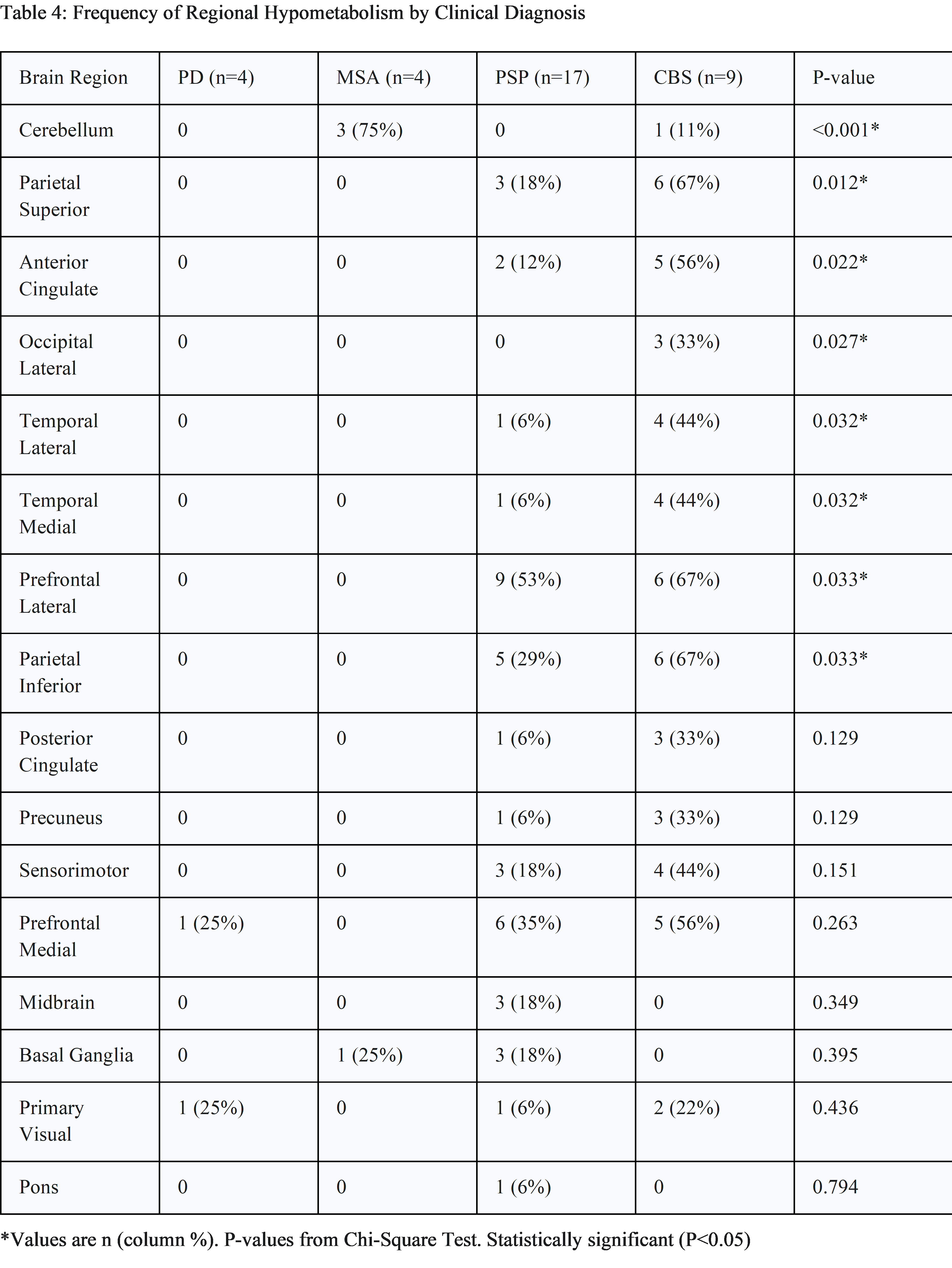
Table 4
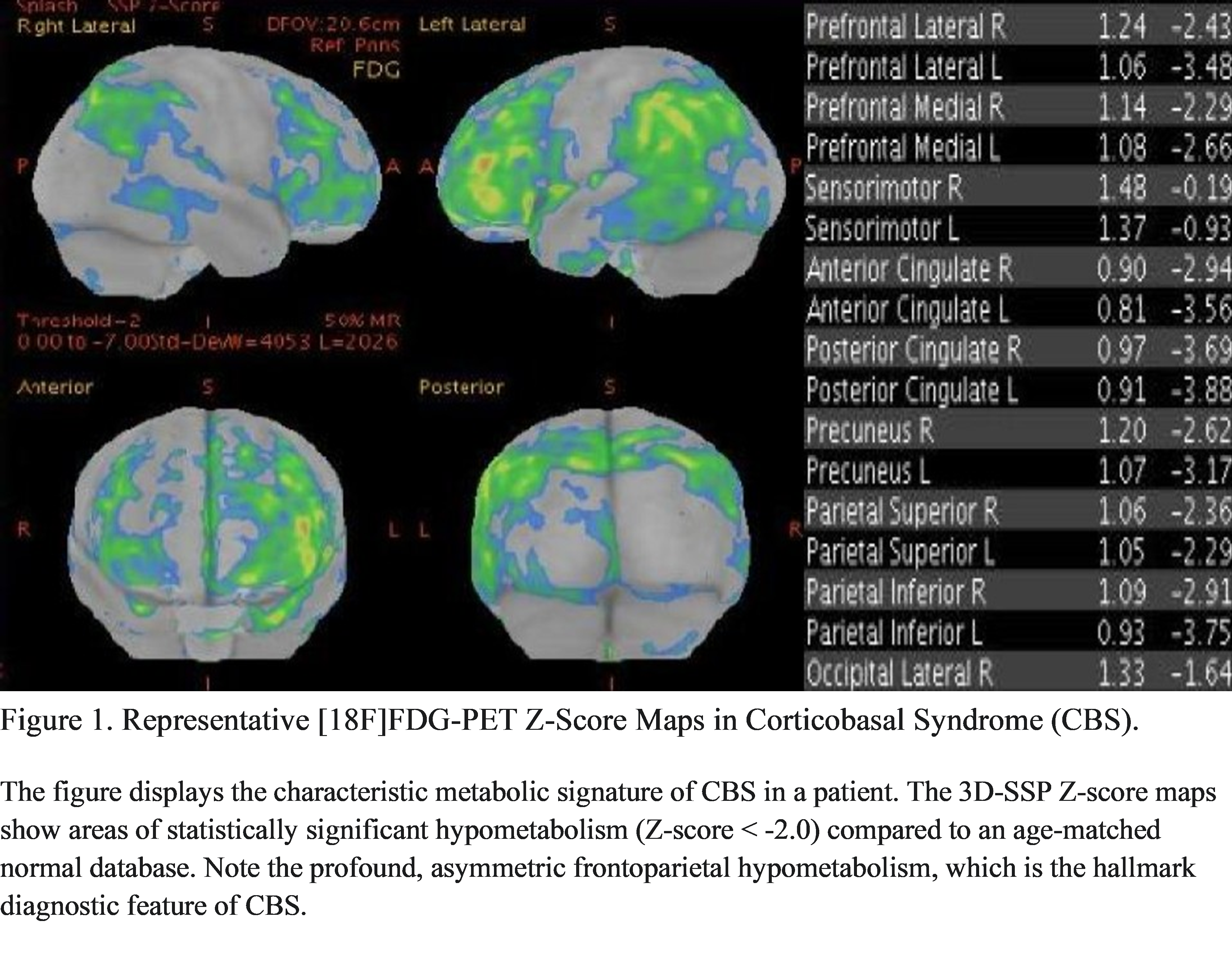
Picture 1
To cite this abstract in AMA style:
A. Mani, J. Hephzibah. Diagnostic Utility of [18F]FDG-PET in the Differential Diagnosis of Parkinsonian Syndromes: A Retrospective Study in an Indian Tertiary Care Cohort [abstract]. Mov Disord. 2026; 41 (suppl 1). https://www.mdsabstracts.org/abstract/diagnostic-utility-of-18ffdg-pet-in-the-differential-diagnosis-of-parkinsonian-syndromes-a-retrospective-study-in-an-indian-tertiary-care-cohort/. Accessed October 1, 2026.« Back to 2026 International Congress
MDS Abstracts - https://www.mdsabstracts.org/abstract/diagnostic-utility-of-18ffdg-pet-in-the-differential-diagnosis-of-parkinsonian-syndromes-a-retrospective-study-in-an-indian-tertiary-care-cohort/