
Category: Parkinson's disease: Neuroimaging
Objective: Identify and characterize patterns of navigated walking performance in people with PD (Parkinson’s disease) and healthy adults, by means of data-driven cluster analysis.
Background: Complex walking tasks like turning and dual‑task walking are common in everyday and amplify cognitive-motor impairments in PD. Both tasks rely on executive–attentional resources linked to the prefrontal cortex, but their relationship to performance levels remains unclear. Additionally, people utilize a range of turning strategies and individual priorities during dual-tasking, adding further complexity.
Method: Data from 48 healthy adults and 42 people with PD performing a navigated walking task [Figure 1] with and without an auditory Stroop task were analyzed. Measures of task performance included spatiotemporal gait and turning variables (via APDM inertial sensors), Stroop reaction time and accuracy, as well as navigation accuracy (scored via video). Prefrontal activity was assessed with functional near-infrared spectroscopy (fNIRS, NIRx) and executive-attentional resources determined with a neuropsychological test battery. Clinical data were collected via balance tests and questionnaires. Performance variables were used for hierarchical clustering analyses based on Random Forest similarities (performed in R). Clinical, fNIRS, neuropsychological, and demographic data were compared across clusters using Chi‑square and parametric or non‑parametric tests as appropriate (Wilcoxon for non‑normal data, Kruska-Wallis test if >2 groups).
Results: Two clusters were formed for each group based on performance variables: one high‑performing and one low‑performing [Figure 2]. Age and physical activity level were key factors differentiating the clusters, but not the groups. Low-performing clusters scored worse on clinical and neuropsychological tests in the PD group. Only the high-performing clusters had a consistent increase in dorsolateral prefrontal cortex activity during navigation tasks in both groups.
Conclusion: Performance of navigated walking was not connected to a specific gait or cognitive domain but instead showed a more global performance decline connected to age and physical activity level. This decline was associated with lower levels of prefrontal activity, possibly due to limits of recruiting or compensatory mechanisms.
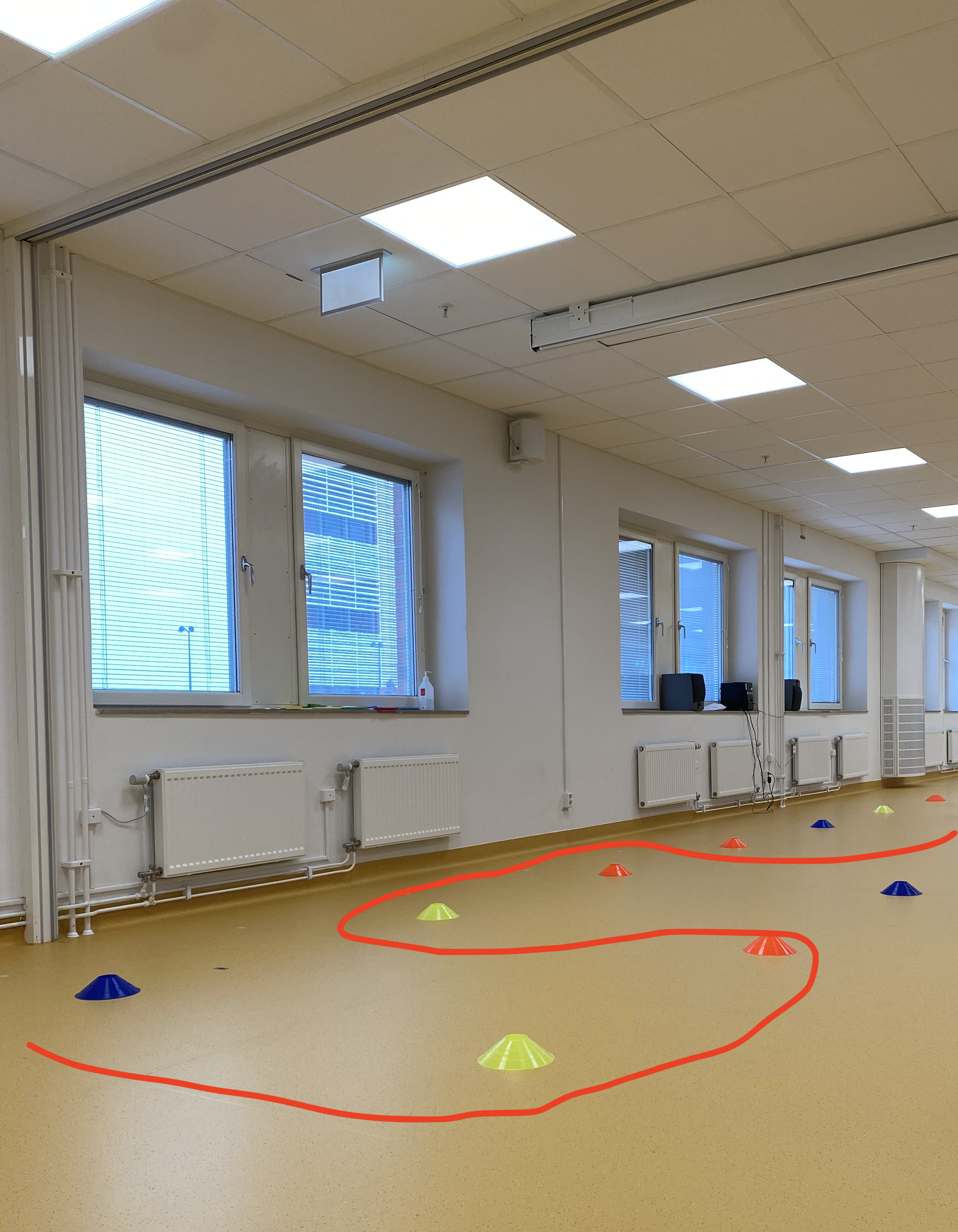
Figure 1: the navigation task
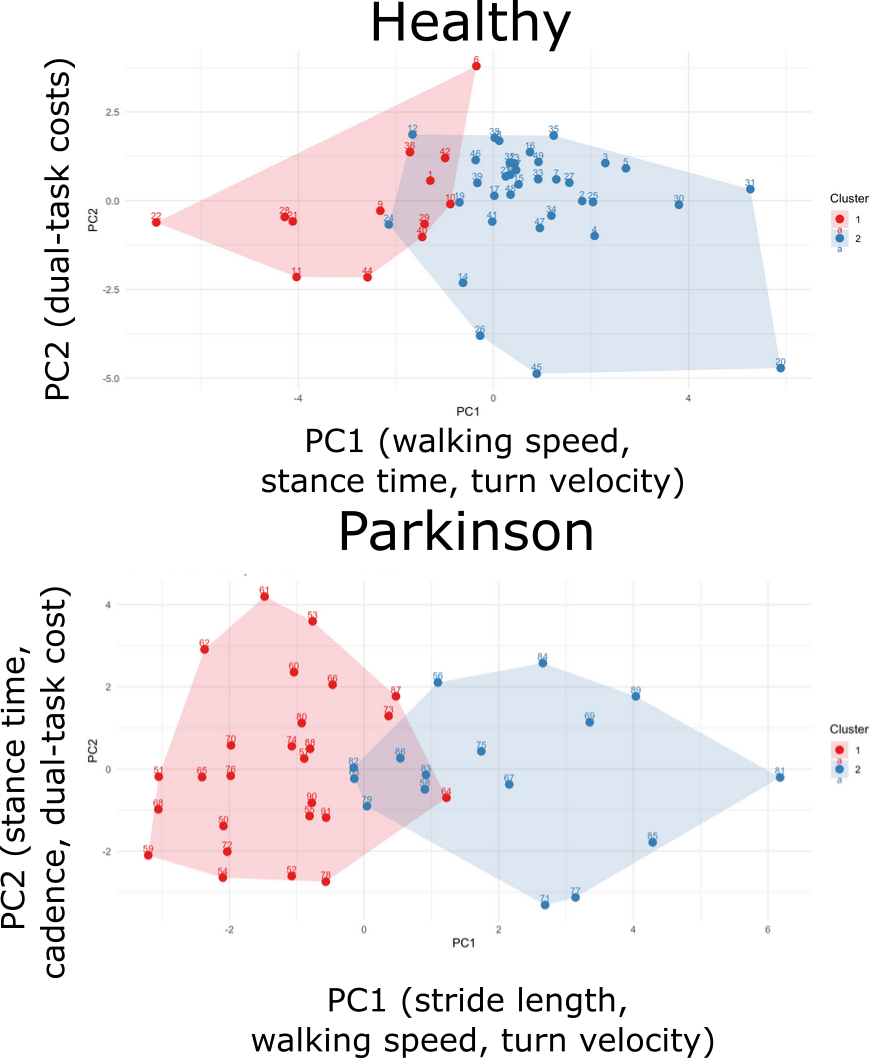
Figure 2: Clusters formed
To cite this abstract in AMA style:
A. Kvist, L. Bezuidenhout, H. Johansson, U. Ekman, D. Moulaee Conradsson, F. Albrecht, E. Franzén. Drivers of Navigated Walking Performance in Aging and Parkinson’s Disease: Insights From Behavioral Clustering, Clinical and Neuroimaging Data [abstract]. Mov Disord. 2026; 41 (suppl 1). https://www.mdsabstracts.org/abstract/drivers-of-navigated-walking-performance-in-aging-and-parkinsons-disease-insights-from-behavioral-clustering-clinical-and-neuroimaging-data/. Accessed October 1, 2026.« Back to 2026 International Congress
MDS Abstracts - https://www.mdsabstracts.org/abstract/drivers-of-navigated-walking-performance-in-aging-and-parkinsons-disease-insights-from-behavioral-clustering-clinical-and-neuroimaging-data/