
Category: AI, Technology, Telemedicine (Other)
Objective: To investigate the effects of a sensory feedback vibration stimulation device that integrates an insole foot pressure sensor on gait.
Background: Foot pressure during gait is key in assessing gait characteristics and is useful for evaluating diseases and gait disorders. Parkinson’s disease (PD), a neurological disorder, is characterized by gait impairments, and external sensory stimulation has been reported to be beneficial. This study developed a device that senses gait and provides real-time vibration stimulation based on foot pressure. We aimed to determine the most effective stimulation method for improving gait.
Method: Four community-dwelling individuals with mild PD participated. An insole-type foot pressure sensor and a wearable device (Requa Inc.) that vibrates in response to foot pressure or at a constant rhythm were attached to the arms, legs, and waist during gait measurements.(Fig.1) Gait under various stimulation conditions was assessed using foot pressure sensors and markerless motion capture (Qualisys). Skeletal estimation was conducted (Theia3D) and gait parameters were analyzed (Visual3D).
Results: Vibration-based sensory stimulation altered gait patterns in PD participants (A–D). The maximum/minimum differences in heel pressure asymmetry were: A, 0.038/0.003; B, 0.073/0.001; C, 0.035/0.003; and D, 0.108/0.008. Walking speeds (m/s) were: A, 1.13/1.00; B, 1.21/1.12; C, 1.39/1.24; and D, 1.11/0.95. Stride lengths (m) were: A, 1.04/0.92; B, 1.10/1.29; C, 1.24/1.39; and D, 0.95/1.11. Walking speed and stride length increased with device use.
Conclusion: The optimal stimulation method for gait improvement varied among participants. Some achieved their fastest walking speed or longest stride length under the no-stimulation condition. However, vibration stimulation generally reduced left-right asymmetry. A constant rhythm was effective for those with central pattern generator dysfunction, while foot-pressure-responsive stimulation benefited those with impairments in muscle strength, posture, or sensory function. Based on these findings, further improvements will be made, followed by larger-scale studies. Future developments will include an AI-based system to detect abnormal gait patterns and early signs of gait impairment using real-time sensing. The system will be feature customizable stimulation parameters and an automated adjustment function for real-world application.
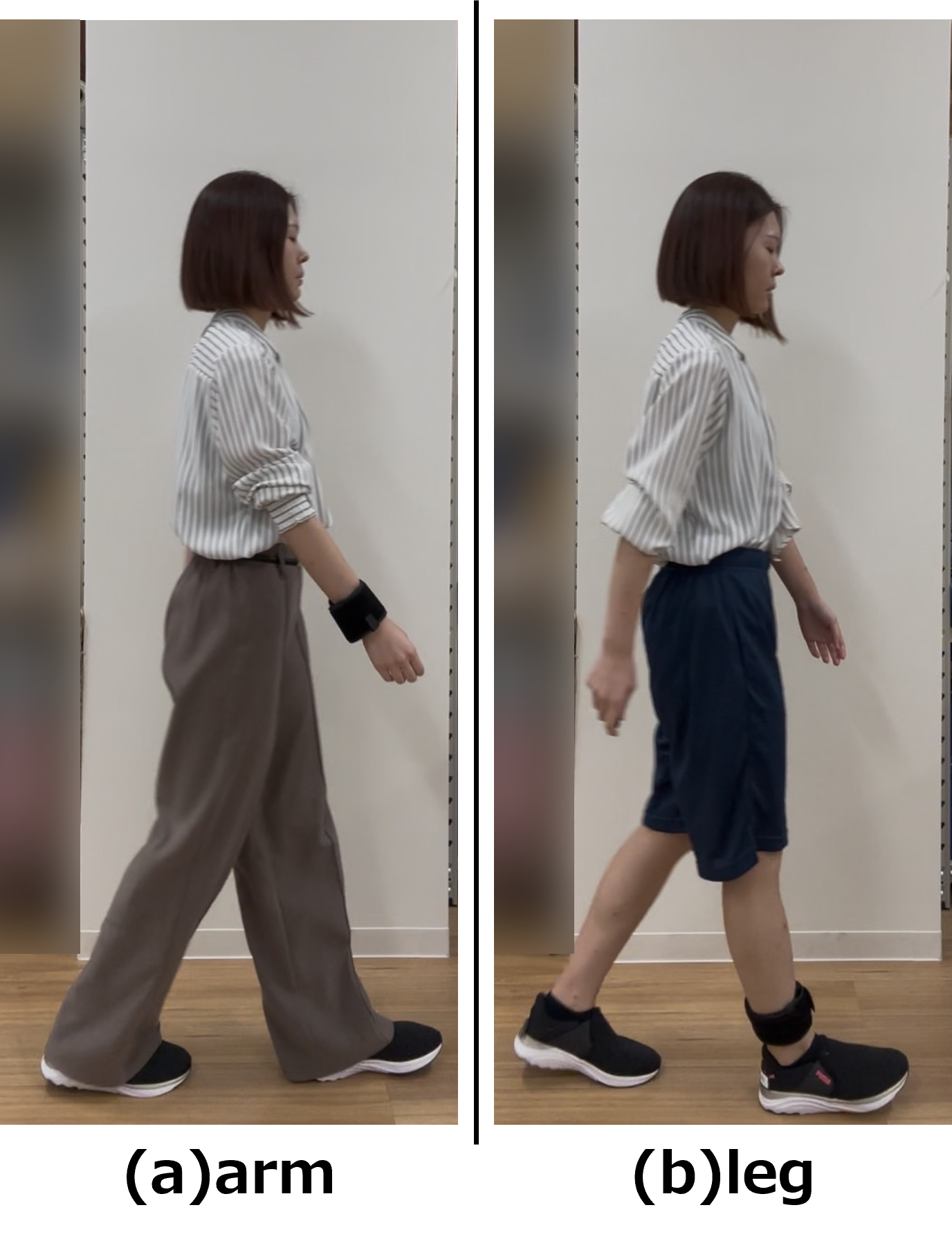
figure1
To cite this abstract in AMA style:
K. Kakegawa, T. Matsuda, J. Ogawa, Y. Yamaguchi, K. Fujinawa. Effect of Sensory Feedback Vibration Stimulation Using an In-Sole Foot Pressure Monitor on Gait [abstract]. Mov Disord. 2025; 40 (suppl 1). https://www.mdsabstracts.org/abstract/effect-of-sensory-feedback-vibration-stimulation-using-an-in-sole-foot-pressure-monitor-on-gait/. Accessed October 7, 2026.« Back to 2025 International Congress
MDS Abstracts - https://www.mdsabstracts.org/abstract/effect-of-sensory-feedback-vibration-stimulation-using-an-in-sole-foot-pressure-monitor-on-gait/