
Objective: To evaluate the clinical correlates of monocyte and T-cell immunoprofiles in Parkinson’s disease (PD) with and without Asian LRRK2 variants.
Background: Immune dysregulation has been postulated to modulate PD pathophysiology [1-6]. Although LRRK2 variants are the most common genetic contributors to PD, their influence on immune dysregulation in PD remains limited, especially for the Asian-prevalent variants, G2385R and R1628P.
Method: 127 individuals without autoimmune disorders or active immunomodulatory treatment were recruited: PD with G2385R (PD-G2385R) (n=29), PD with R1628P (PD-R1628P) (n=39), idiopathic PD (iPD) (n=29), and non-PD controls (n=30). Monocyte and T-cell functional markers were measured by flow cytometry [7]. Clinical and demographic data including age, sex, ethnicity, body mass index (BMI), MDS-UPDRS, Hoehn and Yahr scale (H&Y) and Clinical Impression of Severity Index for Parkinson’s Disease (CISI-PD) were collected. Associations were analyzed with Spearman’s rank correlation.
Results: LRRK2 variants analysis showed that the PD-G2385R group had a lower trend in proportion of intermediate monocytes (IM), while classical monocytes were significantly higher in iPD than in controls [Fig.1A]. The iPD group also showed increased CD163 expression in IM and CD11b in non-classical monocytes (NCM), while TLR4 expression on total T-cells was reduced [Fig.1B-D]. In PD-G2385R, CX3CR1 expression in IM correlated with worse functional status (MDS-UPDRS Part II) (rs=0.604, p=0.010), while HLA-DR in T-cytotoxic cells correlated negatively with BMI (rs=-0.501, p=0.009). In the PD-R1628P group, CD163 expression in IM correlated with worse disease stage (H&Y) (rs=0.512, p=0.002). In iPD, CCR2 expression in NCM correlated with worse motor response complications (MDS-UPDRS Part IV) (rs=0.563, p=0.003), while CX3CR1 in CM and IM correlated with worse disease stage (rs=0.646, p=0.0005; rs=0.536, p=0.006). TLR2 expression in T-helper cells was inversely associated with BMI (rs=-0.641, p=0.001).
Conclusion: Distinct alterations were seen in peripheral monocyte and T-cell immunophenotypes across LRRK2 genotype subgroups, including the Asian risk variant G2385R, but not R1628P. Additionally, the consistent association of the adhesion marker CX3CR1 with worse motor function in the PD-G2385R and iPD groups suggests its potential link with pathogenic pathways.
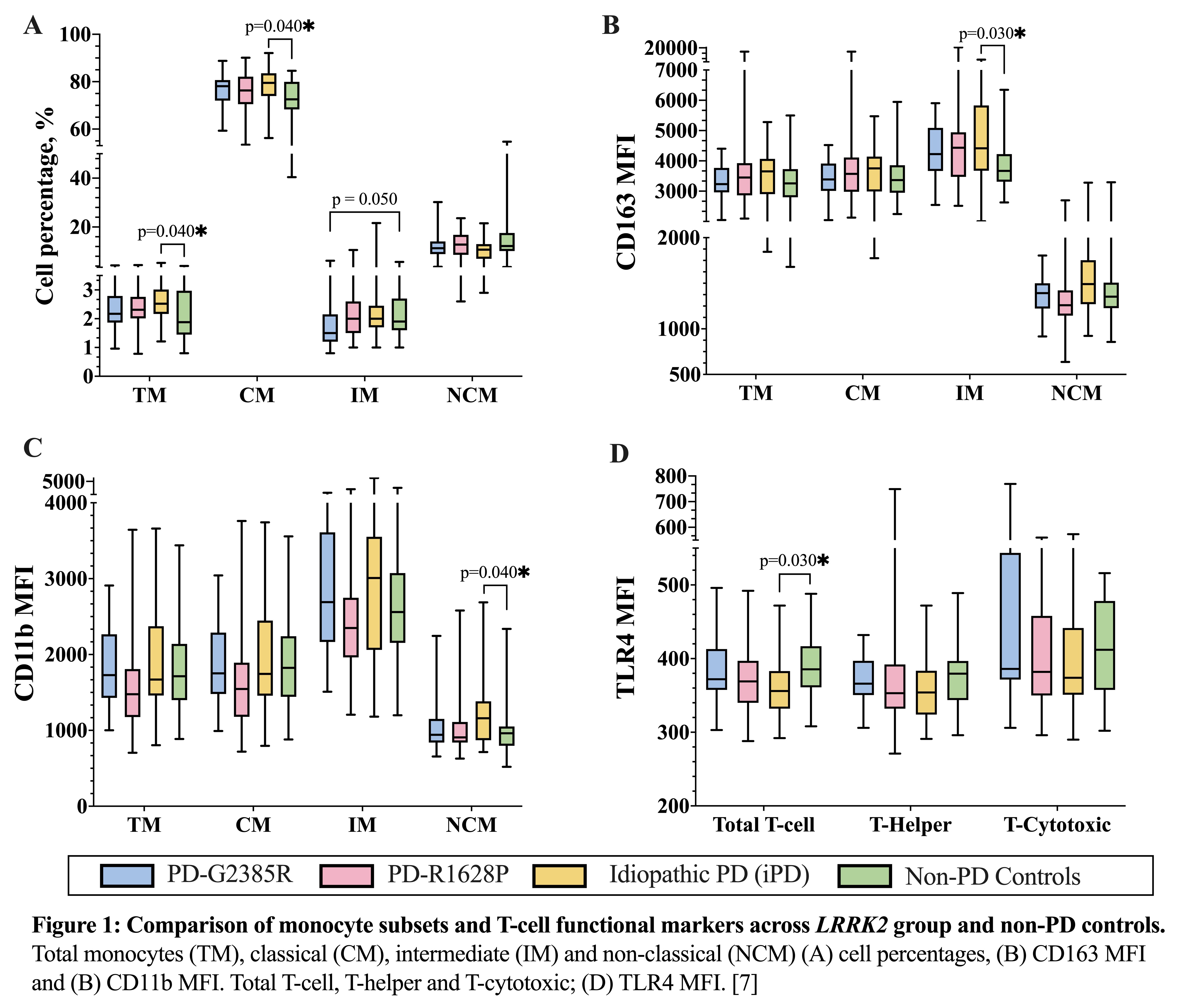
Fig.1: Monocyte and T-cell functional markers
References: 1. Tansey, M.G., et al., Inflammation and immune dysfunction in Parkinson disease. Nature Reviews Immunology, 2022. 22(11): p. 657-673.
2. Chen, X., et al., Evidence for Peripheral Immune Activation in Parkinson’s Disease. Frontiers in Aging Neuroscience, 2021. 13.
3. Grozdanov, V., et al., Inflammatory dysregulation of blood monocytes in Parkinson’s disease patients. Acta Neuropathol, 2014. 128(5): p. 651-63.
4. Wijeyekoon, R.S., et al., Monocyte Function in Parkinson’s Disease and the Impact of Autologous Serum on Phagocytosis. Front Neurol, 2018. 9: p. 870.
5. Konstantin Nissen, S., et al., Changes in CD163+, CD11b+, and CCR2+ peripheral monocytes relate to Parkinson’s disease and cognition. Brain Behav Immun, 2022. 101: p. 182-193.
6. Williams-Gray, C.H., et al., Abnormalities of age-related T cell senescence in Parkinson’s disease. Journal of Neuroinflammation, 2018. 15(1): p. 166.
7. J. Zulkefli, et al. Characterization of Monocyte and T-cell Immune Profiles in Parkinson’s Disease Patients with Asian LRRK2 G2385R and R1628P Variants. in Asian and Oceanian Parkinson’s Disease and Movement Disorders Congress (AOPMC). 2025. Tokyo, Japan: Movement Disorders Clinical Practice.
To cite this abstract in AMA style:
NJ. Zulkefli, NJ. Zulkefli, NS. Zulhaimi, HX. Ding, TS. Toh, JW. Hor, YW. Tay, AN. Khairul Anuar, JL. Lim, JW. Goh, RY. Ong, QH. Yong, A. Ahmad Annuar, LC. Lit, SY. Lim, R. Rajasuriar, AH. Tan. Monocyte and T-cell Immunological Profiles of Asian LRRK2 Variants G2385R And R1628P in Parkinson’s Disease: Associations with Clinical Measures [abstract]. Mov Disord. 2026; 41 (suppl 1). https://www.mdsabstracts.org/abstract/monocyte-and-t-cell-immunological-profiles-of-asian-lrrk2-variants-g2385r-and-r1628p-in-parkinsons-disease-associations-with-clinical-measures/. Accessed October 1, 2026.« Back to 2026 International Congress
MDS Abstracts - https://www.mdsabstracts.org/abstract/monocyte-and-t-cell-immunological-profiles-of-asian-lrrk2-variants-g2385r-and-r1628p-in-parkinsons-disease-associations-with-clinical-measures/