
Category: Non-Dystonia (Other)
Objective: To report a 38-year-old woman with malignant thymoma who developed Morvan syndrome with double-positive CASPR2 and LGI1 antibodies, presenting with typical features as well as exophthalmos and SIADH, and to analyze the clinical characteristics of double-positive cases through a literature review.
Background: Morvan syndrome is a rare autoimmune disorder characterized by peripheral nerve hyperexcitability, autonomic dysfunction, and encephalopathy. It is most commonly associated with antibodies against voltage-gated potassium channel complex proteins, particularly CASPR2 and LGI1.
Method: A PubMed search was performed to identify reported adult cases of Morvan syndrome with double-positive CASPR2 and LGI1 antibodies. Clinical manifestations, laboratory findings, radiologic results, and electrophysiological data were reviewed.
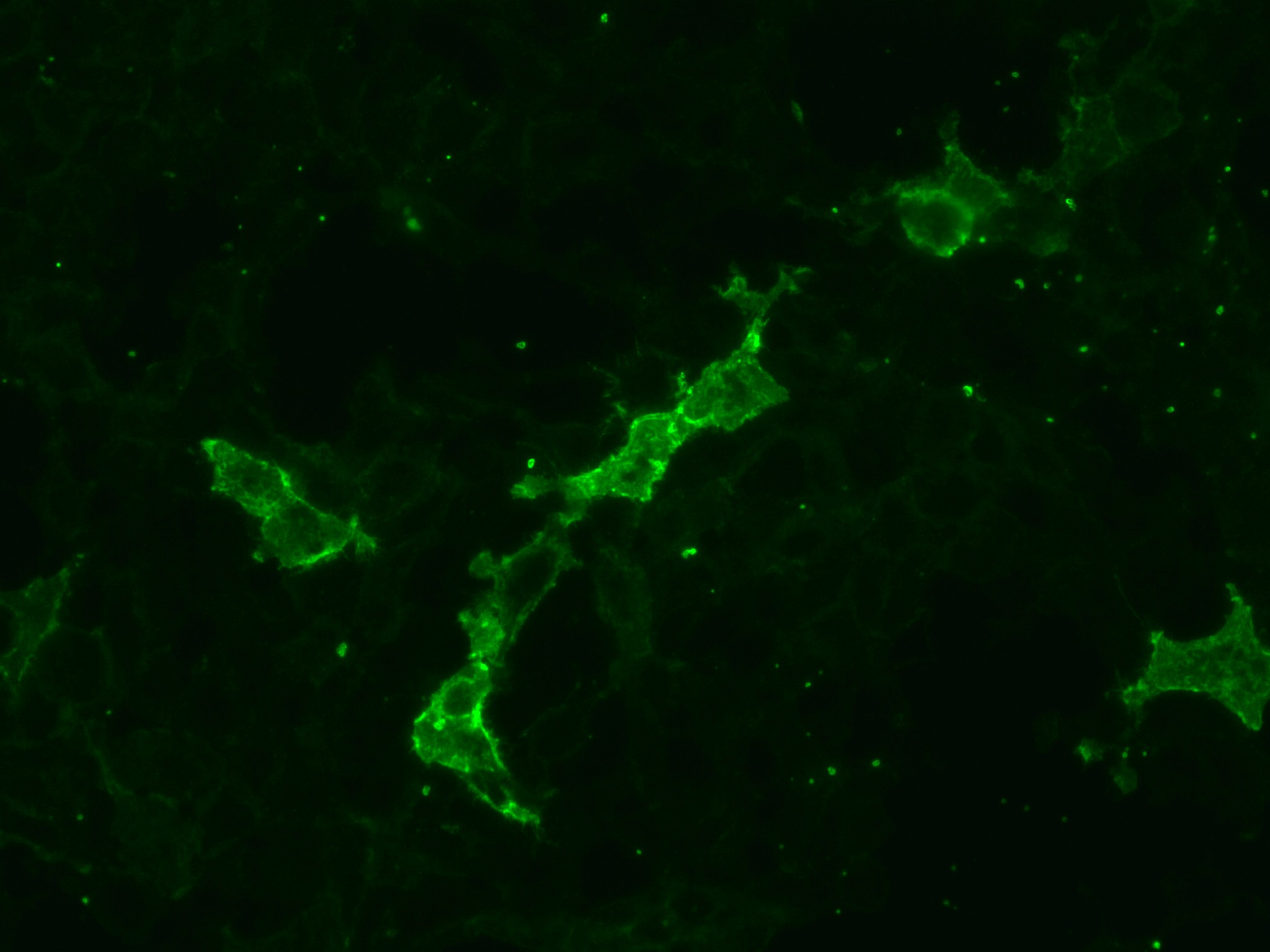
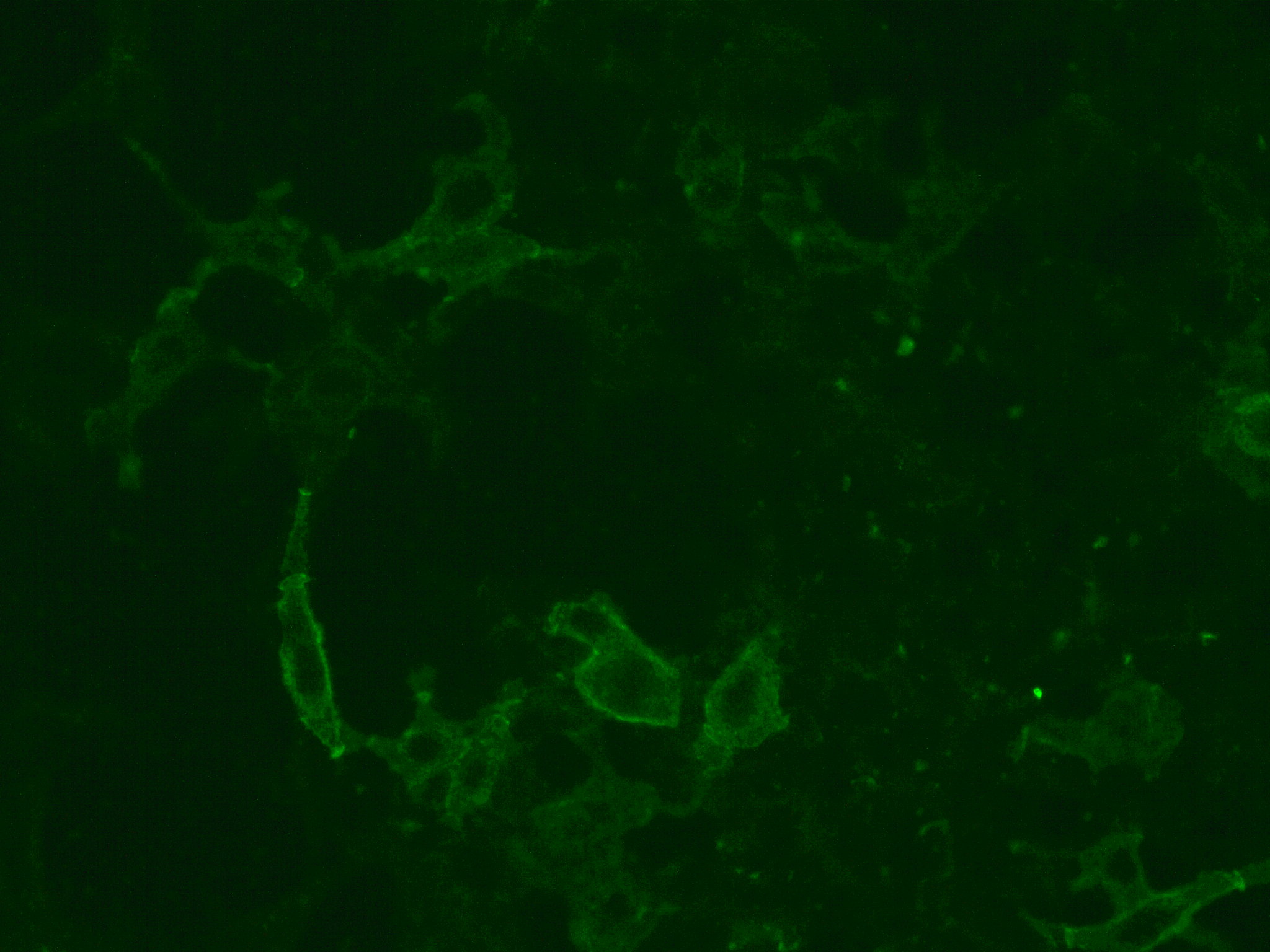
Results: A 38-year-old woman with malignant thymoma underwent chemotherapy and thymectomy. Four months later, she developed tachycardia and hyperhidrosis, followed by abdominal pain and diarrhea. Two years after thymectomy, muscle pain, cramps, generalized fasciculations, myokymia, tremor, severe insomnia, seizures, hallucinations, and exophthalmos developed. Severe SIADH-related hyponatremia was noted. Serology confirmed double-positive CASPR2 and LGI1 antibodies. Electrodiagnostic studies demonstrated peripheral nerve hyperexcitability, while brain MRI showed no structural lesions. Treatment with methylprednisolone pulse therapy and lacosamide resulted in partial improvement.
A literature review identified 43 reported cases with double-positive antibodies. The male-to-female ratio was 1.55:1. Peripheral symptoms were more likely to be the initial manifestation (5:3). The most common CNS symptom was sleep disturbance (55.8%), followed by memory impairment (51.2%), hallucinations (48.8%), seizures (32.6%), and confusion (30.2%).
Conclusion: This case highlights an unusual presentation of Morvan syndrome associated with malignant thymoma and double-positive CASPR2/LGI1 antibodies. The coexistence of SIADH and exophthalmos expands the clinical spectrum. Our analysis suggests a less pronounced male predominance than previously reported and indicates that double-positive cases may present with more severe autonomic dysfunction, higher rates of hallucinations and confusion, and a rapidly progressive course.
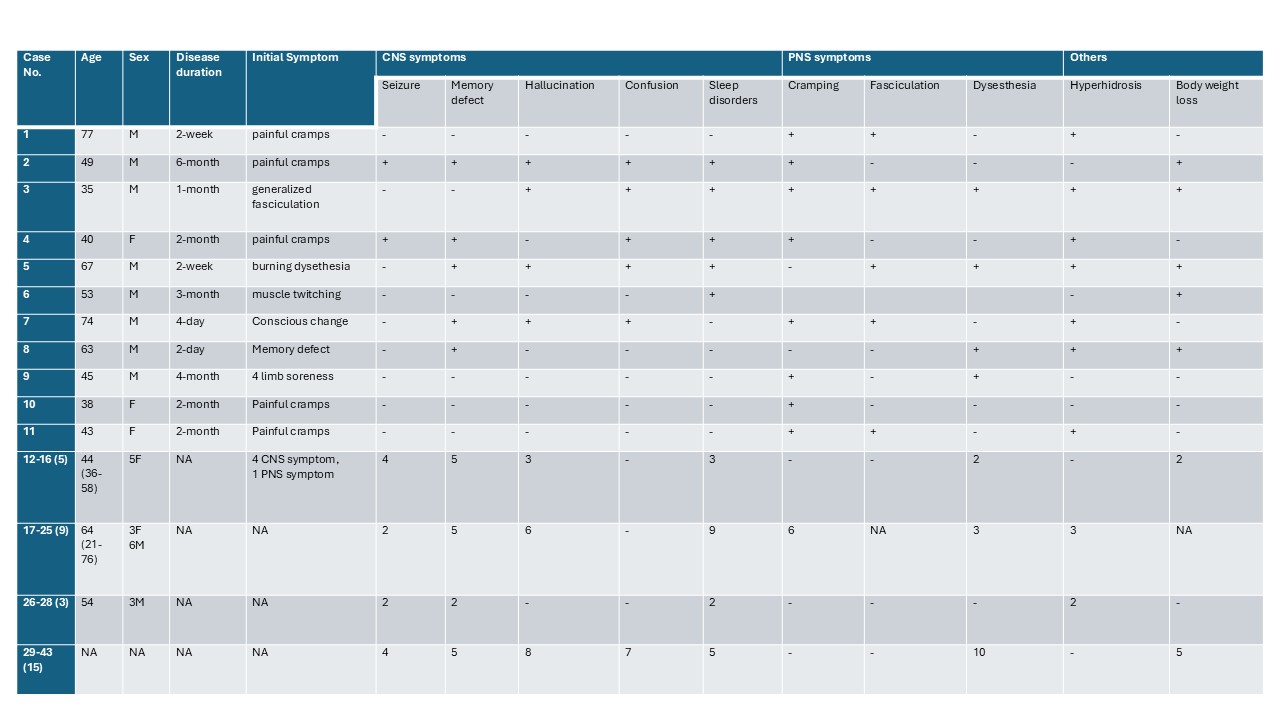
Table 1
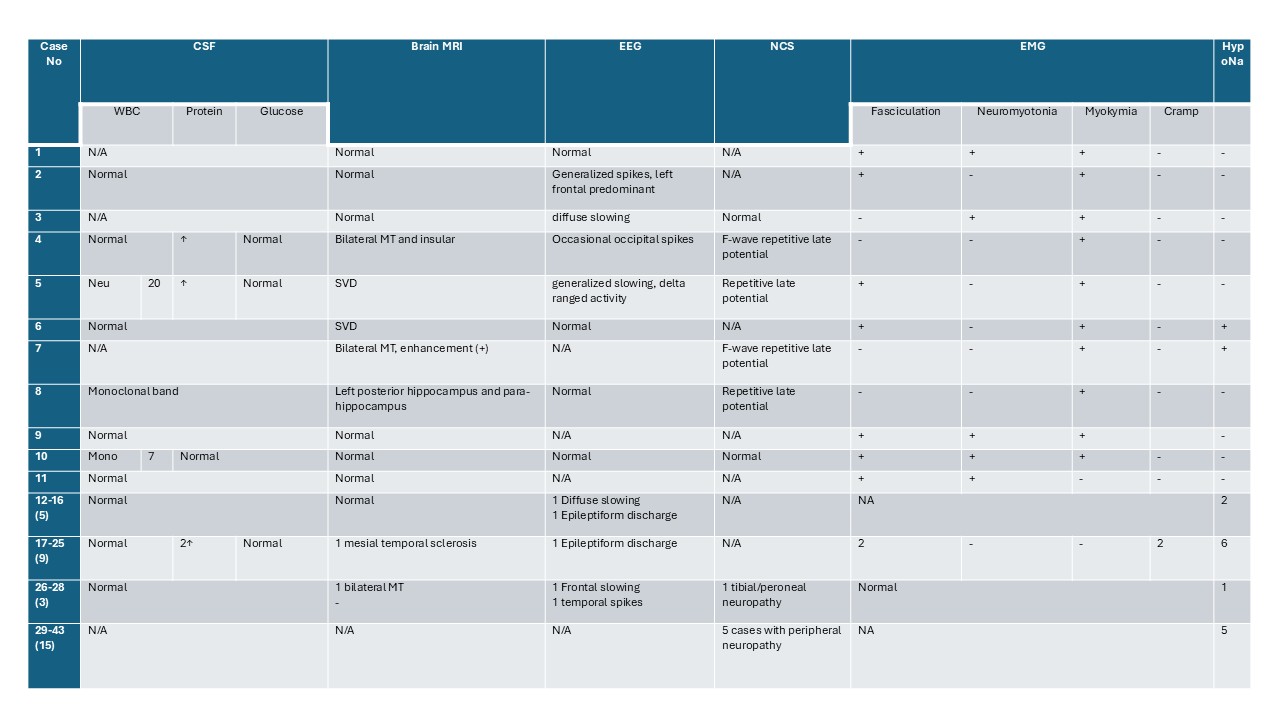
Table 2
Anti-LGI1 Ab
Anti-CASPR2 Ab
References: 1. Irani, S.R., et al., Morvan syndrome: clinical and serological observations in 29 cases. Ann Neurol, 2012. 72(2): p. 241-55.
2. Suzuki, D., et al., Morvan Syndrome Converted from Isaacs’ Syndrome after Thymectomy with Positivity for Both Anti-LGI1 and Anti-CASPR2 Antibodies. Intern Med, 2022. 61(9): p. 1443-1445.
3. Murayama, A., et al., Leucine-rich Glioma-inactivated 1 Encephalitis Followed by Isaacs Syndrome: Alternating Presence of Pathogenic Autoantibodies to Leucine-rich Glioma-inactivated 1 and Contactin-associated Protein-like 2. Intern Med, 2023. 62(11): p. 1659-1663.
4. Gadoth, A., et al., Expanded phenotypes and outcomes among 256 LGI1/CASPR2-IgG-positive patients. Ann Neurol, 2017. 82(1): p. 79-92.
5. Jia, Y., et al., Clinical characteristics of patients double positive for CASPR2 and LGI1-antibodies. Clin Neurol Neurosurg, 2020. 197: p. 106187.
To cite this abstract in AMA style:
K-P. Lee, C-C. Lee, J-Y. Li. Morvan Syndrome Associated with Malignant Thymoma and Double-Positive CASPR2/LGI1 Antibodies [abstract]. Mov Disord. 2026; 41 (suppl 1). https://www.mdsabstracts.org/abstract/morvan-syndrome-associated-with-malignant-thymoma-and-double-positive-caspr2-lgi1-antibodies/. Accessed October 1, 2026.« Back to 2026 International Congress
MDS Abstracts - https://www.mdsabstracts.org/abstract/morvan-syndrome-associated-with-malignant-thymoma-and-double-positive-caspr2-lgi1-antibodies/