
Category: Parkinson's Disease: Surgical Therapy
Objective: To describe stimulation artifacts in patients with complex deep brain stimulation hardware configurations and the impact on electrophysiology recordings.
Background: Deep brain stimulation (DBS) is an effective neuromodulation therapy for treatment refractory movement disorders such as Parkinson’s disease, essential tremor, and dystonia. Some patients with severe disease require more advanced neuromodulation therapy in the form of multiple implantable pulse generators (IPGs) connected to multiple DBS leads. Given the recent FDA approval of electrophysiology-based adaptive DBS for Parkinson’s disease, we characterize scenarios where stimulation artifacts that can affect the interpretation of local field potentials (LFPs) from sensing-enabled DBS systems.
Method: We collected LFP recordings from movement disorders patients with multiple IPGs (Medtronic Percept) during their routine clinic visits at the Normal Fixel Institute for Neurologic Diseases. LFPs were recorded using the Brainsense Streaming function from one IPG while adjusting the stimulation on the other IPG. The raw time series LFPs were visualized using the BRAVO platform and aligned based on the timestamp of the recordings.
Results: We collected LFP recordings from 5 patients with multiple IPGs. Our cohort consists of 2 patients with bilateral STN and GPi leads, 2 patients with bilateral VIM and VO leads, and 1 patient with bilateral STN leads. In all recordings which encompassed all commonly used DBS targets for movement disorders, we observed a stimulation artifact in the LFP recording when the stimulation frequency was under 100 Hz. This caused a strong narrow band signal that would be interpreted as a “peak”. Stimulation frequencies higher than 100 Hz were not observed to produce stimulation artifacts on the LFP recording.
Conclusion: Modern electrophysiology-guided DBS programming requires careful consideration of complex hardware configurations that utilize multiple IPGs. Stimulation parameters involving frequencies below 100 Hz can generate artifactual signal peaks that may be erroneously interpreted as genuine physiological responses. Clinicians must recognize this potential confounding factor to ensure accurate electrophysiological assessment and optimal therapeutic outcomes during DBS programming procedures.
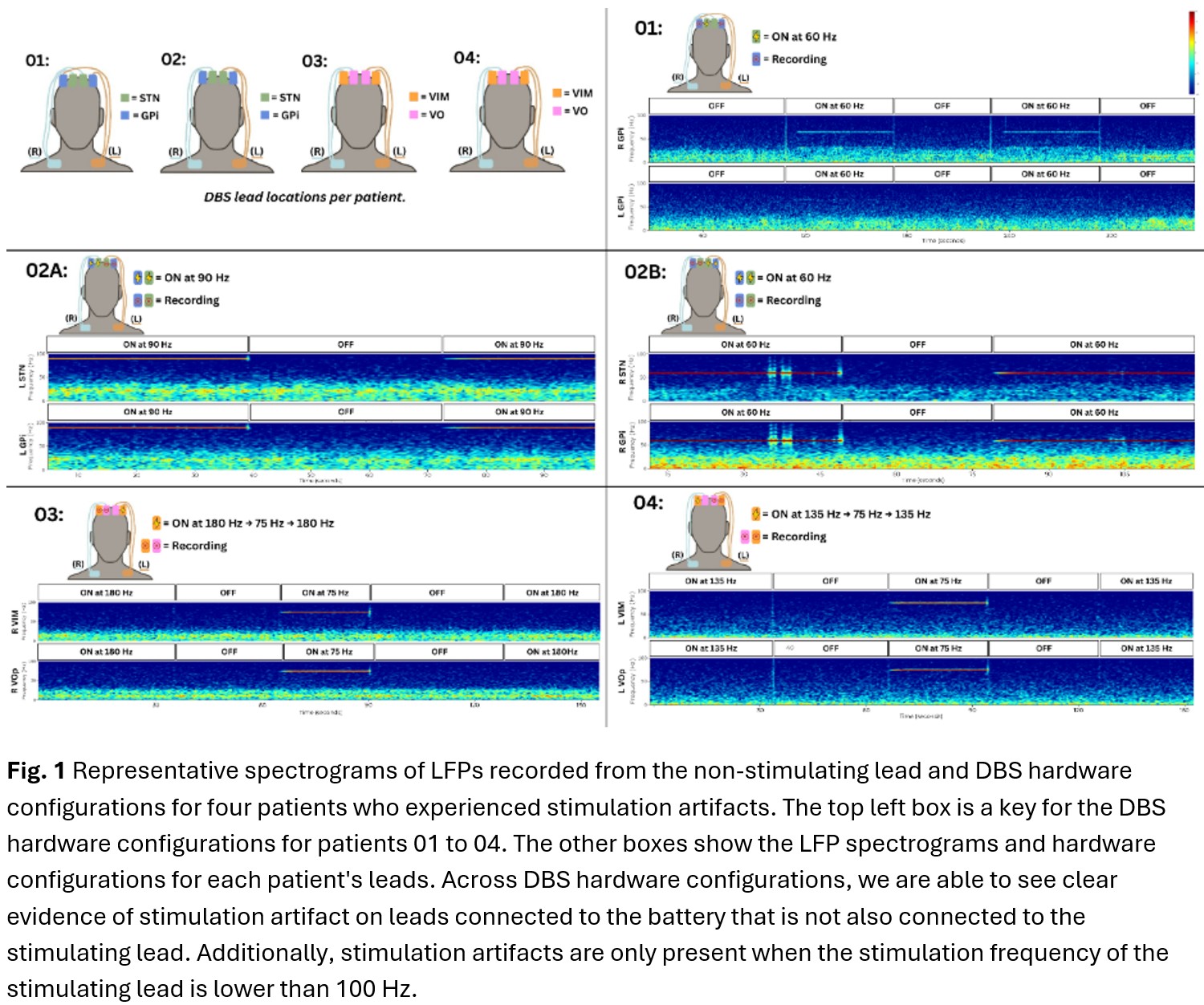
Figure 1 – Stimulation Artifact in Four Patients
To cite this abstract in AMA style:
A. Madamangalam, J. Tu, D. Vuddandam, J. Cagle, C. de Hemptinne, J. Wong. Simulation Artifact in Complex Deep Brain Stimulation Patients [abstract]. Mov Disord. 2026; 41 (suppl 1). https://www.mdsabstracts.org/abstract/simulation-artifact-in-complex-deep-brain-stimulation-patients/. Accessed October 1, 2026.« Back to 2026 International Congress
MDS Abstracts - https://www.mdsabstracts.org/abstract/simulation-artifact-in-complex-deep-brain-stimulation-patients/