
Category: Parkinson's Disease: Disease mechanisms
Objective: This study aimed to investigate whether vagal activity modulates BBB integrity and contributes to neurodegeneration and behavioral impairment in PD pathology.
Background: Disruption of the blood–brain barrier (BBB) is a hallmark of Parkinson’s disease (PD), characterized by increased permeability and infiltration of peripheral immune cells, including lymphocytes, into the brains of postmortem PD patients. Despite accumulating evidence of BBB dysfunction in PD, the mechanisms that initiate and regulate BBB disruption remain poorly understood. Growing evidence suggests that peripheral toxic factors, such as α-synuclein aggregates, contribute to PD pathogenesis and may propagate pathology from the gut to the brain through the vagus nerve. Since the vagus nerve can regulate vascular contractility, it may also influence BBB integrity and the entry of peripheral immune components into the brain.
Method: To induce PD pathology, mice were treated with 1-methyl-4-phenyl-1,2,3,6-tetrahydropyridine (MPTP) following surgical vagotomy. Dopaminergic neuronal degeneration was assessed by tyrosine hydroxylase (TH) immunostaining in the striatum. Behavioral performance was evaluated using the open field test (OFT) and vertical grid test (VGT). In addition, BBB integrity was examined by analyzing the expression of tight junction markers, ZO-1 and VE-cadherin.
Results: Mice that underwent vagotomy prior to MPTP administration exhibited preserved TH intensity in the striatum compared with MPTP-treated sham controls, suggesting attenuation of dopaminergic neuronal loss. In behavioral assessments, the OFT showed no significant differences in total distance traveled or movement velocity between groups, indicating comparable general locomotor activity. However, the VGT revealed a reduced missed step-to-total step ratio in mice that underwent subdiaphragmatic vagotomy (SDV) prior to MPTP treatment compared with MPTP-sham mice, indicating improved motor coordination. Furthermore, the reduction of tight junction markers ZO-1 and VE-cadherin observed in the PD model was restored following vagotomy.
Conclusion: These findings suggest that vagal modulation may exert protective effects on dopaminergic neuronal integrity, motor performance, and BBB integrity in an MPTP-induced PD model. This study supports a potential role of the vagus nerve in regulating PD-related neurodegeneration and BBB dysfunction.
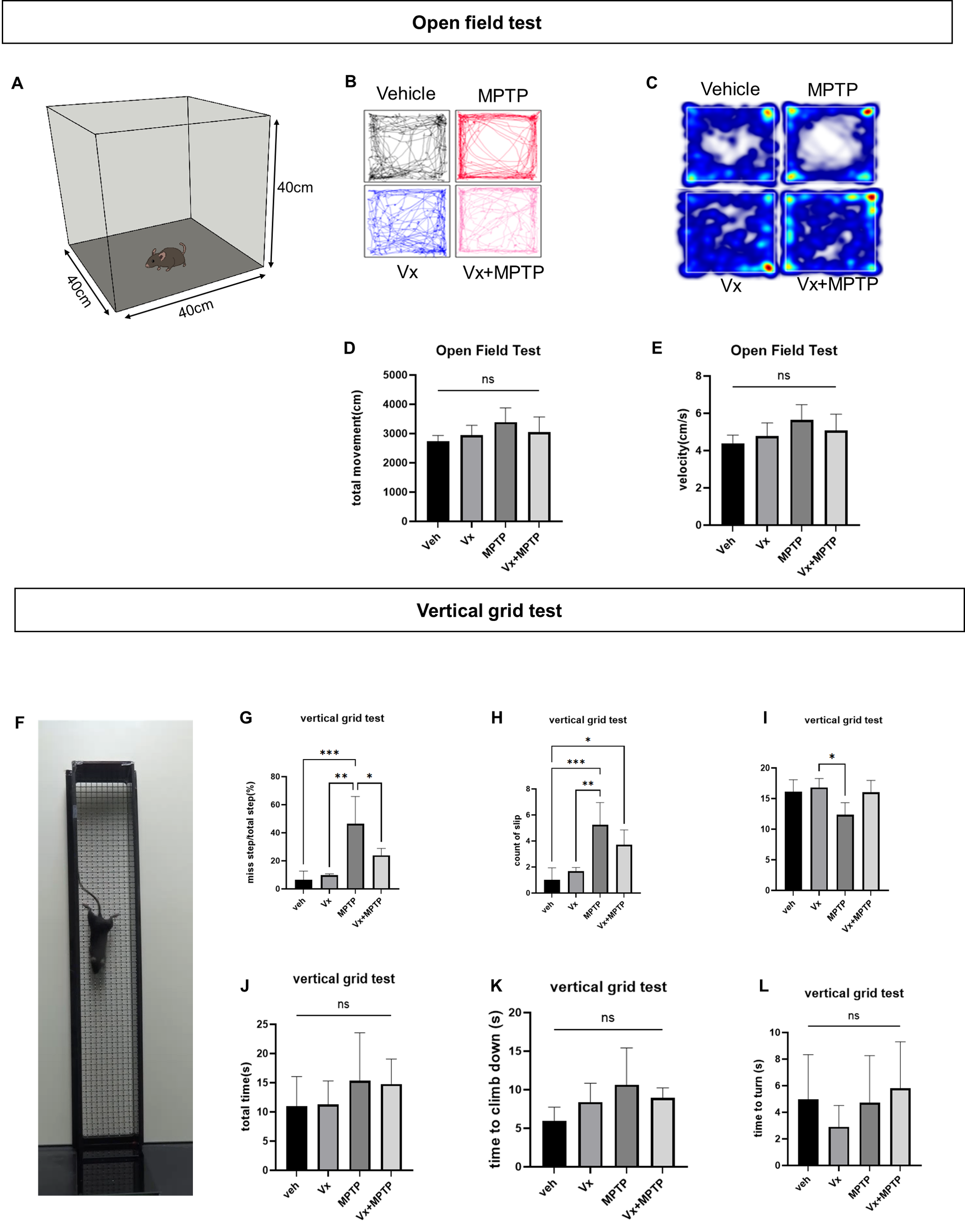
Figure 2
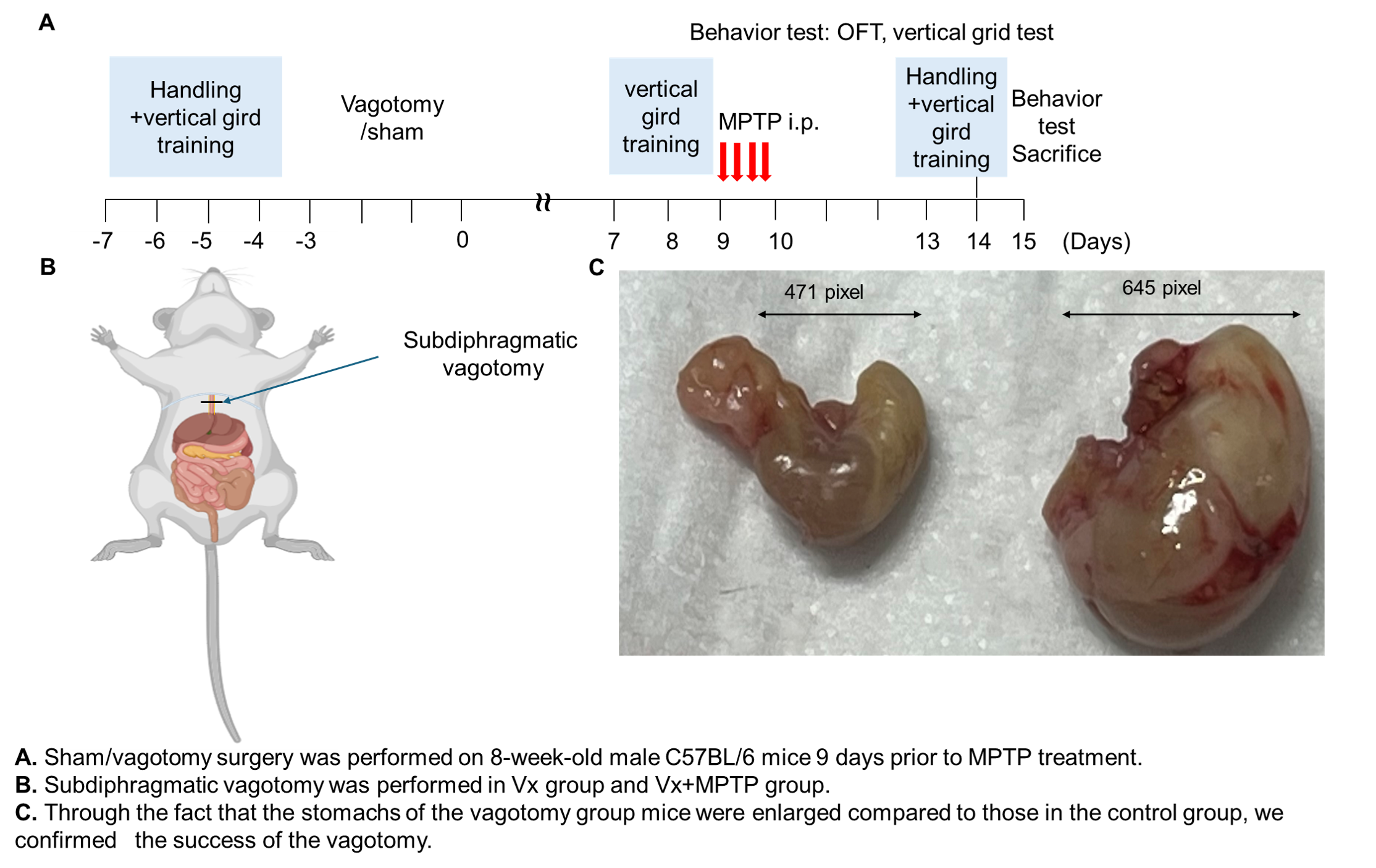
Figure 1
To cite this abstract in AMA style:
J. Ahn, J. Heo, M. Lee, C. Pyo, J. Jeong, Y. Kim, W. Chung, E. Oh. The Protective role of Blood brain barrier-Vagal Interface in Parkinsonian pathology in mice [abstract]. Mov Disord. 2026; 41 (suppl 1). https://www.mdsabstracts.org/abstract/the-protective-role-of-blood-brain-barrier-vagal-interface-in-parkinsonian-pathology-in-mice/. Accessed October 1, 2026.« Back to 2026 International Congress
MDS Abstracts - https://www.mdsabstracts.org/abstract/the-protective-role-of-blood-brain-barrier-vagal-interface-in-parkinsonian-pathology-in-mice/