
Objective: To investigate whether asymmetry in subthalamic deep brain stimulation (STN-DBS) amplitude influences freezing of gait (FoG) during a gait-adaptation task in Parkinson’s disease (PD).
Background: FoG is a disabling feature of PD that critically impairs locomotion and increases fall risk. Although STN-DBS improves the cardinal motor symptoms of PD, its effects on FoG remain variable. Hemispheric asymmetries in frontal cortical activity may influence gait adaptation and could be modulated by asymmetric STN stimulation. Whether DBS amplitude asymmetry affects FoG during adaptive locomotion remains unknown.
Method: Seven patients with PD and FoG treated with bilateral STN-DBS (UPDRS-III 47.9±17.0; FoG item 2.1±1.2) performed an overground gait-adaptation task in immersive virtual reality with stimulation active (Stim-ON); five participants also completed the task with stimulation paused (Stim-OFF). During walking, participants adjusted their trajectory to avoid a virtual agent crossing their path. Freezing episodes were identified from synchronized frontal and lateral video recordings by two independent clinicians, and freezing rate was normalized to walking time. Stimulation amplitude asymmetry between hemispheres was quantified using an asymmetry index (AI), defined as positive when higher amplitude was delivered to the left STN.
Results: Freezing rate during Stim-ON correlated with stimulation amplitude AI, with higher freezing rates observed in patients with relatively greater right-sided stimulation amplitudes. Four of five patients assessed in both conditions showed a marked reduction in freezing during Stim-ON compared with Stim-OFF, whereas one patient exhibited increased freezing. The DBS-related change in freezing rate (Stim-ON vs. Stim-OFF) correlated negatively with stimulation amplitude AI [Figure1].
Conclusion: STN-DBS amplitude asymmetry influences the occurrence and improvement of FoG during gait adaptation in PD. These findings suggest that relatively greater left-sided stimulation may facilitate adaptive locomotor control and reduce freezing episodes.
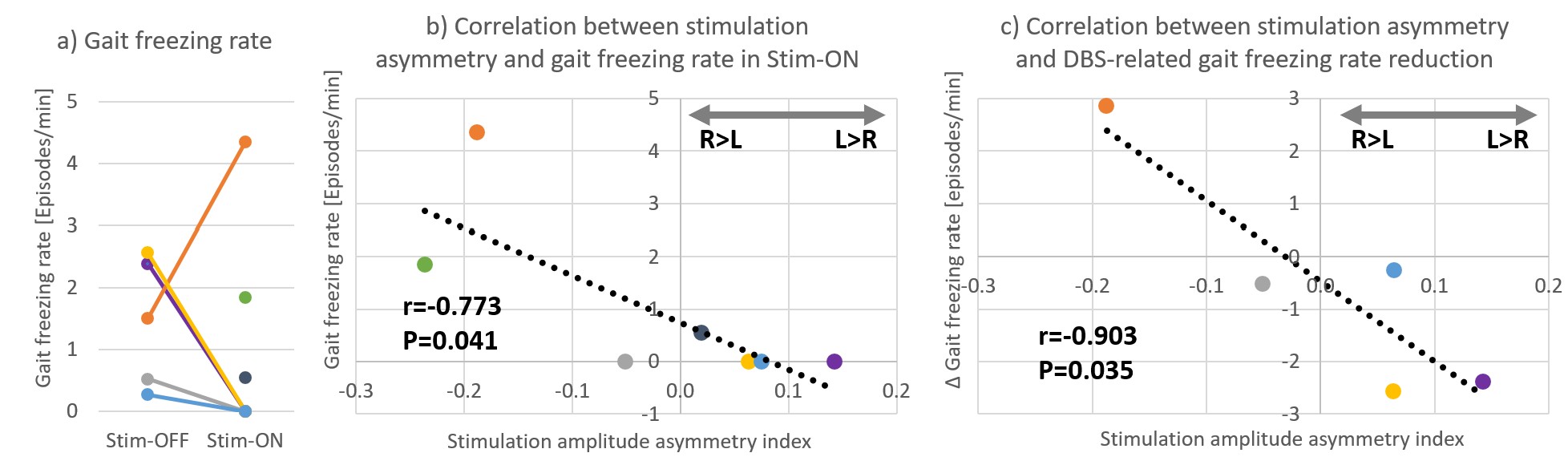
Figure1. DBS-related gait freezing amelioration
To cite this abstract in AMA style:
I. Hanafi, N. Pozzi, G. Pezzoli, J. Volkmann, I. Isaias, C. Palmisano. Stimulation Amplitude Asymmetry in Subthalamic Deep Brain Stimulation Affects Freezing of Gait During Gait Adaptation in Parkinson’s Disease [abstract]. Mov Disord. 2026; 41 (suppl 1). https://www.mdsabstracts.org/abstract/stimulation-amplitude-asymmetry-in-subthalamic-deep-brain-stimulation-affects-freezing-of-gait-during-gait-adaptation-in-parkinsons-disease/. Accessed October 1, 2026.« Back to 2026 International Congress
MDS Abstracts - https://www.mdsabstracts.org/abstract/stimulation-amplitude-asymmetry-in-subthalamic-deep-brain-stimulation-affects-freezing-of-gait-during-gait-adaptation-in-parkinsons-disease/