
Objective: To examine whether nigral microstructural integrity measured via substantia nigra free-water MRI (FW-MRI) relates to peripheral metabolic burden and motor variability across the glycemic spectrum.
Background: Diabetes mellitus (DM) is associated with metabolic and vascular dysregulation that may alter motor control in older adults. Their relationships remain poorly characterized.
Method: De-identified data from the Health and Aging Brain among Latino Elders (HABLE) study identified community-dwelling older adults with physician-diagnosed DM, prediabetes (Pre-DM), or normoglycemic status with available baseline diffusion tensor imaging (DTI) and peripheral metabolic markers; those with prior neurodegenerative diagnoses were excluded. SN free-water (SN FW) values were derived from DTI. Markers included HbA1c, fasting glucose, LDL, and HDL. Motor performance was assessed via Short Physical Performance Battery (SPPB), Timed Up and Go (TUG), and motor timing variability (SD of repeated trials). Bootstrap-validated Kruskal-Wallis tests (N=2,000 iterations) with covariate adjustment for age, sex, and BMI assessed group differences. Spearman correlations were computed within the DM subgroup.
Results: We identified 103 DM (age=62.7±7.22, 64.1% female), 49 Pre-DM (age=64.2±7.66, 75.5% female), and 321 controls (age=62.2±8.03, 64.5% female); groups did not differ demographically (~90% Hispanic, all p>0.05). DM participants showed significantly impaired motor performance versus controls: motor timing variability (p=0.00067), balance (p=0.0012), SPPB (p=0.002), and TUG (p=0.0031), remaining significant after covariate adjustment. HbA1c and fasting glucose were elevated in DM (both p<0.001); HDL was reduced (p<0.01). SN FW did not differ across groups (all p>0.05). Within DM, left anterior SN FW correlated negatively with HDL (r=−0.23, p=0.027).
Conclusion: In older adults with diabetes, motor variability appears more sensitive than SN free-water group differences, while nigral microstructure relates modestly to lipid markers within the DM subgroup. Diabetic neuropathy status was unavailable as a covariate and should be considered when interpreting motor findings. These findings underscore the utility of combining FW-MRI with systemic metabolic markers to uncover nigral microstructural-metabolic associations in diabetes that could inform early detection of motor decline and related vulnerabilities in older adults.
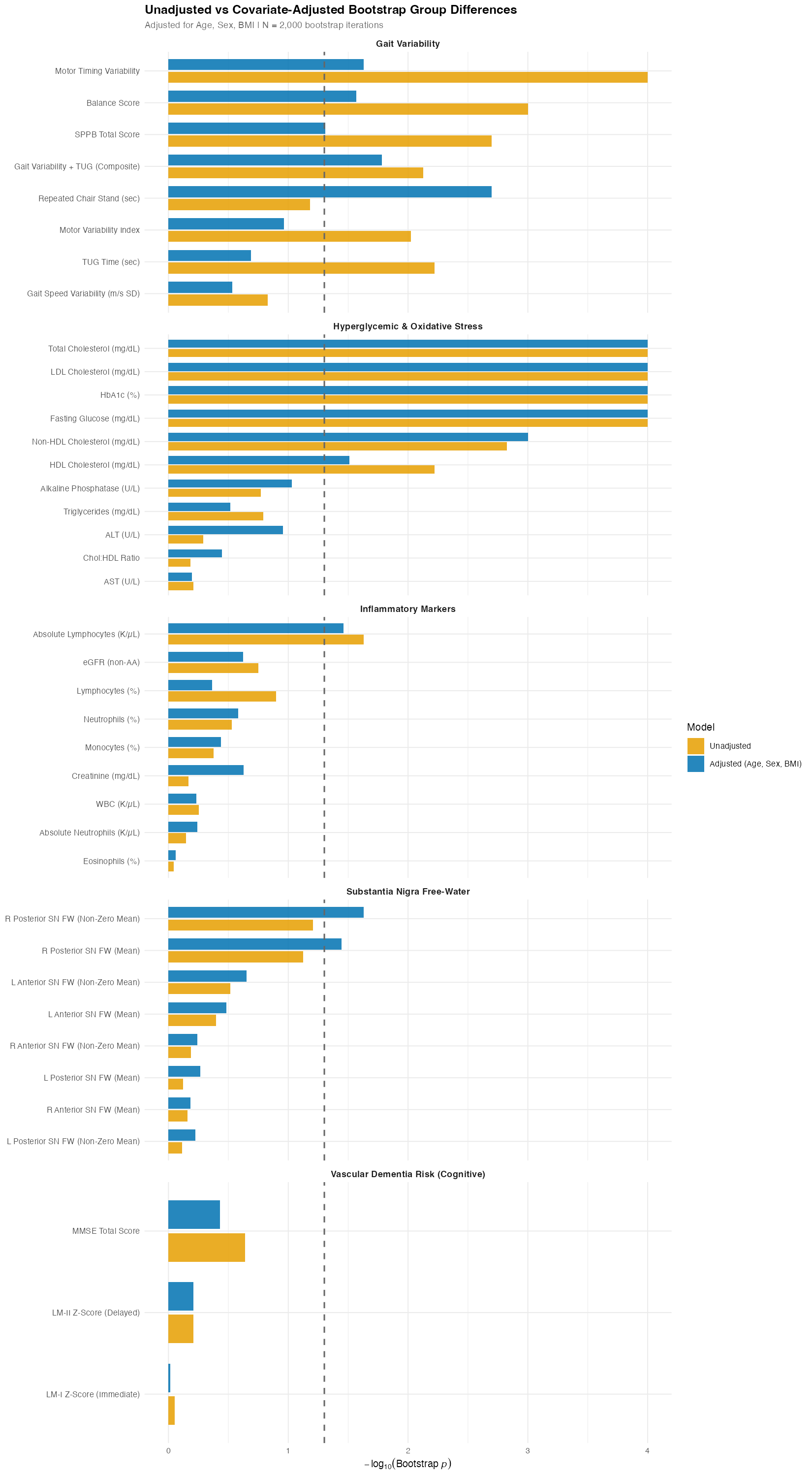
Unadjusted vs Covariate-Adjusted Group Differences
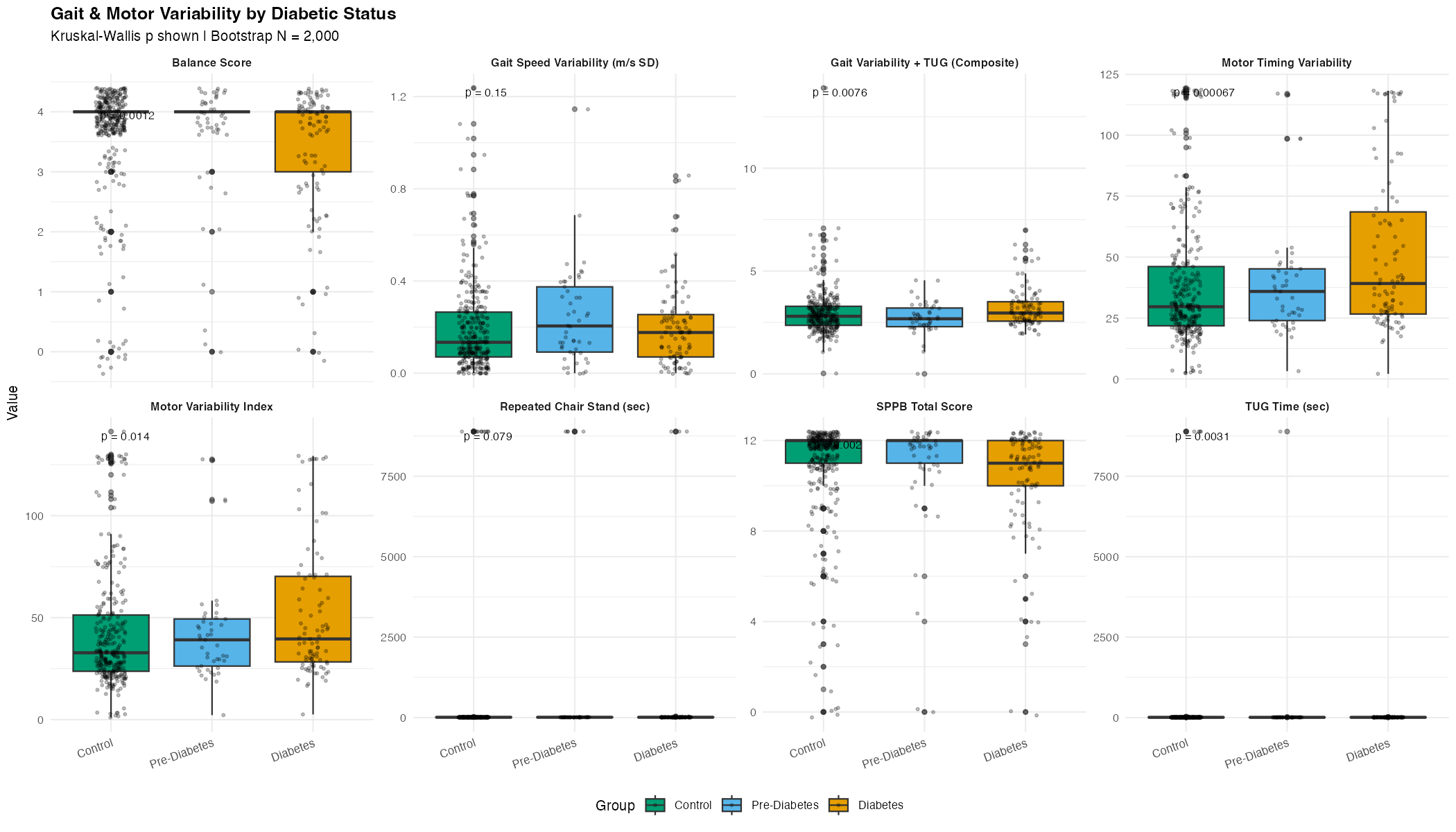
Gait & Motor Variability by Diabetic Status
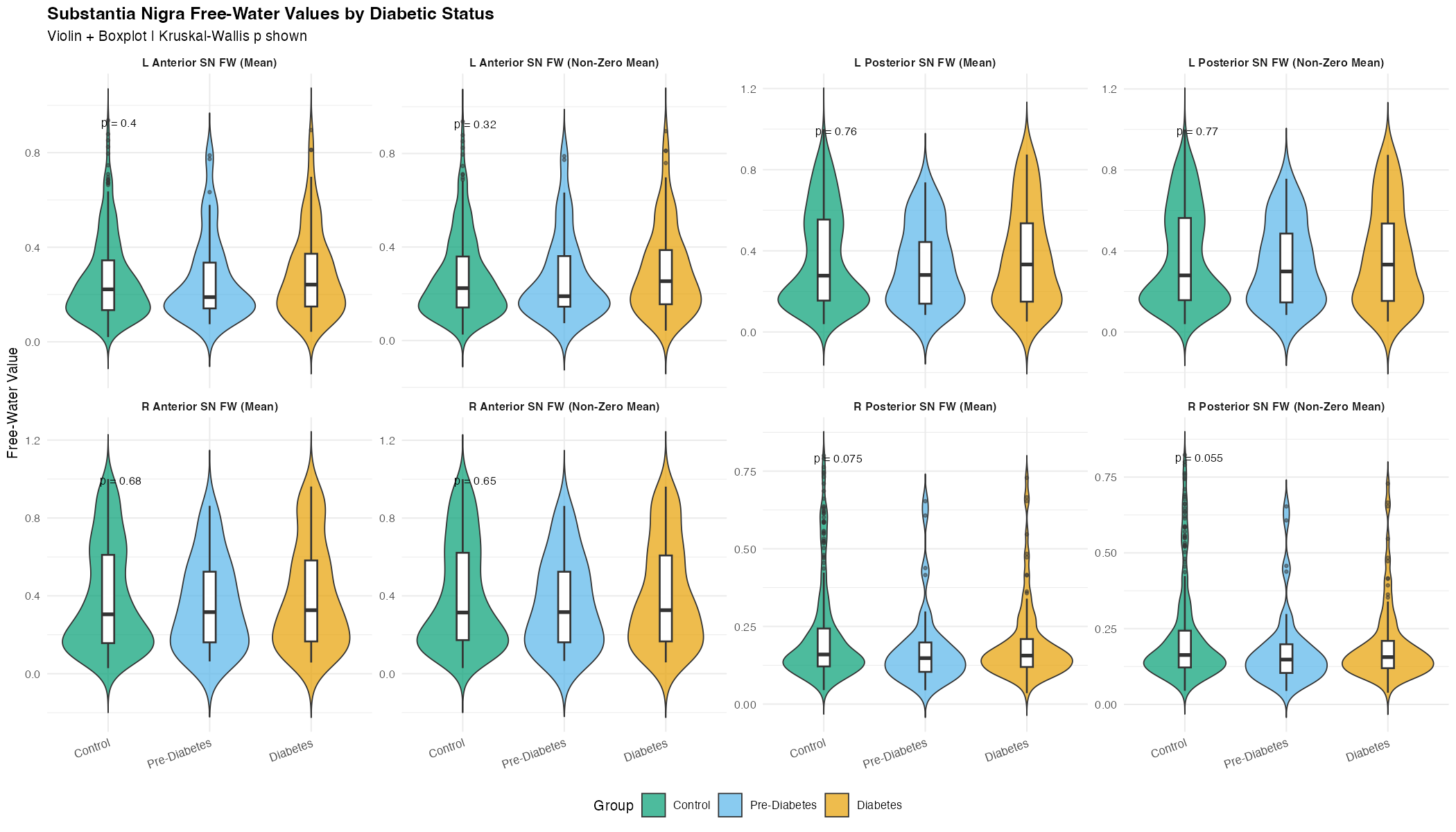
SN FW Values by Diabetic Status
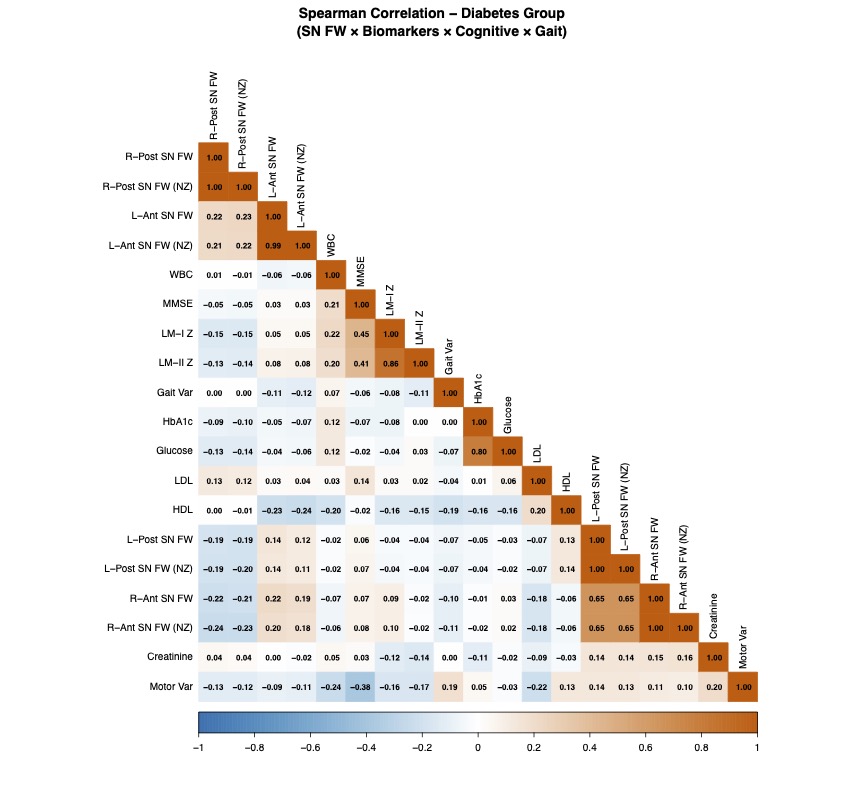
Spearman Correlation – Diabetes Group
References: 1. Lee, S., Cuneo, M., & Petrofsky, J. (2006). Gait characteristics in patients with Type 2 diabetes; Improvement after administration of rosiglitazone [Abstract 2127-PO]. Clinical Therapeutics/New Technology—Pharmacologic Treatment of Diabetes or Its Complications, A512.
2. O’Bryant, S. E., Johnson, L. A., Barber, R. C., Braskie, M. N., Christian, B., Hall, J. R., Hazra, N., King, K., Kothapalli, D., Large, S., Mason, D., Matsiyevskiy, E., McColl, R., Nandy, R., Palmer, R., Petersen, M., Philips, N., Rissman, R. A., Shi, Y., Toga, A. W., & HABLE Study Team. (2021). The Health & Aging Brain among Latino Elders (HABLE) study methods and participant characteristics. Alzheimer’s & Dementia: Diagnosis, Assessment & Disease Monitoring, 13(1), e12202. https://doi.org/10.1002/dad2.12202
3. Planetta, P. J., Ofori, E., Pasternak, O., Burciu, R. G., Shukla, P., DeSimone, J. C., Okun, M. S., McFarland, N. R., & Vaillancourt, D. E. (2016). Free-water imaging in Parkinson’s disease and atypical parkinsonism. Brain, 139(2), 495–508. https://doi.org/10.1093/brain/awv361
4. Vale, T. C., Barbosa, M. T., Caramelli, P., & Cardoso, F. (2012). Vascular parkinsonism and cognitive impairment: Literature review, Brazilian studies and case vignettes. Dementia & Neuropsychologia, 6(3), 137–144. https://doi.org/10.1590/S1980-57642012DN06030005
5. Schweitzer, N., Son, S. J., Aizenstein, H., Yang, S., Iordanova, B., Hong, C. H., Rho, H. W., Cho, Y. H., Park, B., Kim, N. R., Choi, J. W., Cheong, J. Y., Seo, S. W., An, Y. S., Moon, S. Y., Han, S. J., & Wu, M. (2024). Higher HbA1c is associated with greater 2-year progression of white matter hyperintensities. Diabetes, 73(4), 604–610. https://doi.org/10.2337/db23-0303
To cite this abstract in AMA style:
A. Belnavis, S. Chiu, K. Chen, J. Klein-Seetharaman, E. Ofori. Substantia Nigra Free-Water, Metabolic Markers, and Motor Variability in Older Adults with Diabetes [abstract]. Mov Disord. 2026; 41 (suppl 1). https://www.mdsabstracts.org/abstract/substantia-nigra-free-water-metabolic-markers-and-motor-variability-in-older-adults-with-diabetes/. Accessed October 1, 2026.« Back to 2026 International Congress
MDS Abstracts - https://www.mdsabstracts.org/abstract/substantia-nigra-free-water-metabolic-markers-and-motor-variability-in-older-adults-with-diabetes/