
Category: Parkinson's Disease: Non-Motor Symptoms
Objective: This investigation aims to explore temporal shifts in caffeine consumption throughout the Parkinson’s disease (PD) course.
Background: Caffeine has been consistently associated with a decreased risk of developing PD. The mechanism for this effect, whether neuroprotective, symptomatic, related to tolerability, or confounded by other factors, is unclear. Tracking evolution of the caffeine/PD relationship over the course of early PD may help better understand these potential mechanisms.
Method: Utilizing the UK Biobank, we conducted a cohort study analyzing self-reported caffeine consumption among PD patients. We compared quantity of caffeine (in mg/day and cups/day), source of caffeine (coffee and tea), and coffee type (caffeinated vs. decaffeinated) between PD patients and age, sex, assessment date, and recruitment center-matched controls. Participants were grouped into annual cohorts based on the timing of their recorded PD diagnosis (from 13 years preceding to 6 years following estimated PD diagnosis), and temporal trends in caffeine consumption were evaluated.
Results: From 502,304 participants (average age 63±5.3, 63% male), 3,979 PD cases were identified. Our analysis showed a progressive reduction in average caffeine intake from coffee and tea sources over time in PD patients only (in mg/day), with statistical significance observed solely in the analysis of coffee intake (p=0.04) [Figure 1a and 2a]. Although the quantity of tea and coffee cups consumed daily did not exhibit a significant decline over time in both cohorts [Figure 1b and 2b], stratification by coffee type indicated a significant decrease in the daily consumption of caffeinated coffee over time (p=0.03) [Figure 1c]. Notably, we found a progressive and significant shift towards decaffeinated coffee intake in PD patients absent in controls (p=0.02) [Figure 3].
Conclusion: The study found a notable temporal declines in caffeine consumption among patients with PD as disease progressed from its earliest stages. Particularly, PD patients, but not matched controls, gradually transitioned from caffeinated to decaffeinated coffee. These findings could suggest a possible alteration in caffeine metabolism, tolerance or dependency as PD advances, potentially implicating modifications in dopaminergic neurotransmission or adaptive behavioral changes in response to illness.
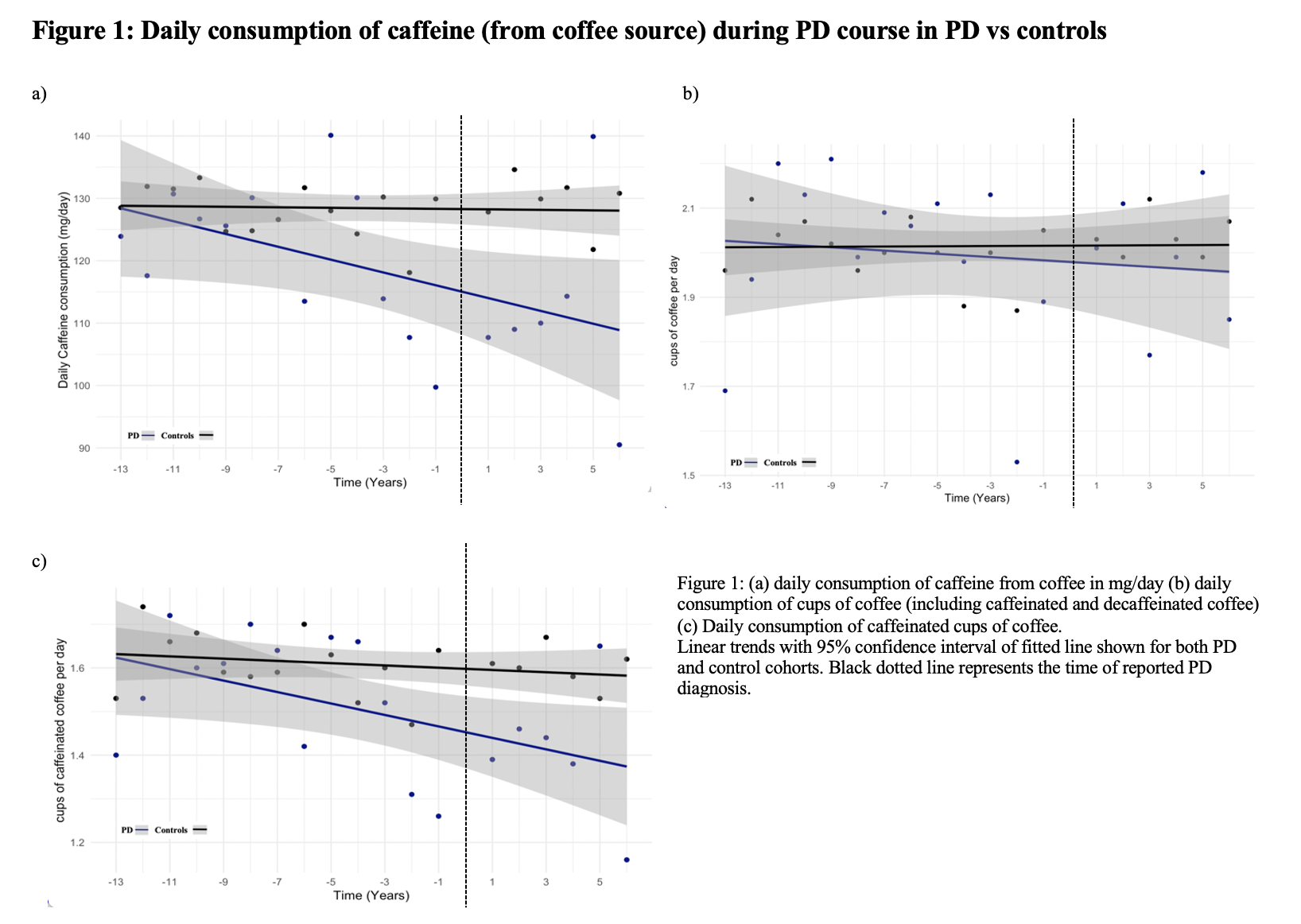
Daily consumption of caffeine (from coffee source)
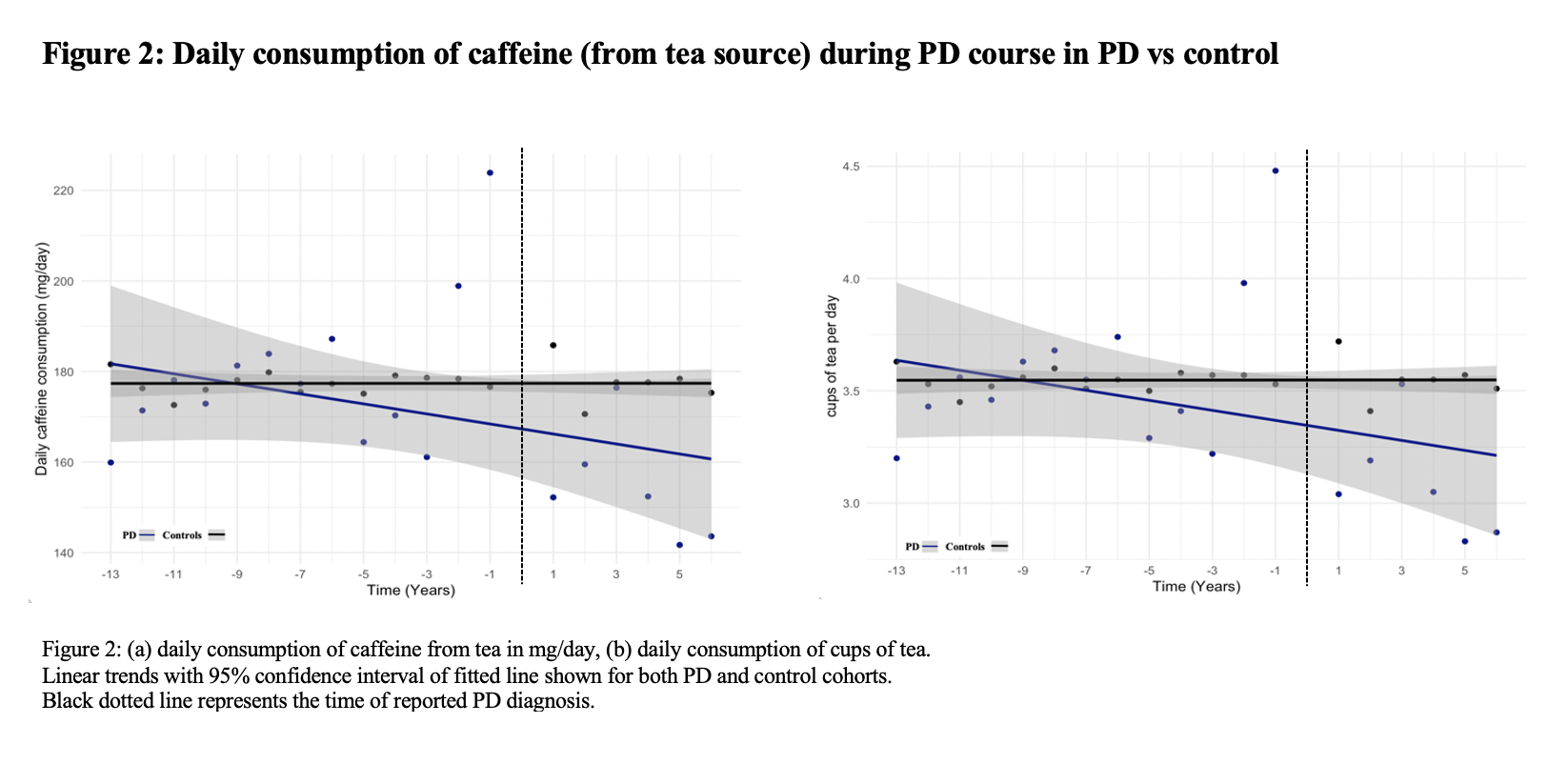
Daily consumption of caffeine (from tea source)
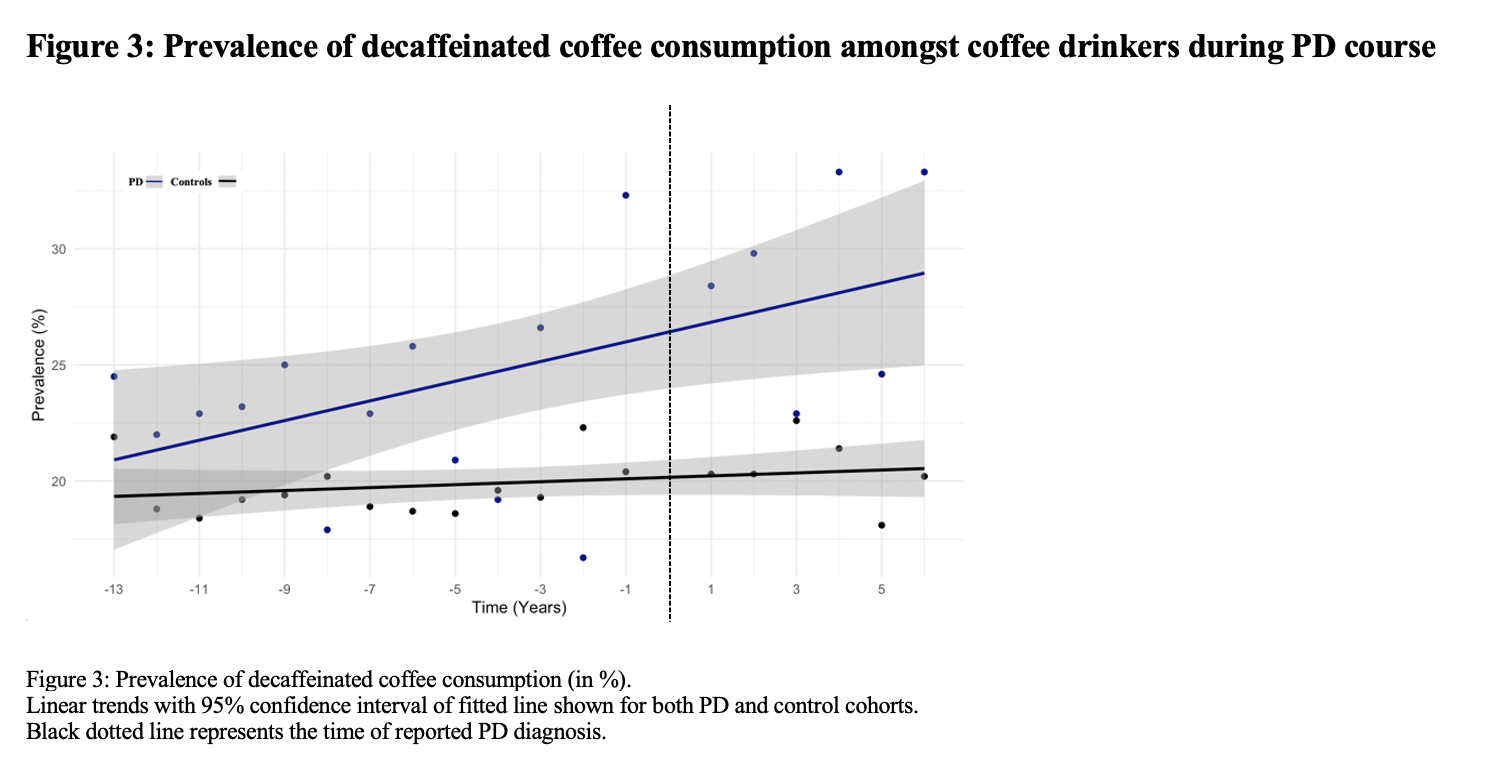
Prevalence of decaffeinated coffee consumption
To cite this abstract in AMA style:
S. Bouhadoun, S. Zolfaghari, A. Delva, T. Kouchache, A. Pelletier, R. Postuma. Shifting Tides of Caffeine: Evaluating Consumption Patterns In Parkinson’s disease Progression [abstract]. Mov Disord. 2024; 39 (suppl 1). https://www.mdsabstracts.org/abstract/shifting-tides-of-caffeine-evaluating-consumption-patterns-in-parkinsons-disease-progression/. Accessed October 4, 2026.« Back to 2024 International Congress
MDS Abstracts - https://www.mdsabstracts.org/abstract/shifting-tides-of-caffeine-evaluating-consumption-patterns-in-parkinsons-disease-progression/